Riveted bar grating
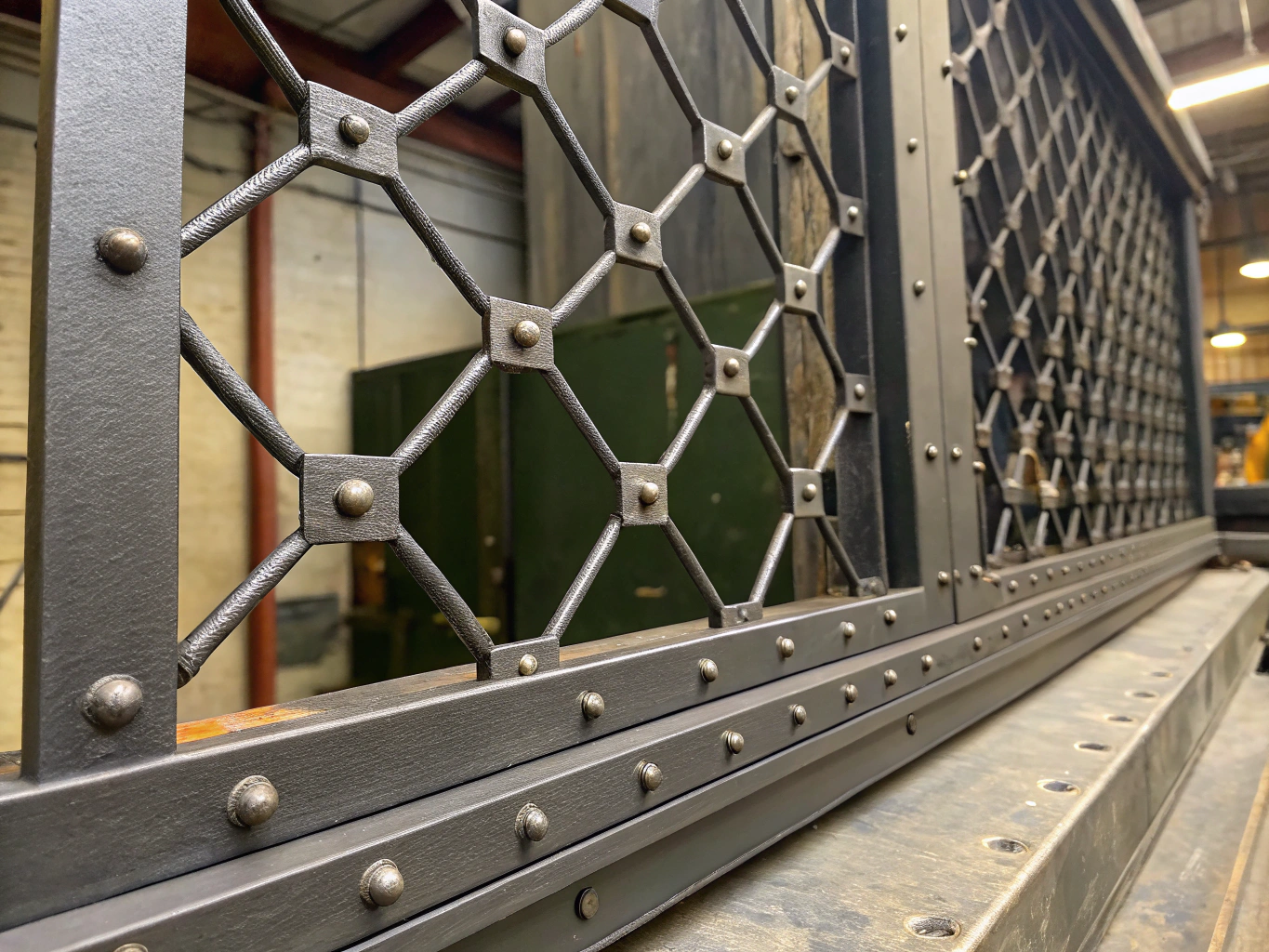
Bearing bars and reticuline cross bars mechanically fastened with high-tensile rivets. Built for installations where welding is prohibited or where weld heat-affected zones compromise alloy temper.
Mechanical integrity without thermal stress
In riveted grating, crimped cross bars are cold-riveted at every contact point. This creates a solid truss system that eliminates micro-cracks and residual thermal stress typical of arc welding, making it the preferred choice for heavy bridge decks, rolling equipment paths, and sensitive aluminum architectural structures.
Zero heat-affected zones
Mechanical riveting preserves the tempered molecular strength of heat-sensitive alloys without thermal distortion.
Mechanical truss rigidity
Cold-pressed rivets lock crimped reticuline bars to straight bearing bars, distributing high point-loads evenly.
High impact & fatigue resistance
Ductile non-welded fasteners absorb cyclic vibration and bridge heavy rolling wheel traffic reliably.
Corrosion-resistant fastening options
Standard units feature precision matched alloy rivets—aluminum rivets for aluminum gratings and austenitic stainless rivets for stainless builds—preventing galvanic reaction and preserving structural lifespan in coastal or harsh industrial exposures.
Custom span & loading configurations
Manufactured to custom project drawings, bearing bar depths from 1" to 2-1/2", and standard 7-inch rivet spacing for vehicular and pedestrian loads.
Available alloy materials
Select base metals and matched mechanical hardware for project-specific operating conditions.
Lightweight, non-sparking, and naturally corrosion-resistant for marine and chemical facilities.
Maximum resistance to severe chemical attack, acidic atmospheres, and sanitary washdown.
Heavy structural load capacity available plain (mill finish), painted, or hot-dip galvanized.
Engineered specifications and assembly standards
Review connection methods, material grades, and fastening options built for heavy-duty structural performance across industrial and architectural installations.
Standard Baseline
Cold & hot-driven solid riveting
- Interlocking cold-formed or hot-driven mechanical fasteners
- Eliminates heat-affected zones and thermal distortion
- Even shear stress distribution along structural joint lines
Standard Baseline
Marine-grade 304/316 fasteners
- Grade 304 and 316 stainless steel rivets and threaded hardware
- Hot-dip galvanized and zinc-nickel protective coatings
- Dielectric isolation washers to prevent galvanic corrosion
Standard Baseline
Non-welded modular systems
- Industrial walkways, mezzanine platforms, and catwalks
- Architectural facade screens and sunshade louvers
- Heavy vibration screening assemblies and acoustic dampening panels
Standard Baseline
Aluminum, SS 304/316, Carbon Steel
- Aluminum: 3003-H14, 5052-H32, and structural 6061-T6
- Stainless steel: Austenitic 304 and molybdenum-bearing 316
- Carbon steel: Hot-rolled ASTM A36 and cold-rolled commercial quality
Material Grade Matrix
Comparative mechanical properties and recommended surface treatments.
Aluminum Alloys
5052-H32 / 6061-T6Lightweight, non-magnetic, superior atmospheric corrosion resistance.
Stainless Steel 304 / 316
AISI 304 / AISI 316High yield strength, high-temperature tolerance, maximum acid and chloride resistance.
Carbon Steel
ASTM A36 / 1008-1010High structural rigidity, cost-effective load bearing, impact resistance.
Need customized hole patterns, rivet pitches, or alloy test reports?
Send your mechanical drawings, structural load specifications, or assembly constraints. Our engineering team reviews all tolerances prior to quoting.