How Bar Grating Bearing Bar Size Affects Load Capacity
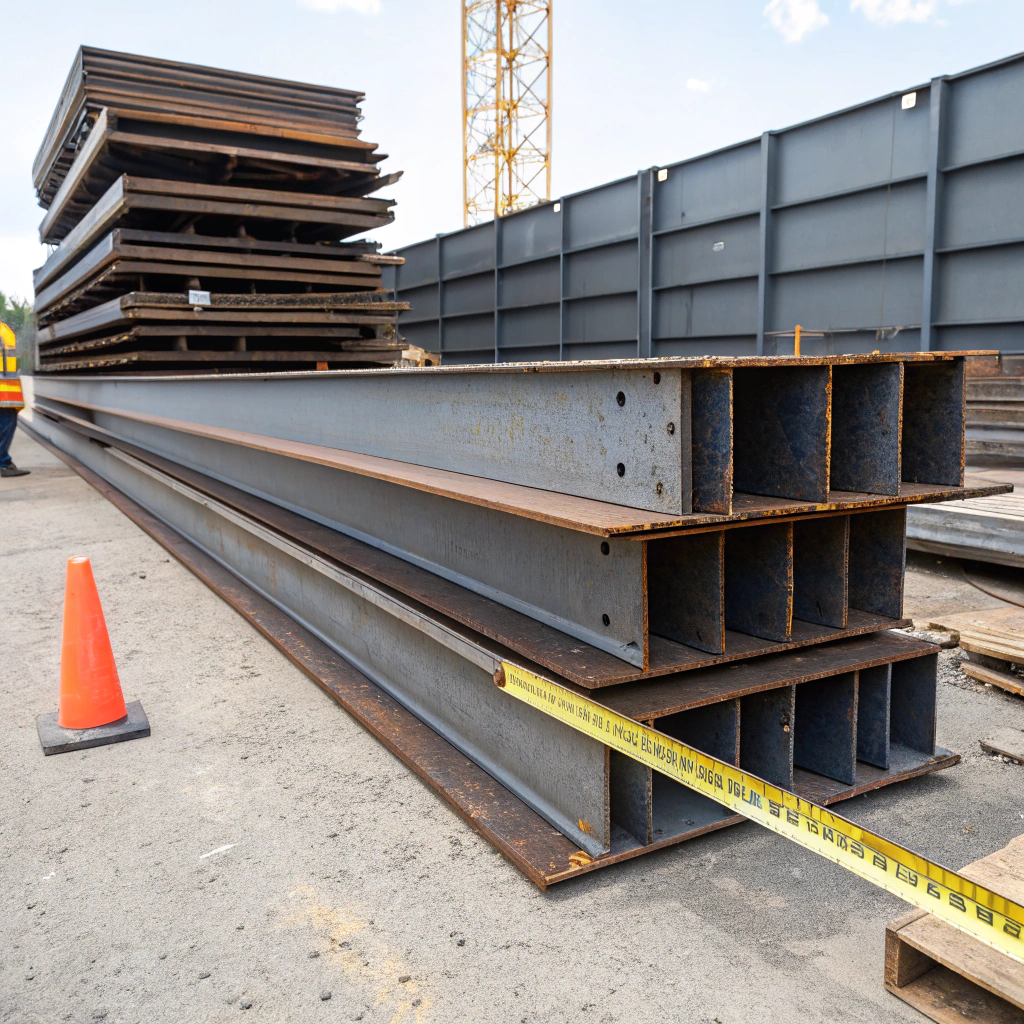
Understanding Bearing Bar Dimensions
The load‑carrying capacity of bar grating is governed primarily by four geometric parameters:
- Bearing bar depth – the vertical dimension that resists bending.
- Bearing bar thickness – the material’s resistance to shear.
- Bar spacing – distance between adjacent bearing bars.
- Span (support distance) – length of the grating between supports.
Each factor interacts with the others, and the NAAMM MBG‑531 standard provides a clear methodology for calculating the allowable load.
How Depth and Thickness Influence Strength
- Depth: Increasing the depth of the bearing bar dramatically raises its moment of inertia, allowing the grating to support higher point loads without excessive deflection.
- Thickness: A thicker bar raises the section modulus, improving resistance to shear and bending stresses.
When both depth and thickness are increased proportionally, the grating’s load capacity can more than double compared with a baseline 12 mm × 5 mm bar.
The Role of Bar Spacing and Span
- Bar spacing: Wider spacing reduces the number of load‑transfer points, decreasing overall stiffness. For a given load, tighter spacing distributes forces more evenly across the grating.
- Span: Longer spans increase bending moments on each bearing bar. According to MBG‑531, the allowable load varies inversely with the square of the span length.
Example: A 1 m span with 25 mm spacing will support roughly 30 % more load than a 1.5 m span with the same spacing, assuming identical bar dimensions.
Practical Guidance for Designers
- Start with the required load and select a bearing‑bar depth that meets the MBG‑531 moment‑capacity chart.
- Adjust thickness to satisfy shear‑stress limits, especially for heavy point loads.
- Reduce spacing if the design calls for higher stiffness or if the grating will experience dynamic loading.
- Limit span where possible; add intermediate supports to keep spans within the recommended range.
By balancing these parameters, engineers can optimize bar grating for safety, performance, and cost‑effectiveness while staying compliant with NAAMM MBG‑531.