How to Choose Open Area for Perforated and Expanded Metal
Understanding Open Area Percentage
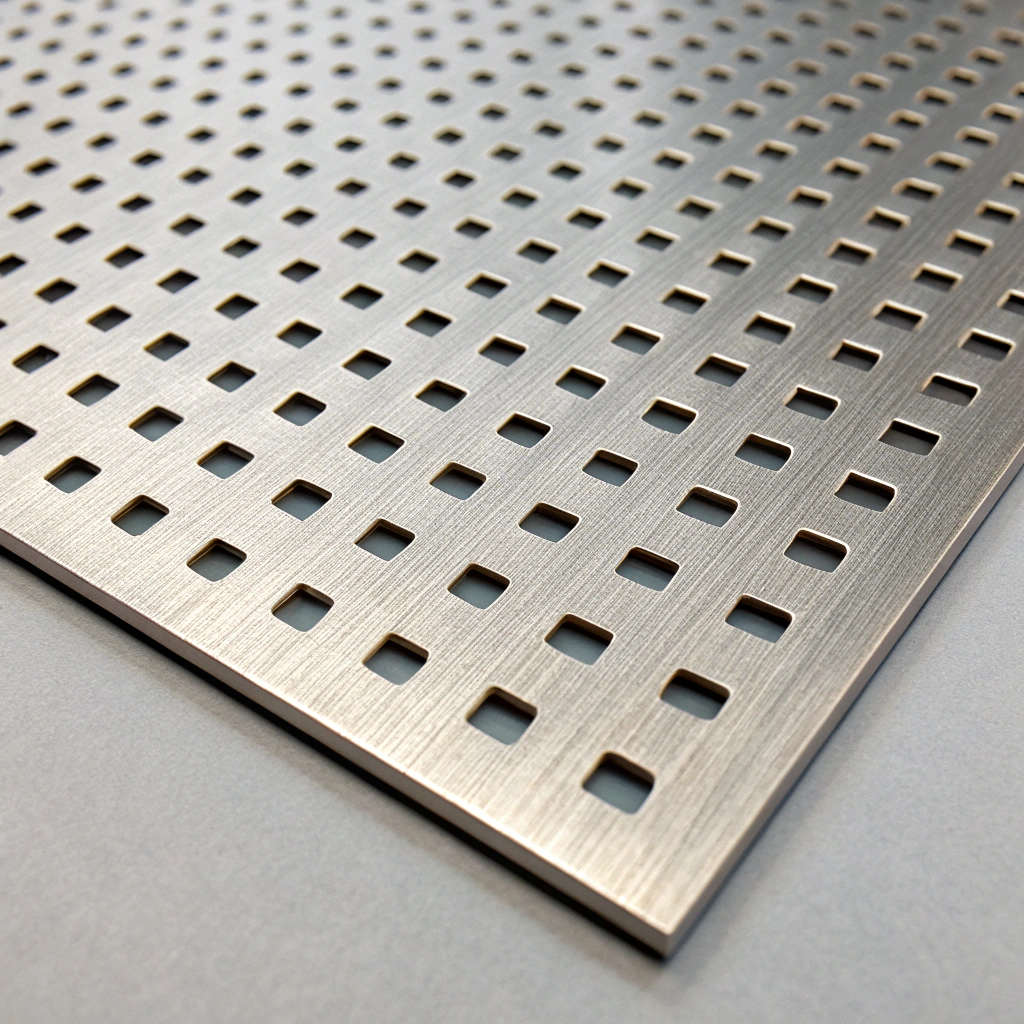
The open area of perforated or expanded metal is the ratio of void space to total sheet area, expressed as a percentage. This single figure governs four critical performance factors:
- Airflow performance – higher open area allows more air to pass, reducing pressure drop.
- Light transmission – larger openings let more daylight through, useful for architectural facades.
- Visibility – open area determines how clearly objects can be seen through the panel.
- Structural strength – as open area increases, the remaining metal web thins, lowering load‑bearing capacity.
Balancing these variables is the key to a successful specification.
Steps to Choose the Right Open Area
- Define the primary function – Is the panel mainly for ventilation, lighting, sightlines, or load support?
- Calculate required flow or illumination – Use CFD or lighting software to estimate the minimum open area needed for the desired airflow (CFM) or lux level.
- Assess load requirements – Refer to our load tables; for structural applications keep open area below 40 % to maintain adequate stiffness.
- Select a compatible pattern – Diamond, round, slotted, or custom shapes affect both aesthetics and strength.
- Validate with a prototype – Request a sample quote from Mutual Metal; we can provide a physical mock‑up to confirm performance before full‑scale production.
Practical Tips
- For high‑speed ventilation (e.g., industrial exhaust), aim for 50–70 % open area with a robust pattern such as hexagonal expanded metal.
- For architectural shading where light diffusion is desired, 30–45 % open area with round perforations offers a pleasant balance.
- When visibility is critical (e.g., safety grates), keep openings uniform and limit open area to 20–35 % to preserve structural integrity.
By systematically evaluating airflow, light, visibility, and strength, engineers can specify the optimal open area for any perforated or expanded metal application, ensuring performance, safety, and cost‑effectiveness.
Related guides and product pages
- How to Calculate Perforated Metal Open Area: formulas and worked examples.
- How to Choose Hole Size for Perforated Metal
- How to Choose Perforated Metal and How to Choose Expanded Metal
- Engineering & Calculations: open area and weight calculators.
- Perforated Metal and Expanded Metal