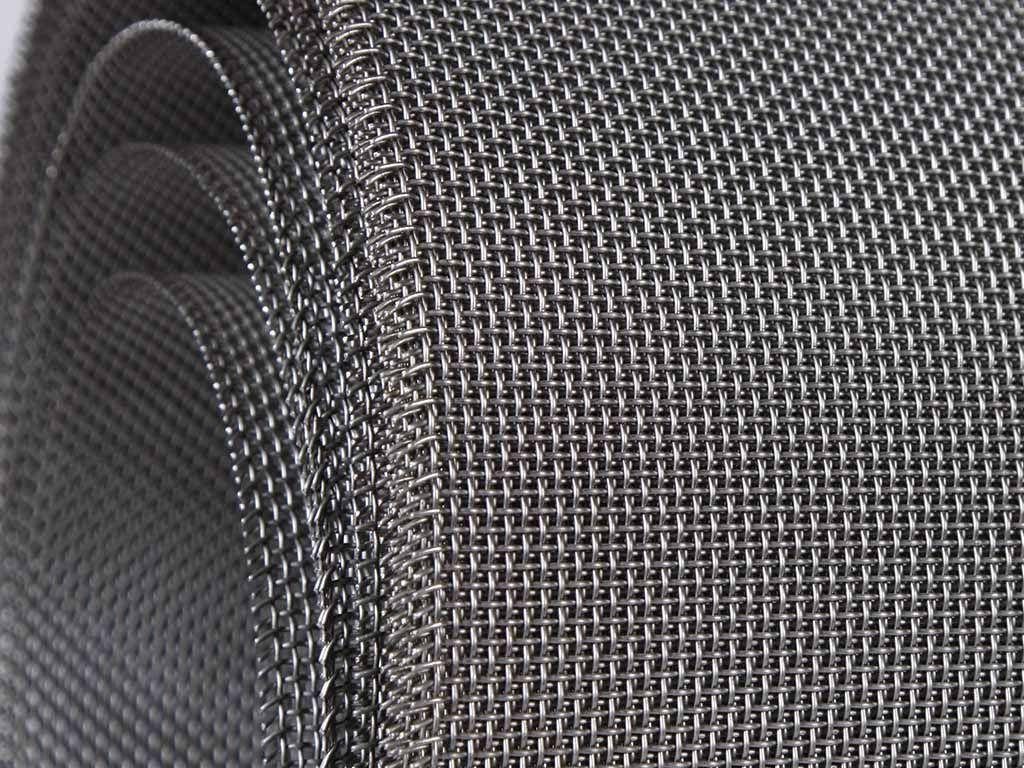
Wire mesh—seemingly simple, yet critically complex—is a foundational component in countless industrial, architectural, and filtration applications. From sieving fine powders in pharmaceutical production to reinforcing concrete in construction, the performance of wire mesh hinges on a nuanced understanding of its physical and mechanical properties. Whether you’re an engineer, designer, or procurement specialist, selecting the right mesh isn’t just about opening size—it’s about aligning material, weave, and structural characteristics with your specific operational demands.
In this article, we’ll explore the key properties of wire mesh and how they influence performance, reliability, and longevity in real-world applications.
1. Material Composition: The Foundation of Performance
The choice of material sets the baseline for corrosion resistance, strength, temperature tolerance, and compatibility with process media.
- Stainless Steel (e.g., 304, 316): Offers excellent corrosion resistance, high strength, and hygiene—ideal for food processing, chemical filtration, and medical devices.
- Carbon Steel: Economical and strong but prone to rust; often galvanized for outdoor or structural uses.
- Nickel Alloys (e.g., Inconel, Monel): Used in extreme environments like high-temperature furnaces or aggressive chemical reactors.
- Copper & Brass: Chosen for electrical conductivity, antimicrobial properties, or decorative applications.
Tip: Always consider the chemical compatibility between your process fluid or environment and the mesh material. A small oversight here can lead to rapid degradation and system failure.
2. Weave Type: Structure Dictates Function
The way wires are interlaced—known as the weave type—directly affects openness, strength, and flexibility.
- Plain Weave: The most common. Each warp wire passes alternately over and under weft wires. Offers stability and fine filtration but limited open area.
- Twill Weave: Warp wires pass over two and under two weft wires, creating a diagonal pattern. Higher flexibility and strength, suitable for heavier-duty applications.
- Dutch Weave: Uses fine weft wires and coarse warp wires, tightly packed for high filtration efficiency (e.g., in oil or fuel filters).
- Reverse Dutch Weave: The opposite configuration—coarse weft, fine warp—optimized for high-pressure filtration with controlled porosity.
Insight: A Dutch weave may offer superior filtration, but it’s less flexible and harder to form into curved surfaces than a plain weave. Match the weave to both your filtration needs and installation geometry.
3. Mesh Count and Opening Size: Precision in Filtration
Mesh count (number of openings per linear inch) and aperture size determine what particles are retained or passed.
- Higher mesh counts = smaller openings = finer filtration.
- However, finer meshes can clog more easily and reduce flow rates.
Always pair mesh count with wire diameter—thicker wires increase durability but reduce open area, potentially lowering throughput.
Rule of Thumb: For critical filtration, use standardized testing (e.g., ASTM E11) to validate opening size consistency across the mesh batch.
4. Open Area Percentage: Balancing Flow and Retention
The open area—the percentage of the mesh surface that is empty space—directly impacts fluid or air flow rates.
- A mesh with 50% open area allows twice the flow of one with 25%, assuming identical pressure conditions.
- However, higher open area often comes at the cost of reduced mechanical strength.
Calculate open area using:
Application Note: In ventilation or acoustic panels, maximizing open area improves performance without compromising structural integrity if support framing is adequate.
5. Mechanical Properties: Strength, Flexibility, and Durability
Under operational stress—vibration, pressure differentials, or thermal cycling—mesh must maintain integrity.
- Tensile Strength: Critical in screening or reinforcement roles.
- Fatigue Resistance: Vital in vibrating screens or dynamic filtration systems.
- Formability: Determines how well the mesh can be bent or shaped without cracking (e.g., for custom enclosures or curved sieves).
Annealed (softened) wire mesh offers greater flexibility; hard-drawn wire provides higher strength but is more brittle.
6. Surface Finish and Coatings: The Final Layer of Protection
Even the best base material can benefit from surface enhancements:
- Electropolishing: Smoothes stainless steel surfaces, improving cleanability and corrosion resistance—essential in sanitary applications.
- Galvanization: Zinc coating protects carbon steel in outdoor or corrosive environments.
- PTFE (Teflon) Coating: Adds non-stick properties and chemical inertness for food or chemical handling.
Conclusion: Optimize, Don’t Compromise
Selecting wire mesh isn’t a one-size-fits-all decision. Optimal performance emerges from a holistic evaluation of material, weave, geometry, and environmental conditions. Cutting corners on specification may save upfront costs but often leads to premature failure, downtime, or safety risks.
Collaborate with experienced mesh suppliers who can provide test data, samples, and application engineering support. When you understand the interplay of these properties, you don’t just choose a mesh—you engineer a solution.
Ready to refine your selection process?
Consider requesting a performance simulation or lab-scale test with your target media before full-scale implementation. In the world of wire mesh, the right choice is woven from knowledge, not guesswork.