Two-bar raised pattern plate for heavy-duty safety
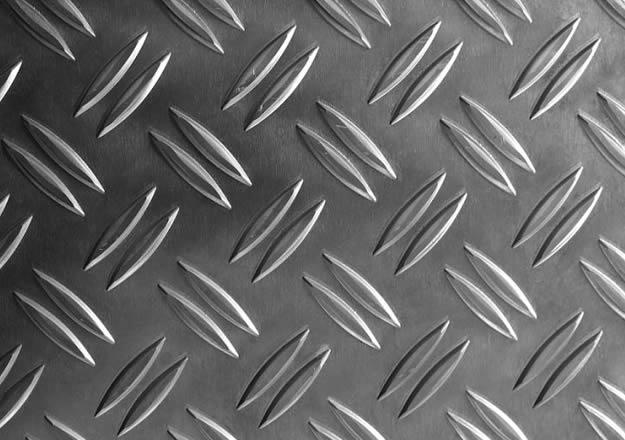
Two parallel raised ribs per repeat cycle rolled into carbon steel, 304/316 stainless steel, or aluminum plate for multi-directional grip.
Carbon steel, 304 & 316 stainless, 5052-H32 / 6061-T6 aluminum
Reference standards include GB/T 33974, ASTM A786/A786M, ASTM B632/B632M, DIN 59220, and base steel EN 10025-2; applicable standard and tolerances are confirmed per project and producing factory.
Engineering specifications
Product tolerances1.25 mm to 2.0 mm raised rib elevation above base surface
4.76 mm up to 12.7 mm thick heavy industrial plate
Also available in 60" widths and custom cut-to-length blanks
Engineered high-friction profile preserving self-drainage
Common structural applications
Stair tread nosing
Slip prevention at critical impact edges on indoor and outdoor metal stairs.
Walkway flooring
Drainage-ready elevated catwalks, mezzanines, and industrial platforms.
Truck bed liners
Impact resistance and cargo traction for commercial utility vehicles.
Loading ramps
High axle-load capacity for pallet jacks and heavy forklift transit.
Two-bar checkered plate specifications
Dimensional parameters, gauge selections, standard alloys, and surface treatments for heavy industrial flooring and access ways.
| Parameter | Value | Metric or reference | Notes |
|---|---|---|---|
Thickness & Gauge RangeMetric & Imperial | 14 Ga to 1/2 in (1.98 mm - 12.7 mm) | Light duty 14-12 Ga; Standard 1/8-1/4 in; Heavy 5/16-1/2 in | Base plate thickness measured before pattern rolling; tolerances are confirmed for each project and producing factory. |
Available MaterialsStandard Alloys | Carbon Steel, Stainless Steel, Aluminum | A36/Q235B/S235JR (comparable); 304/316 SS; 6061-T6/3003-H22 | Mill-tested structural metals engineered for slip-resistant decking, steps, and machinery flooring. Carbon steel grades are comparable, not identical. |
Two-Bar Pattern GeometryAnti-Skid Profile | 0.8 mm - 1.6 mm lug height | 35 mm x 35 mm center-to-center pitch array | Paired parallel raised lugs oriented perpendicular to adjacent pairs for omnidirectional slip resistance. Slip resistance confirmed per project; test methods such as DIN 51130 can be referenced. |
Sheet DimensionsStandard & Custom | 48" x 96", 48" x 120", 60" x 120" | 1000 x 2000 mm, 1250 x 2500 mm, 1500 x 3000 mm | Standard sheet sizes may be available; availability is confirmed at quotation. Tolerances are confirmed for each project and producing factory. |
Weight & Density IndexNominal Averages | 27.5 – 52.3 kg/m² (Steel 1/8 – 1/4 in) | Aluminum 1/8 in: ~9.8 kg/m² (2.01 lbs/ft²) | Total weight accounts for base plate thickness plus the volume of the two-bar raised pattern. Steel 1/8 in is ~5.63 lbs/ft²; 1/4 in is ~10.71 lbs/ft². |
Protective Surface FinishesCorrosion Defence | Hot-Dip Galvanized, Mill & Pickled, Primers | ASTM A123 / ISO 1461 / GB/T 13912 (85 µm typical) | Surface treatments engineered for chemical washdown, atmospheric exposure, and severe industrial wear. Zinc phosphate shop primer, powder coating, or passivated stainless available. |
Base plate thickness measured before pattern rolling; tolerances are confirmed for each project and producing factory.
Mill-tested structural metals engineered for slip-resistant decking, steps, and machinery flooring. Carbon steel grades are comparable, not identical.
Paired parallel raised lugs oriented perpendicular to adjacent pairs for omnidirectional slip resistance. Slip resistance confirmed per project; test methods such as DIN 51130 can be referenced.
Standard sheet sizes may be available; availability is confirmed at quotation. Tolerances are confirmed for each project and producing factory.
Total weight accounts for base plate thickness plus the volume of the two-bar raised pattern. Steel 1/8 in is ~5.63 lbs/ft²; 1/4 in is ~10.71 lbs/ft².
Surface treatments engineered for chemical washdown, atmospheric exposure, and severe industrial wear. Zinc phosphate shop primer, powder coating, or passivated stainless available.
Processing options can be coordinated through selected in-house production or partner factories, subject to project requirements and confirmation.
Applicable standards
Listed as reference standards only, never certificates held by MutualMetal. The applicable standard, material grade, and documentation are confirmed per product and project.
Two-bar pattern designations, sheet thicknesses, and tolerances differ between GB/T 33974, ASTM A786, and DIN 59220; specific pattern dimensions, thickness, and tolerances are confirmed per project and producing factory.
Product standards
- GB/T 33974Hot-rolled checkered steel plate and strip
- ASTM A786/A786MRolled steel floor plates
- ASTM B632/B632MAluminum-alloy rolled tread plate
No direct product standard in this series; floor plate patterns and materials reference ASTM standards (e.g. ASTM A786), with walking surface safety referencing ANSI/ASSP A1264.2.
No dedicated ISO checkered plate product standard; ISO 14122-2 applies as an application safety reference for walkway surfaces.
- DIN 59220Floor plates, rolled — dimensions
Technical standards
- GB/T 700Carbon structural steel
- GB/T 13912Hot-dip galvanized coatings on metal products — technical requirements and test methods
- ASTM A36Structural carbon steel, bar and plate material
- ASTM A240/A240MChromium and chromium-nickel stainless steel plate, sheet, and strip
- ASTM B209/B209MAluminum and aluminum-alloy flat sheet, coiled sheet, and plate
- ASTM A123/A123MZinc (hot-dip galvanized) coatings on iron and steel products
- ISO 1461Hot-dip galvanized coatings on fabricated iron and steel articles — specifications and test methods
- EN 10025-2Non-alloy structural steels — technical delivery conditions
Need custom specifications or standard sheet sizes?
Send your pattern dimensions, plate gauges, and volume requirements for a project quote.
Receive itemized pricing per specification. Lead times are confirmed per project.
Drawings and specifications reviewed by our team.
Material test reports can be requested at quotation where available.
Submit project specs
Share your material type, sheet dimensions, pattern codes, or rough sketches to get an itemized quote.