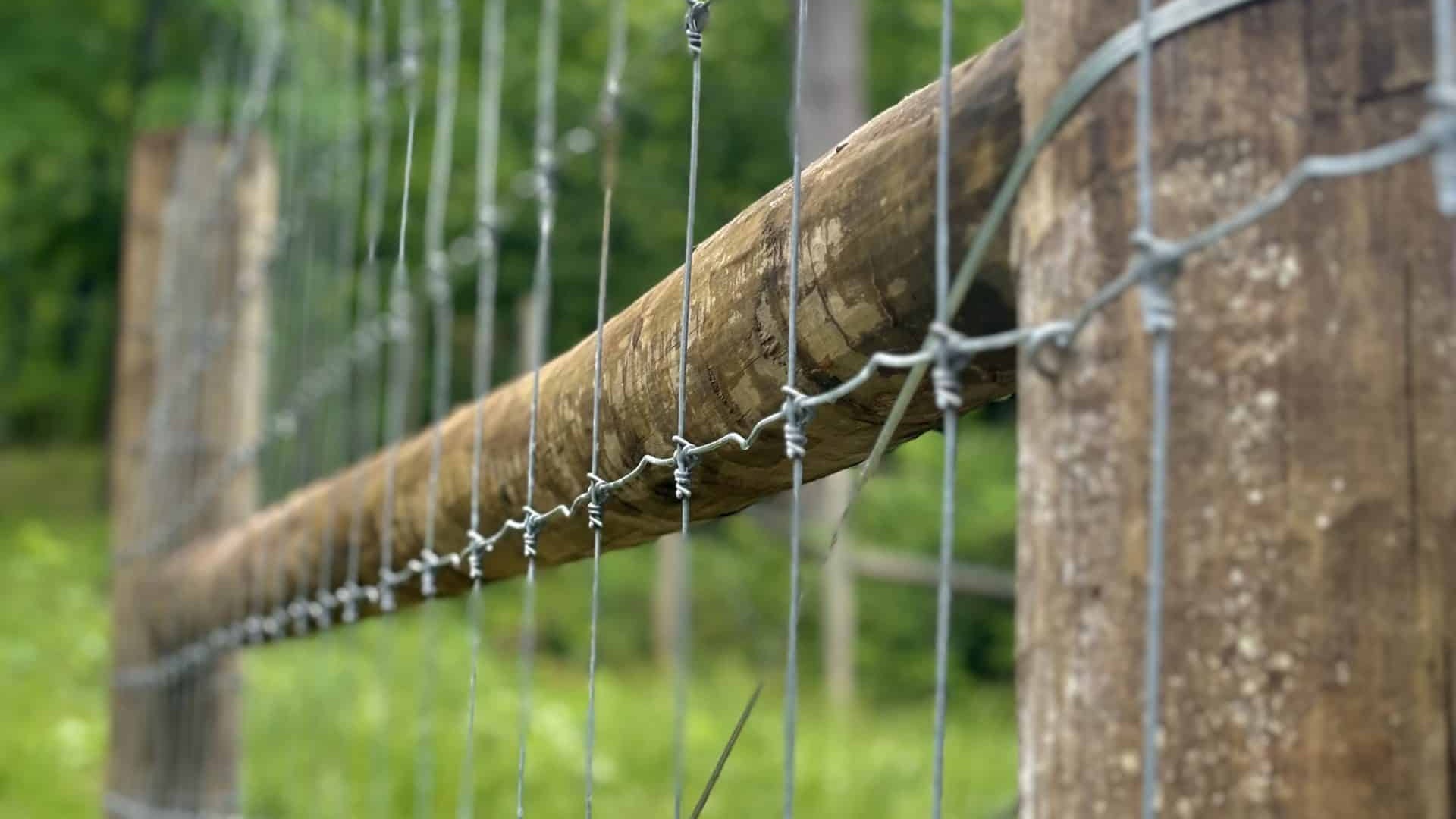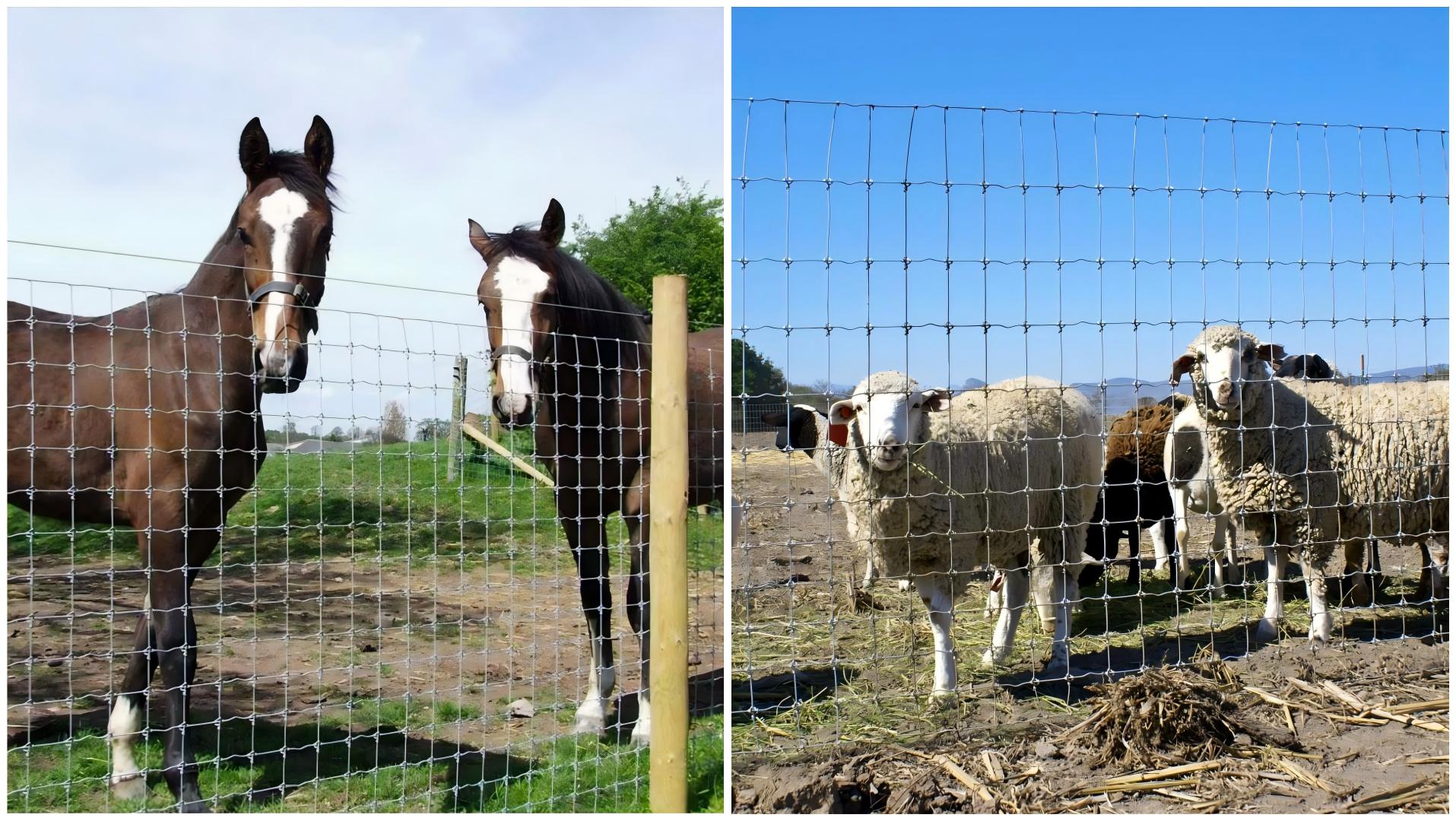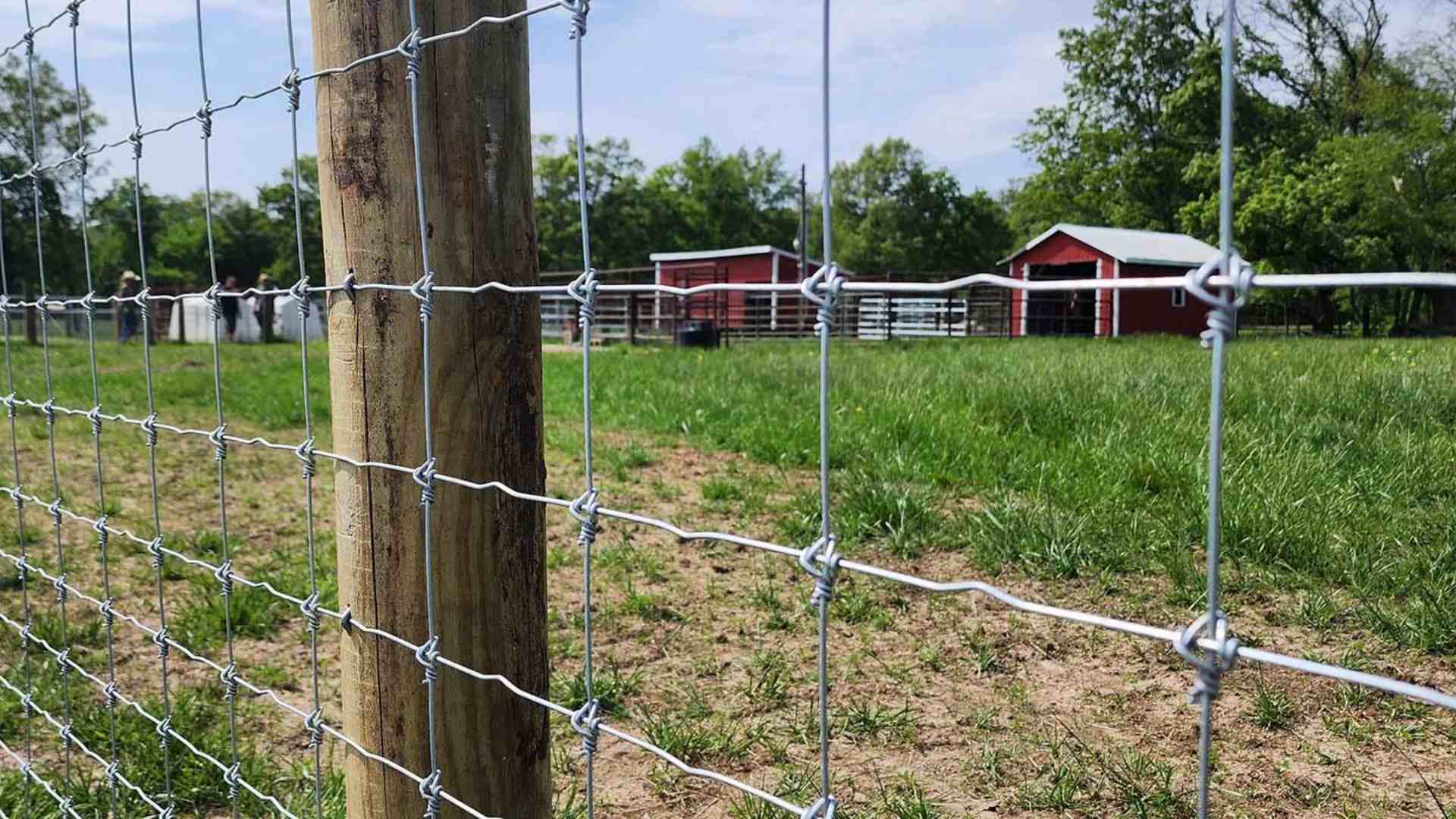
Choosing woven wire fence starts with the application—not with a product name.
Different projects may require different combinations of:
- Mesh opening
- Fence height
- Wire diameter
- Tensile strength
- Knot construction
- Coating
- Posts and bracing
- Installation method
A suitable specification should therefore be selected as a complete fence system, rather than by comparing one dimension at a time.
The Woven Wire Fence Selection Process
A practical selection process can be simplified into eight steps:
Application → User / Animal → Mesh → Height → Wire → Knot → Coating → Installation
Each step narrows the appropriate product configuration.
1. Define the Application
Start by identifying what the fence needs to do.
Common applications include:
Livestock Containment
For:
- Cattle
- Sheep
- Goats
- Horses
- Swine
- Mixed livestock
The priority is usually reliable containment and long-term structural performance.
Wildlife Exclusion
Used to prevent animals such as deer from entering:
- Orchards
- Vineyards
- Crops
- Nurseries
- Protected areas
Height, mesh configuration, ground clearance, and gates become particularly important.
Wildlife Containment
Some managed wildlife applications require a secure perimeter fence.
The specification can differ substantially from conventional livestock fencing.
General Agricultural Fencing
Woven wire may also be used for property boundaries, agricultural facilities, and other rural applications.
Define the application before selecting the fence.
2. Identify the Animal or Target Species
If the fence is intended for animals, identify the species first.
| Application | Primary Considerations |
|---|---|
| Cattle | Strength, height, structural stability |
| Sheep | Mesh opening and containment |
| Goats | Mesh, height, climbing behavior |
| Horses | Safety, visibility, entanglement risk |
| Swine | Lower-section containment and pushing |
| Deer | Height, mesh, exclusion |
| Mixed livestock | Most demanding containment requirement |
Animal size and behavior can be as important as physical size.
Young animals, horned animals, climbing animals, and animals that push against fencing may require different configurations.
3. Select the Mesh Opening
Mesh opening controls how animals interact with the fence.
Consider:
- Head size
- Hoof size
- Animal age
- Animal behavior
- Escape risk
- Predator pressure
- Wildlife passage requirements
Smaller Mesh
Generally provides greater containment for smaller animals.
Potential advantages:
- Reduced openings
- Better containment
- Less opportunity for animals to pass through
Potential trade-offs:
- More wire
- Higher material weight
- Potentially higher cost
Larger Mesh
May be suitable for larger animals or applications where smaller openings are unnecessary.
The goal is not to select the smallest available mesh.
Select an opening appropriate for the animal and application.
4. Select Fence Height
Fence height should be considered together with mesh opening.
Factors include:
- Animal species
- Animal behavior
- Jumping or climbing ability
- Terrain
- Fence purpose
- Local requirements
For livestock applications, typical fence heights can vary significantly by species and project.
Wildlife exclusion may require substantially taller fencing.
Published specifications should be treated as application- and location-specific requirements, not universal rules.
5. Select the Wire
Wire specification includes more than diameter.
Consider:
Wire Diameter
Affects:
- Material quantity
- Handling
- Physical strength
- Fence weight
Tensile Strength
Particularly important for high-tensile fence systems.
Wire Configuration
Evaluate:
- Line wire
- Stay wire
- Horizontal wire arrangement
- Vertical stay spacing
The final specification should describe the wire construction clearly.
6. Choose the Knot Construction
Two major woven wire constructions are:
Hinge Joint
The vertical and horizontal wires are mechanically wrapped around each other.
Common characteristics include:
- Flexible joint
- Traditional agricultural use
- Wide range of configurations
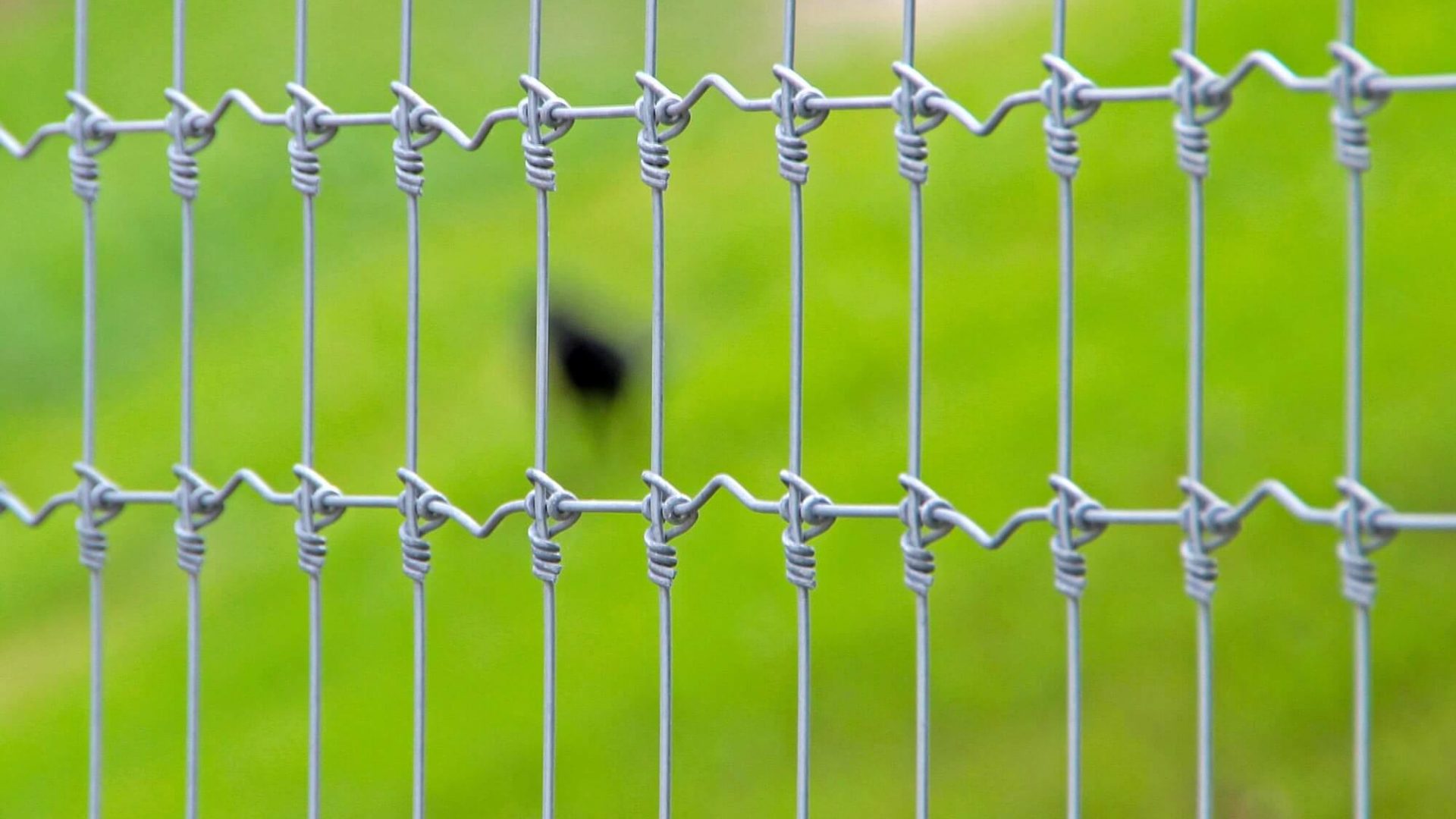
Fixed Knot
The vertical stay wire is secured to the horizontal line wire with a separate locking wrap.
Common characteristics include:
- Stronger resistance to wire movement
- Consistent mesh geometry
- Common use in high-tensile and demanding applications
The choice should depend on:
- Application
- Animal pressure
- Wire strength
- Fence height
- Terrain
- Installation system
Fixed knot is not automatically better than hinge joint.
It is a different construction intended for different performance requirements.
7. Select the Coating
For outdoor woven wire fence, corrosion protection is an important consideration.
Common options include:
Galvanized
Provides zinc-based corrosion protection and is widely used in agricultural fencing.
Zinc-Aluminum Alloy Coated
Zinc-aluminum coatings can provide enhanced corrosion resistance compared with conventional zinc coatings, depending on the coating system and coating level.
The selection should consider:
- Climate
- Moisture
- Soil exposure
- Agricultural environment
- Expected service conditions
- Required service life
Do not evaluate coating type separately from the coating specification.
8. Consider Installation Conditions
A fence specification cannot be separated completely from the installation environment.
Evaluate:
- Soil conditions
- Terrain
- Fence length
- Corners
- Gates
- End assemblies
- Line posts
- Bracing
- Tensioning requirements
A high-performance fence fabric can still perform poorly if the supporting structure is inadequate.
Conventional vs High-Tensile Woven Wire
One of the most important decisions is whether the application requires conventional or high-tensile construction.
| Factor | Conventional Woven Wire | High-Tensile Woven Wire |
|---|---|---|
| Wire strength | Generally lower | Higher |
| Fence weight | Often higher | Can be lower for equivalent strength |
| Tensioning | Less demanding | Requires controlled tension |
| Installation | Generally simpler | Requires appropriate components |
| Long runs | Suitable | Particularly advantageous |
| Structural requirements | Moderate | More demanding |
High-tensile systems require appropriate posts, bracing, connections, and tensioning.
Therefore:
High tensile is a complete fence system, not simply a stronger wire.
Fixed Knot vs Hinge Joint
| Factor | Fixed Knot | Hinge Joint |
|---|---|---|
| Joint construction | Locked knot | Wrapped hinge |
| Wire movement | More restricted | More flexible |
| Mesh stability | High | Flexible |
| High-tensile applications | Common | Also available depending on product |
| Agricultural use | Common | Very common |
| Selection priority | Application-specific | Application-specific |
Neither construction should be selected solely based on the knot name.
Evaluate the complete fence specification.
How the Factors Work Together
The most important point is that these variables are interconnected.
For example:
Small livestock
→ smaller mesh opening
→ appropriate fence height
→ suitable wire strength
→ appropriate knot
→ suitable posts and fastening
While:
Deer exclusion
→ greater fence height
→ appropriate mesh
→ secure lower edge
→ suitable wire construction
→ carefully designed gates and corners
The final product should therefore be treated as a system configuration.
Woven Wire Fence Selection Checklist
Before requesting a quotation or technical specification, define:
Application
☐ Livestock
☐ Wildlife exclusion
☐ Wildlife containment
☐ Agricultural / property boundary
☐ Other
Animal / Target Species
☐ Cattle
☐ Sheep
☐ Goats
☐ Horses
☐ Swine
☐ Deer / wildlife
☐ Mixed
Fence Construction
☐ Hinge joint
☐ Fixed knot
☐ Conventional
☐ High tensile
Mesh
☐ Fence height
☐ Mesh opening
☐ Horizontal wire spacing
☐ Vertical stay spacing
Wire
☐ Wire diameter
☐ Tensile strength
☐ Wire material
Coating
☐ Galvanized
☐ Zinc-aluminum alloy coated
☐ Other specified coating
Installation
☐ Post type
☐ Post spacing
☐ Corner / end assemblies
☐ Bracing
☐ Gates
☐ Terrain / soil conditions
Common Buying Mistakes
1. Buying by Height Only
Two fences with the same height can have completely different performance.
2. Comparing Wire Diameter Only
Diameter does not fully describe tensile performance or fence construction.
3. Ignoring Mesh Opening
A strong fence with an unsuitable opening may still fail its containment objective.
4. Treating All Fixed Knot Fences as the Same
Fixed knot describes the joint construction, not the complete specification.
5. Treating All Galvanized Fences as the Same
Coating level and coating specification also matter.
6. Choosing the Cheapest Specification
Initial price does not represent the entire cost of ownership.
Consider:
Material + Installation + Maintenance + Expected Service Life
7. Ignoring the Installation System
Posts, braces, fasteners, gates, and tensioning components are part of the finished fence system.
How to Compare Woven Wire Fence Quotations
When comparing suppliers, request the complete specification rather than only a product name.
At minimum, compare:
| Specification | Supplier A | Supplier B |
|---|---|---|
| Fence height | ||
| Mesh opening | ||
| Wire diameter | ||
| Wire tensile strength | ||
| Knot type | ||
| Horizontal wire count | ||
| Vertical stay spacing | ||
| Coating type | ||
| Coating level | ||
| Roll length | ||
| Weight / roll | ||
| Packaging | ||
| Installation accessories |
This makes quotations much easier to compare on a like-for-like basis.
When to Choose Fixed Knot
Consider fixed knot when the project requires:
- High-tensile construction
- Stable mesh geometry
- Long fence runs
- Higher resistance to animal pressure
- Demanding agricultural or wildlife applications
But confirm the complete system specification before making the decision.
When to Choose Hinge Joint
Hinge joint can be appropriate when:
- Flexible fence behavior is preferred
- Conventional agricultural fencing is suitable
- The application does not require a high-tensile fixed-knot system
- Cost and installation simplicity are important considerations
Again, application determines the appropriate choice.
Final Selection Framework
A simple way to approach woven wire fence selection is:
APPLICATION ↓TARGET ANIMAL / SPECIES ↓MESH OPENING ↓FENCE HEIGHT ↓WIRE DIAMETER & STRENGTH ↓KNOT CONSTRUCTION ↓COATING ↓POSTS & BRACING ↓INSTALLATION CONDITIONS ↓FINAL SPECIFICATION
This sequence helps avoid selecting a fence based on one specification while overlooking the rest of the system.
Conclusion
Choosing woven wire fence is not simply a matter of selecting a height, gauge, or mesh opening.
A suitable specification should balance:
Application + Animal + Mesh + Height + Wire + Knot + Coating + Installation
The right fence is therefore not necessarily the heaviest, strongest, or most expensive option.
It is the configuration that provides the required performance for the intended application and environment.
For commercial projects, the final specification should be confirmed against project requirements, applicable standards, local conditions, and the supplier’s technical documentation.
FAQ
What is the best woven wire fence?
There is no universal “best” woven wire fence. The appropriate product depends on the application, animal or target species, mesh, height, wire construction, coating, and installation conditions.
Is fixed knot better than hinge joint?
Not necessarily. Fixed knot and hinge joint are different constructions with different performance characteristics. The appropriate choice depends on the application.
Is high-tensile woven wire better?
High-tensile woven wire can provide advantages in demanding applications and long fence runs, but it requires appropriate installation and supporting components.
What mesh opening should I choose?
The mesh opening should be selected according to the animal, age, containment requirements, and application. Smaller animals generally require closer containment.
How do I compare woven wire fence suppliers?
Request the complete technical specification, including height, mesh opening, wire diameter, tensile strength, knot construction, coating, roll length, and weight. Compare equivalent specifications rather than product names alone.