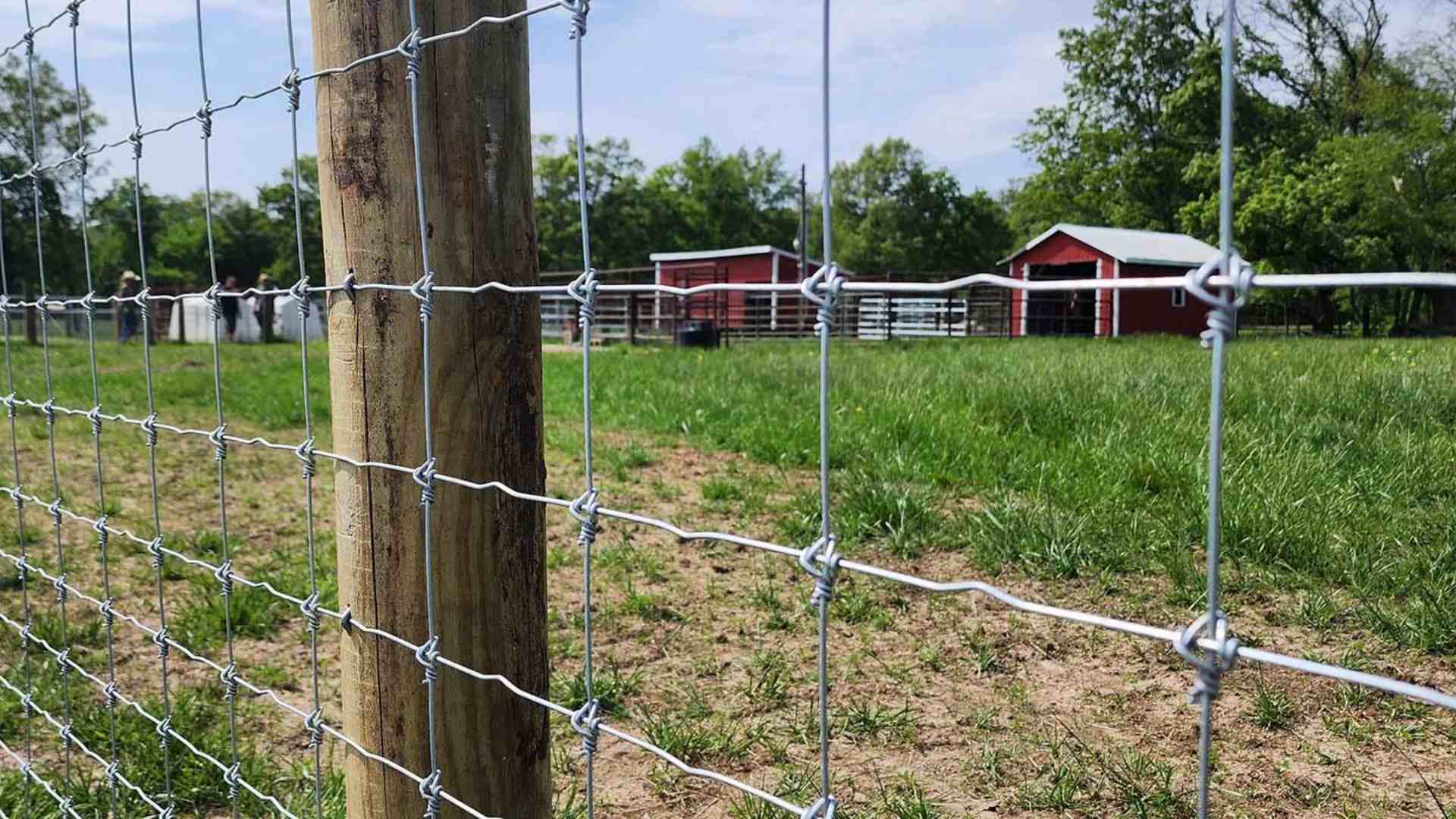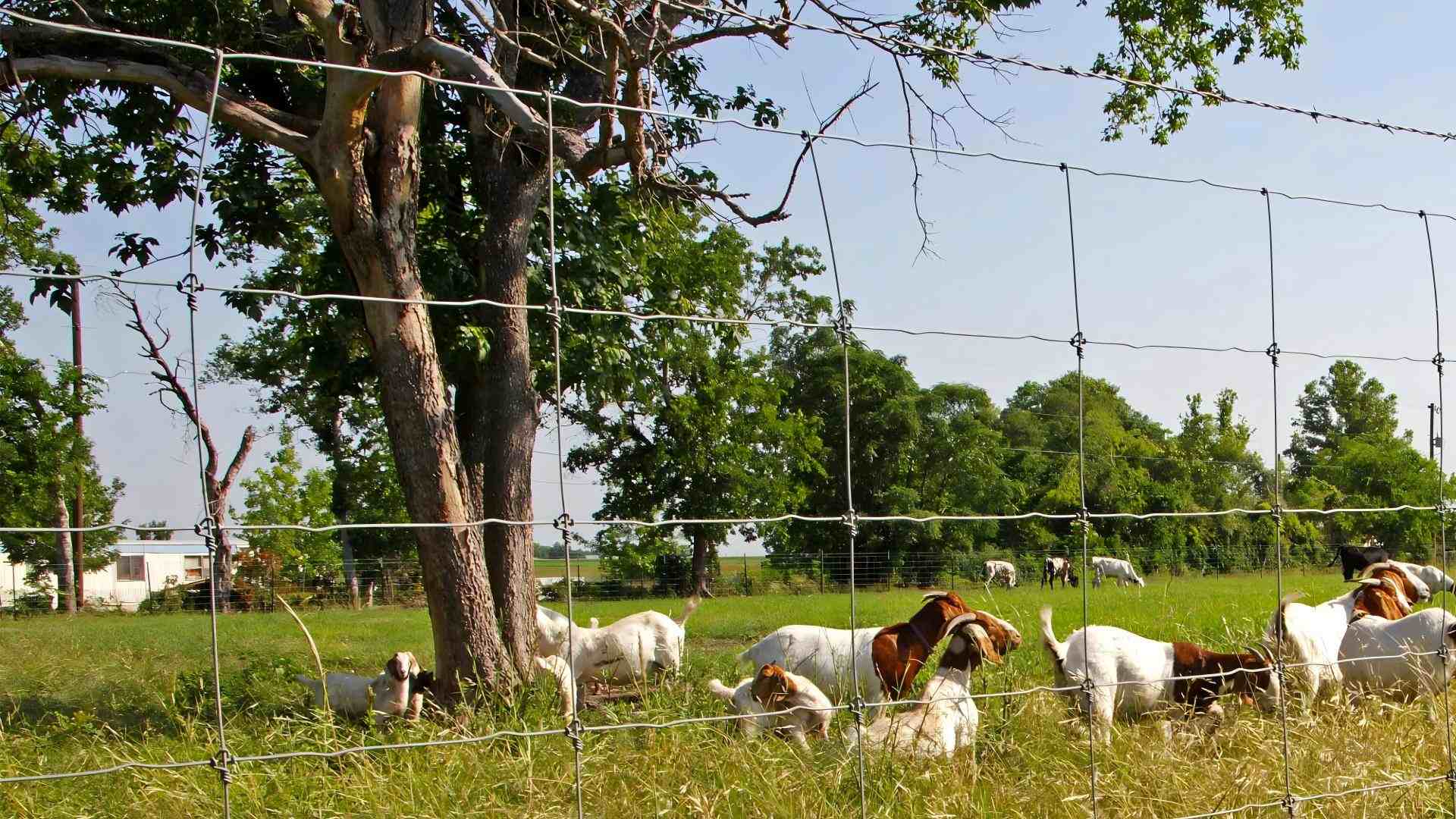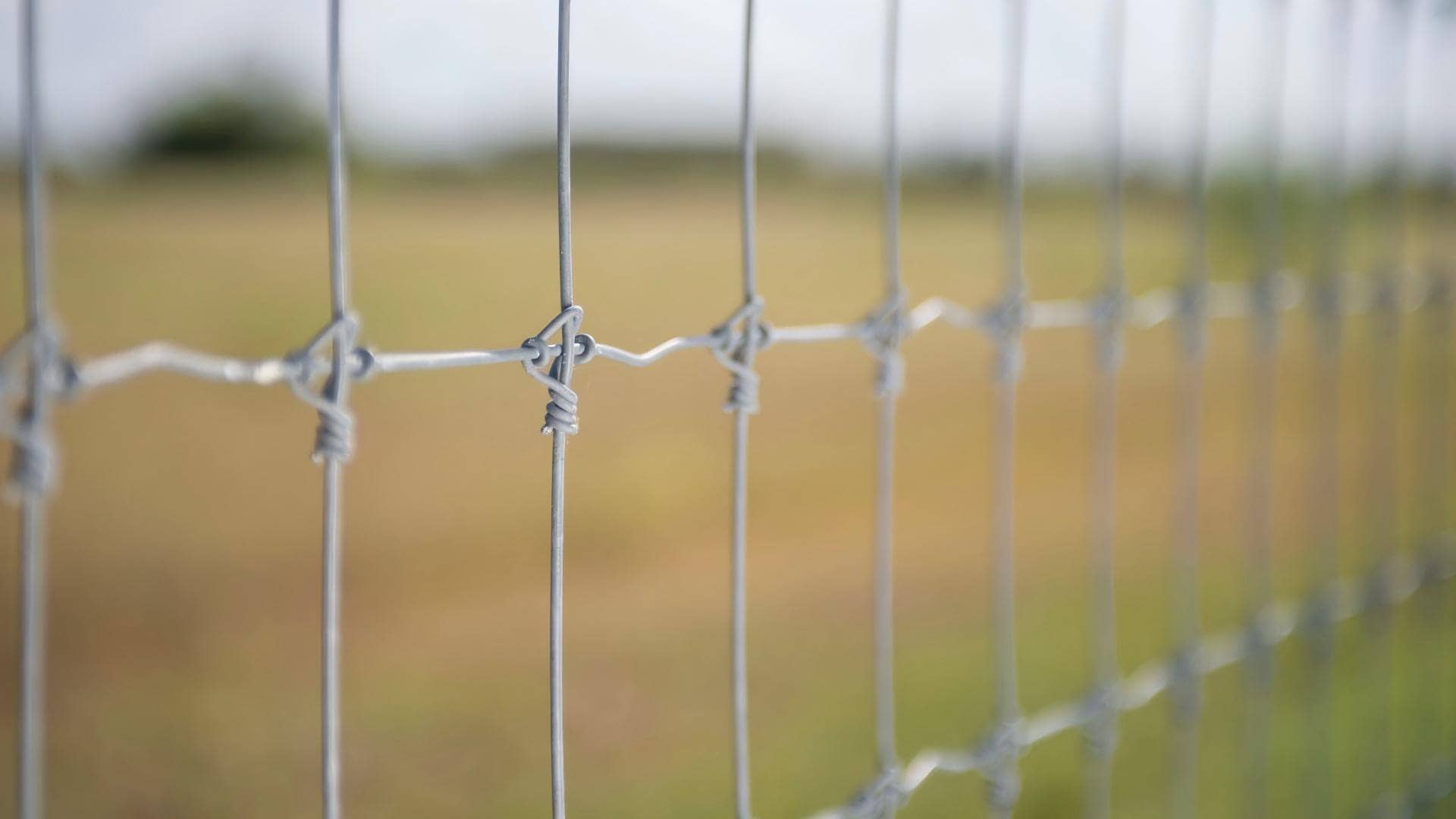

Woven wire fence is widely used for livestock containment because it provides a continuous physical barrier while allowing different mesh configurations for different animals and applications.
However, there is no single woven wire fence specification suitable for every livestock application.
Cattle, sheep, goats, horses, and swine have different sizes, behaviors, and containment requirements. Fence selection should therefore consider the animal together with mesh opening, fence height, wire strength, knot construction, and installation conditions.
Technical Snapshot
| Selection Factor | Why It Matters |
|---|---|
| Animal type | Determines containment and safety requirements |
| Mesh opening | Controls animal interaction with the fence |
| Fence height | Affects containment and jumping/climbing |
| Wire strength | Determines resistance to loading |
| Knot construction | Influences how the mesh behaves under pressure |
| Coating | Affects corrosion resistance |
| Terrain | Influences installation and tension |
| Posts & bracing | Support the fence system |
1. Start With the Animal
The first question should not be:
What size fence do I need?
It should be:
What animal am I trying to contain?
Animal size, age, behavior, and interaction with the fence can all affect the appropriate configuration.
For example, a fence suitable for adult cattle may not be appropriate for goats or young livestock because smaller animals can interact with larger mesh openings differently. Extension guidance similarly emphasizes that species, size, and age influence fencing requirements.
2. Cattle
Cattle generally place substantial horizontal pressure on fences through movement, leaning, and contact.
For cattle applications, consider:
- Adequate overall fence height
- Appropriate wire strength
- Strong end and corner assemblies
- Suitable mesh configuration
- Durable coating
- Proper tensioning
Woven wire can be combined with other fence components where additional control is required.
The exact height and wire configuration should follow the project specification. For example, NRCS state-level specifications may establish minimum heights and other requirements that differ by animal and location.
Typical priority:
Structural strength + suitable height + reliable installation
3. Sheep
Sheep are smaller than cattle and can interact with larger mesh openings more easily.
When selecting woven wire for sheep, pay particular attention to:
- Smaller mesh openings
- Lower mesh configuration
- Fence height
- Predator pressure
- Wire spacing
NRCS guidance for woven wire fencing identifies sheep as requiring different height and spacing considerations from larger livestock.
Where predator exclusion is also important, the fence may need to be designed around both the livestock and the animals that must be excluded.
Typical priority:
Mesh containment + predator considerations
4. Goats
Goats can be particularly challenging because they tend to climb, push against, and investigate fencing.
For goats, consider:
- Smaller or appropriate mesh openings
- Secure fence height
- Strong knot construction
- Reliable corner assemblies
- Potential reinforcement or electrification
Bekaert’s livestock guidance specifically discusses smaller openings and fixed-knot woven wire for goats and sheep.
The correct mesh should also account for horned animals where applicable.
Typical priority:
Containment + mesh configuration + climbing behavior
5. Horses
Horse fencing requires additional attention to entanglement and visibility.
A fence that contains horses effectively may still be inappropriate if openings allow a hoof or leg to become trapped.
For this reason, smaller mesh configurations are often considered for horse applications. Bekaert recommends considering smaller openings for horses and notes that horse-fence height can vary depending on the application.
For high-traffic areas, visibility may also be improved by combining woven wire with other visible fence components.
Typical priority:
Containment + visibility + entanglement prevention
6. Swine
Swine interact with fencing differently from cattle, sheep, or horses.
Rooting and pushing behavior can create substantial pressure near the ground.
For swine applications, consider:
- Lower mesh configuration
- Ground clearance
- Wire strength
- Post stability
- Resistance to pushing and rooting
Woven wire can be used in some swine applications, but the fence system needs to be designed around the animals’ behavior and the site. Extension guidance notes that swine can push or lift woven wire and may require alternative or reinforced systems.
Typical priority:
Ground-level containment + structural resistance
7. Mesh Opening Is Critical
The correct mesh opening depends on the animal.
A larger opening may be acceptable for larger livestock but can create problems for smaller animals.
A smaller opening can improve containment, but it may also increase material use and fence weight.
Therefore:
Do not select mesh opening based only on the animal’s adult size.
Consider:
- Young animals
- Head and hoof dimensions
- Horns
- Animal behavior
- Predator pressure
- Required containment level
8. Fence Height Matters
Fence height should be selected together with mesh configuration.
The appropriate height depends on:
- Animal species
- Animal behavior
- Fence location
- Terrain
- Jumping or climbing behavior
- Local or project requirements
There are published specifications with different minimum heights for different livestock. For example, one NRCS woven-wire specification lists minimum total heights of 48 inches for cattle, goats, horses, and people, 42 inches for sheep, and 36 inches for swine; these figures are specific to that specification and should not be treated as universal requirements.
This distinction is important when writing technical purchasing content.
9. Wire Strength and Knot Construction
Two separate questions should be asked:
How strong is the wire?
This is related to:
- Wire diameter
- Tensile strength
- Steel properties
How are the wires connected?
This is related to:
- Fixed knot
- Hinge joint
- Other woven constructions
A high-tensile fixed-knot fence and a conventional hinge-joint fence should not be treated as equivalent simply because they have similar mesh dimensions.
For demanding livestock applications, the complete construction should be evaluated.
10. Coating Selection
Livestock fencing is normally exposed to outdoor environmental conditions for extended periods.
Coating selection should therefore consider:
- Moisture
- Humidity
- Soil conditions
- Agricultural environment
- Expected exposure
- Required service performance
Galvanized and zinc-aluminum coated wire are both options used in woven wire fencing.
As discussed in our previous guide, coating type should be evaluated together with the coating level and environmental conditions.
Livestock Fence Selection Matrix
| Application | Main Considerations | Woven Wire Priority |
|---|---|---|
| Cattle | Strength, height, structural loading | High-strength construction |
| Sheep | Smaller containment openings | Closer mesh |
| Goats | Climbing and escape behavior | Suitable small mesh + secure construction |
| Horses | Safety and visibility | Appropriate opening + visibility |
| Swine | Rooting and pushing | Strong lower section |
| Mixed livestock | Different animal sizes | Mesh + height + behavior |
This is a selection framework, not a universal specification table.
A Practical Selection Process
For a livestock project, work through the following sequence:
Step 1 — Identify the livestock
Cattle? Sheep? Goats? Horses? Swine? Mixed livestock?
Step 2 — Consider animal size and behavior
Include young animals and specific behavioral risks.
Step 3 — Determine mesh opening
Select an opening that provides the required containment and safety.
Step 4 — Determine fence height
Consider jumping, climbing, terrain, and project requirements.
Step 5 — Select wire construction
Evaluate diameter, tensile strength, and knot type.
Step 6 — Select coating
Match the coating system to the exposure environment.
Step 7 — Check installation requirements
Posts, corners, bracing, tension, and fastening must support the selected fence.
Step 8 — Confirm the complete specification
The final fence specification should describe the complete construction rather than relying on a product name such as “livestock fence.”
Common Selection Mistakes
Choosing One Fence for Every Animal
Different livestock have different containment and safety requirements.
Selecting Mesh Based Only on Adult Animals
Young animals can interact with the fence differently.
Looking Only at Wire Diameter
Diameter does not fully describe fence strength.
Treating High Tensile and Fixed Knot as the Same Specification
One describes wire properties; the other describes joint construction.
Ignoring Installation
A strong fence fabric cannot compensate for inadequate posts, corners, or bracing.
Using Generic Height Recommendations as Standards
Published dimensions can be specific to a region, project, or specification.
Conclusion
Woven wire fence can provide an effective livestock containment system when its configuration is matched to the animals and site.
The key is to evaluate the fence as a complete system:
Animal → Mesh Opening → Height → Wire → Knot → Coating → Installation
There is no universal woven wire fence specification for every livestock application.
For commercial or engineered projects, the final selection should be based on the applicable project requirements, local conditions, and manufacturer’s technical specification.
FAQ
What is the best woven wire fence for cattle?
There is no single best specification. Cattle fencing should be evaluated based on fence height, wire strength, mesh configuration, knot construction, posts, and installation conditions.
What mesh is suitable for sheep?
Sheep generally require closer mesh than larger livestock. The exact opening should consider animal size, age, containment requirements, and predator pressure.
Is woven wire fence suitable for goats?
Yes. Woven wire is commonly used for goats, but mesh configuration and fence height should account for goats’ climbing and escape behavior.
Can woven wire fence be used for horses?
Yes, but horse applications require particular attention to mesh opening, visibility, and entanglement risk.
Can one woven wire fence contain multiple livestock species?
It can, but the fence should be selected according to the most demanding containment and safety requirements of the animals being kept together.