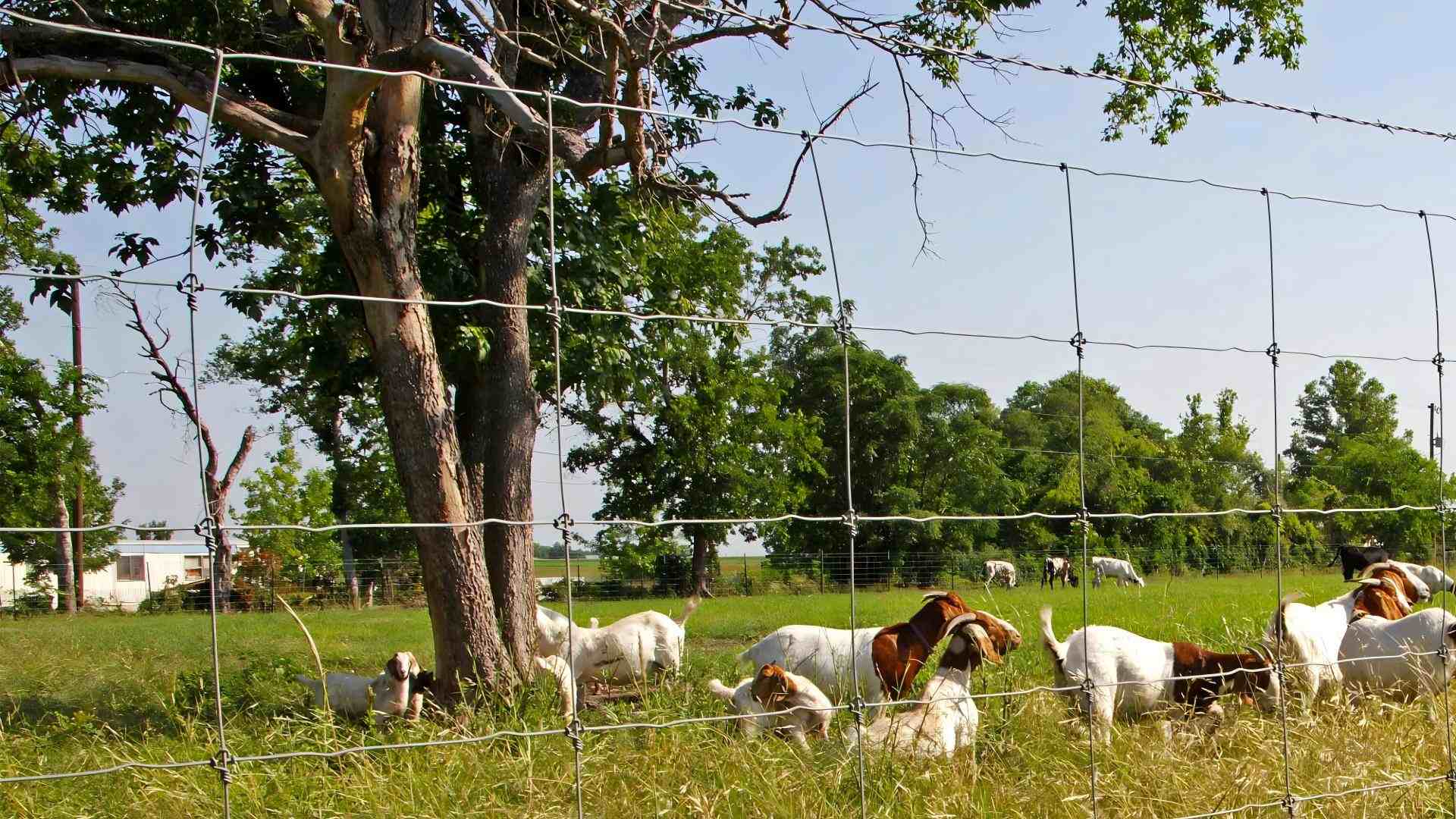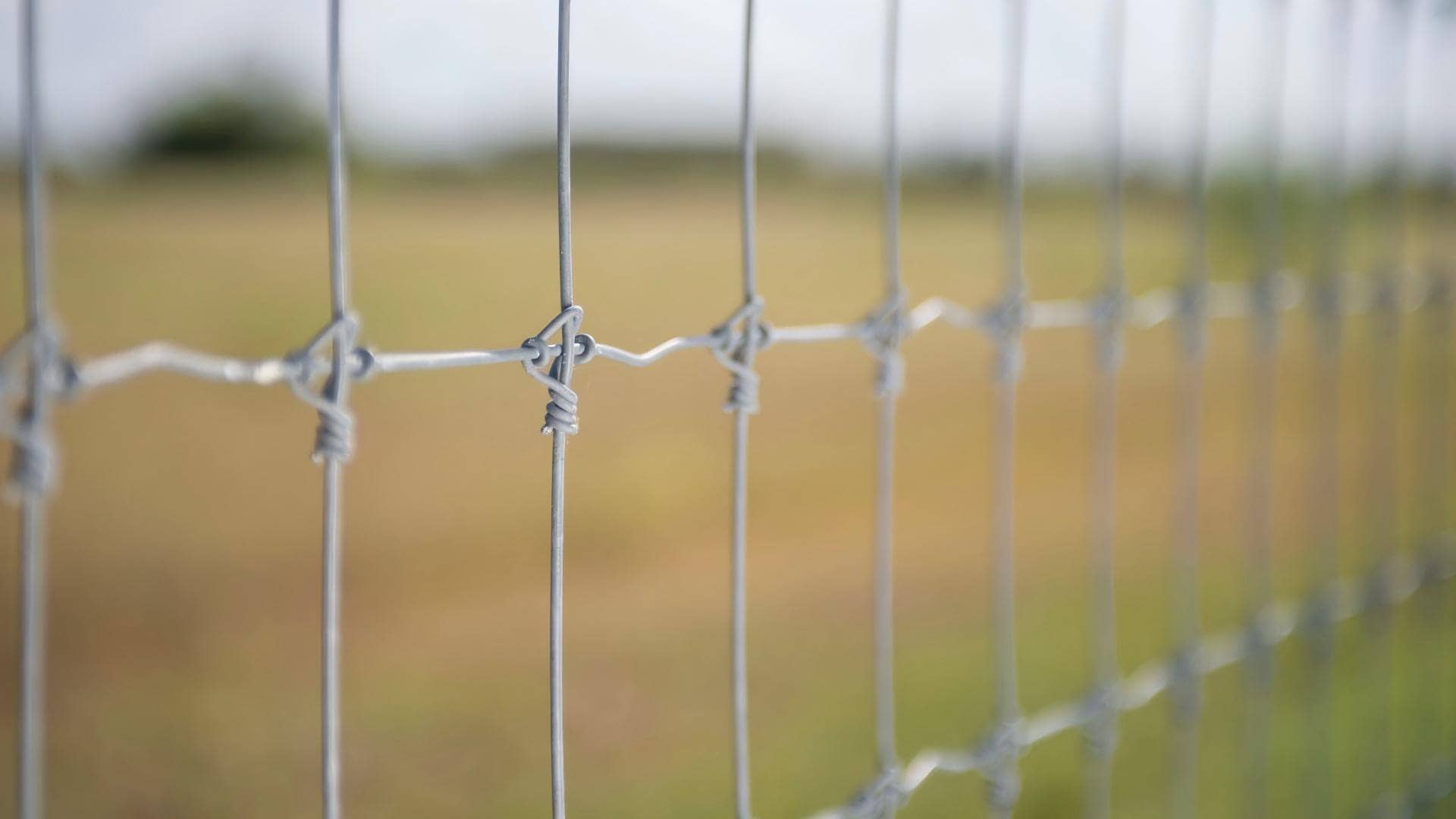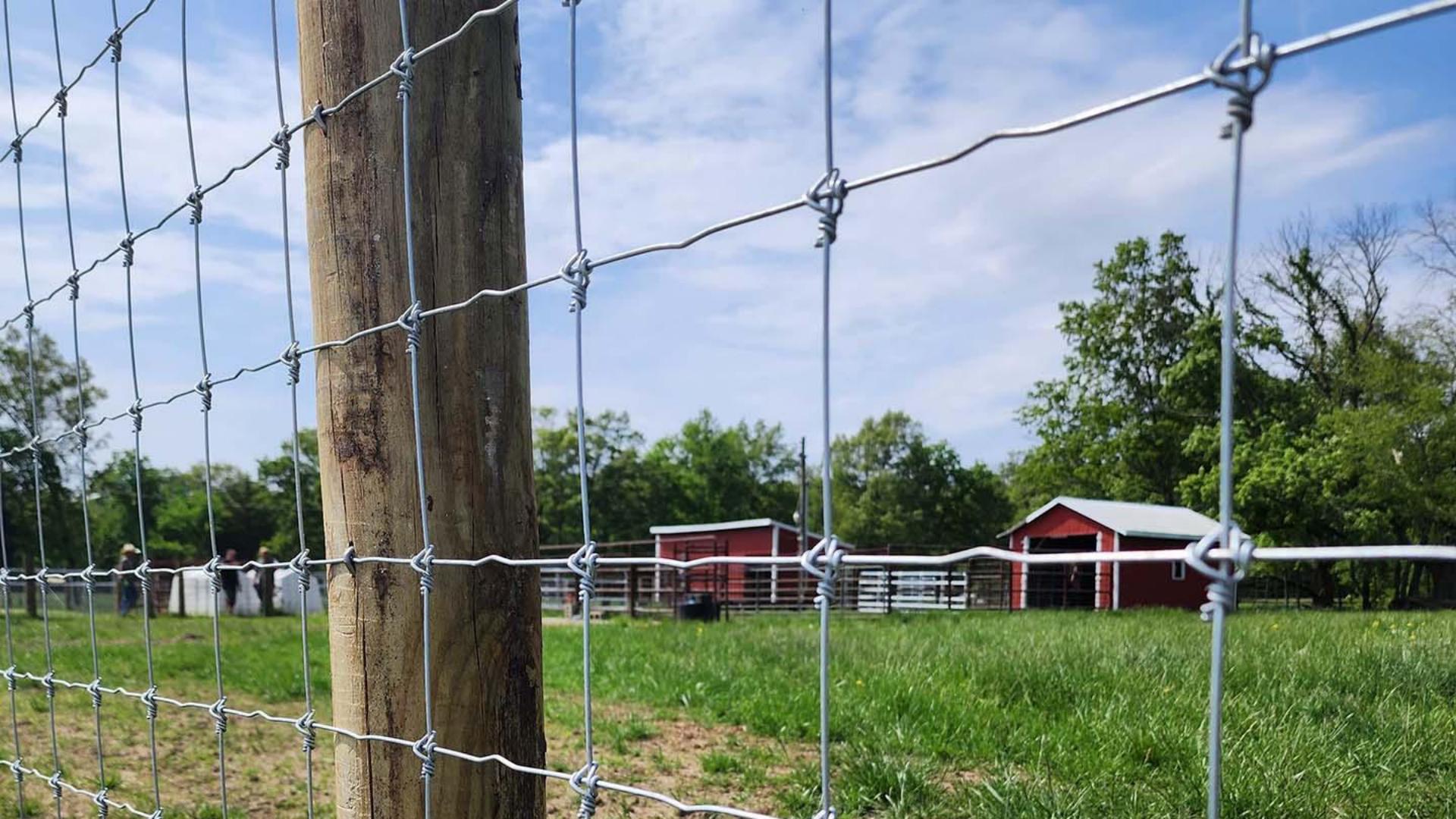
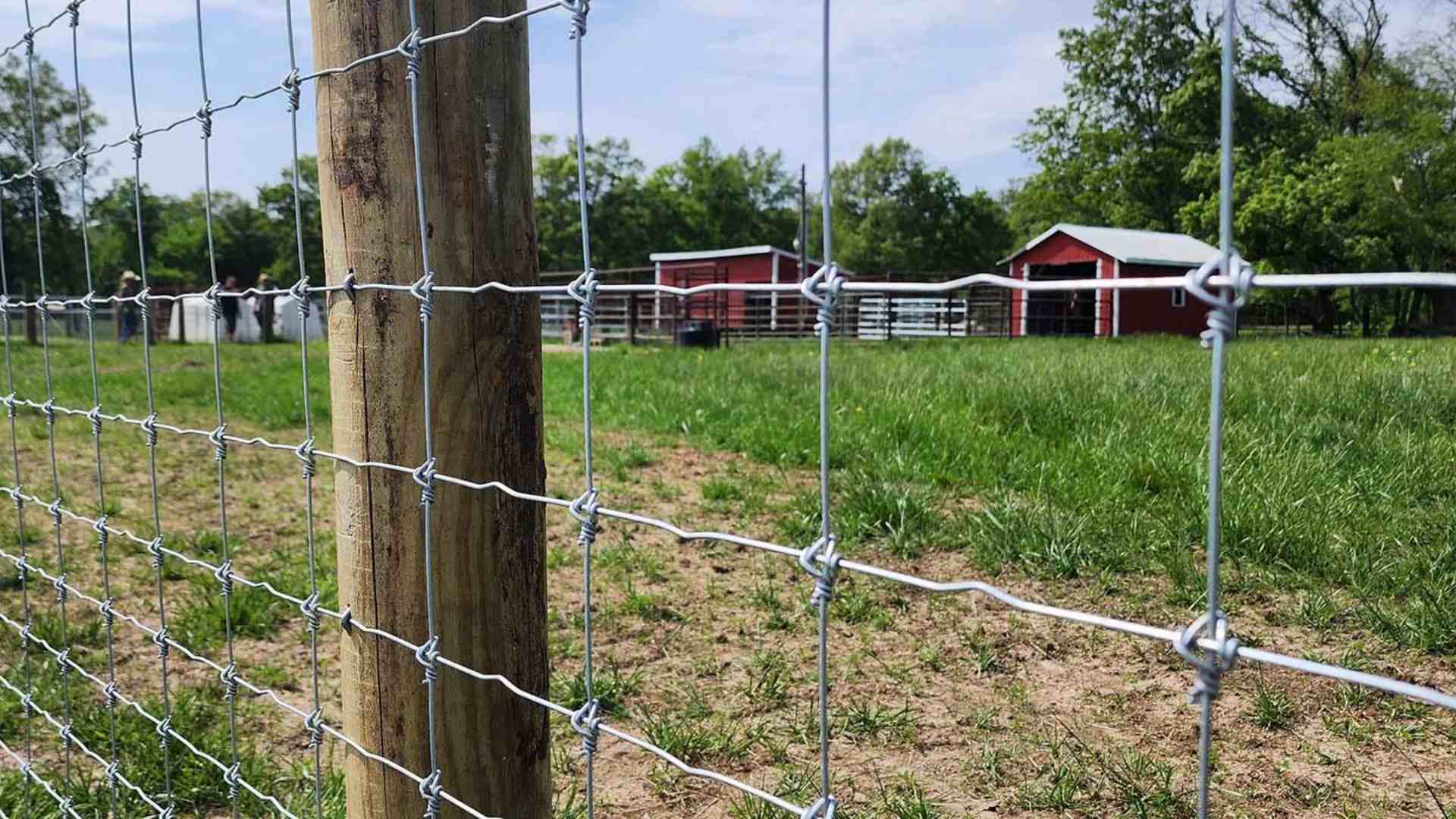
Mesh opening is one of the most important specifications of woven wire fence. It describes the space between the horizontal and vertical wires and determines how the fence interacts with livestock, wildlife, and other enclosed areas.
Mesh opening should not be evaluated independently. Fence height, wire diameter, knot construction, animal type, and installation conditions all contribute to the performance of the complete fence system.
Technical Snapshot
| Item | Overview |
|---|---|
| Mesh opening | Clear space between adjacent wires |
| Horizontal spacing | Distance between horizontal line wires |
| Vertical spacing | Distance between vertical stay wires |
| Common configuration | Smaller openings near the bottom, larger openings toward the top |
| Key considerations | Animal size, containment, terrain, fence height |
| Common applications | Livestock, agriculture, wildlife, perimeter fencing |
What Is Mesh Opening?
Mesh opening is the clear space formed between the horizontal and vertical wires of woven wire fence.
A fence specification may describe mesh using:
- Horizontal wire spacing
- Vertical wire spacing
- Mesh opening dimensions
- Number of horizontal line wires
- Fence height
For example, a specification may indicate a series of progressively larger openings from the bottom toward the top of the fence.
The exact terminology and measurement method can vary by product and specification, so the manufacturer’s technical data should be used for precise dimensions.
Why Does Mesh Opening Matter?
Mesh opening determines how easily an animal can interact with or pass through the fence.
A smaller opening can provide greater control for smaller animals and reduce the possibility of animals pushing their heads or legs through the mesh.
A larger opening can reduce material usage and provide greater visibility, but may not be suitable where smaller openings are required for containment.
The appropriate opening therefore depends on the intended application rather than simply choosing the smallest available mesh.
Variable Mesh vs Uniform Mesh
Woven wire fence is often manufactured with graduated or variable mesh openings.
The openings near the bottom are typically smaller, while the openings toward the top become larger.
This configuration can provide:
- Better control near ground level
- Efficient use of wire
- Reduced material weight
- Suitable containment for different animal sizes
Some woven wire products use relatively uniform openings instead. The choice depends on the application and product design.
Mesh Opening and Animal Size
Animal size is one of the most important considerations when selecting mesh opening.
Small Livestock
Smaller animals may require closer wire spacing to reduce the risk of passing through or becoming caught in the fence.
Large Livestock
Cattle and other large livestock generally require a fence configuration designed around their size, behavior, and pressure on the fence.
Wildlife
Wildlife fencing often requires specific mesh configurations and fence heights based on the species being contained or excluded.
Horses
Horse fencing requires particular attention to opening dimensions and fence visibility because of the risk of animals becoming entangled or injured.
The correct specification should therefore be based on the animal and application rather than a generic mesh-size recommendation.
Mesh Opening and Fence Height
Mesh opening and fence height should be considered together.
A taller fence with larger upper openings may provide a suitable balance between material use and containment.
For applications involving jumping or climbing animals, overall fence height can be as important as the opening dimensions.
For livestock containment, the lower section of the fence often requires closer spacing than the upper section.
Mesh Opening and Wire Configuration
Mesh opening is only one part of the fence construction.
Other relevant specifications include:
- Wire diameter
- Tensile strength
- Knot type
- Number of horizontal wires
- Stay-wire spacing
- Fence height
- Coating
For example, two fences may have similar mesh openings but different wire diameters and tensile strengths. Their overall performance may therefore be different.
How to Choose the Right Mesh Opening
Start with the application.
1. Identify the Animal or Function
Determine whether the fence is intended for cattle, sheep, goats, horses, wildlife, property boundaries, or another application.
2. Consider the Smallest Relevant Animal
Where several animal types share an enclosure, the mesh should be evaluated against the smallest animal that must be contained.
3. Check the Lower Mesh
The lower section is particularly important for preventing animals from pushing through or becoming caught.
4. Consider Fence Height
Mesh opening should be evaluated together with total fence height.
5. Check the Complete Specification
Review mesh configuration together with wire diameter, tensile strength, knot type, and coating.
6. Confirm Project Requirements
For commercial, infrastructure, or wildlife projects, follow the applicable project specification or engineering requirements rather than relying only on general recommendations.
Common Mesh Opening Mistakes
Choosing by Size Alone
The smallest mesh is not automatically the best solution.
Ignoring the Bottom Section
The lower mesh configuration can be particularly important for animal containment.
Ignoring Fence Height
Opening size and fence height work together.
Comparing Different Products Without Their Full Configuration
A nominal mesh size does not describe the complete fence.
Using Generic Recommendations for Specialized Applications
Wildlife, equestrian, and infrastructure fencing may have application-specific requirements.
Conclusion
Mesh opening is a fundamental woven wire fence specification that affects containment, animal interaction, and overall fence design.
The right opening depends on the animal or application, fence height, mesh configuration, wire strength, knot construction, and installation conditions.
For accurate purchasing, specify the mesh opening dimensions and complete fence configuration, rather than relying on a generic product name alone.
FAQ
What is mesh opening in woven wire fence?
Mesh opening is the clear space between the horizontal and vertical wires that form the fence mesh.
What mesh size is best for livestock?
There is no single mesh size suitable for all livestock. The appropriate configuration depends on animal size, behavior, fence height, and the specific containment requirement.
Should woven wire fence have smaller openings at the bottom?
Graduated mesh with smaller lower openings is commonly used in agricultural fencing because it can improve containment near ground level. The appropriate configuration depends on the intended application.
Is smaller mesh always better?
No. Smaller openings can improve containment for some applications but may increase wire usage, weight, and cost. The mesh should be selected according to the actual requirement.
Does mesh opening affect fence strength?
Mesh opening itself does not determine fence strength. However, mesh configuration works together with wire diameter, tensile strength, knot construction, fence height, posts, and installation to determine overall performance.