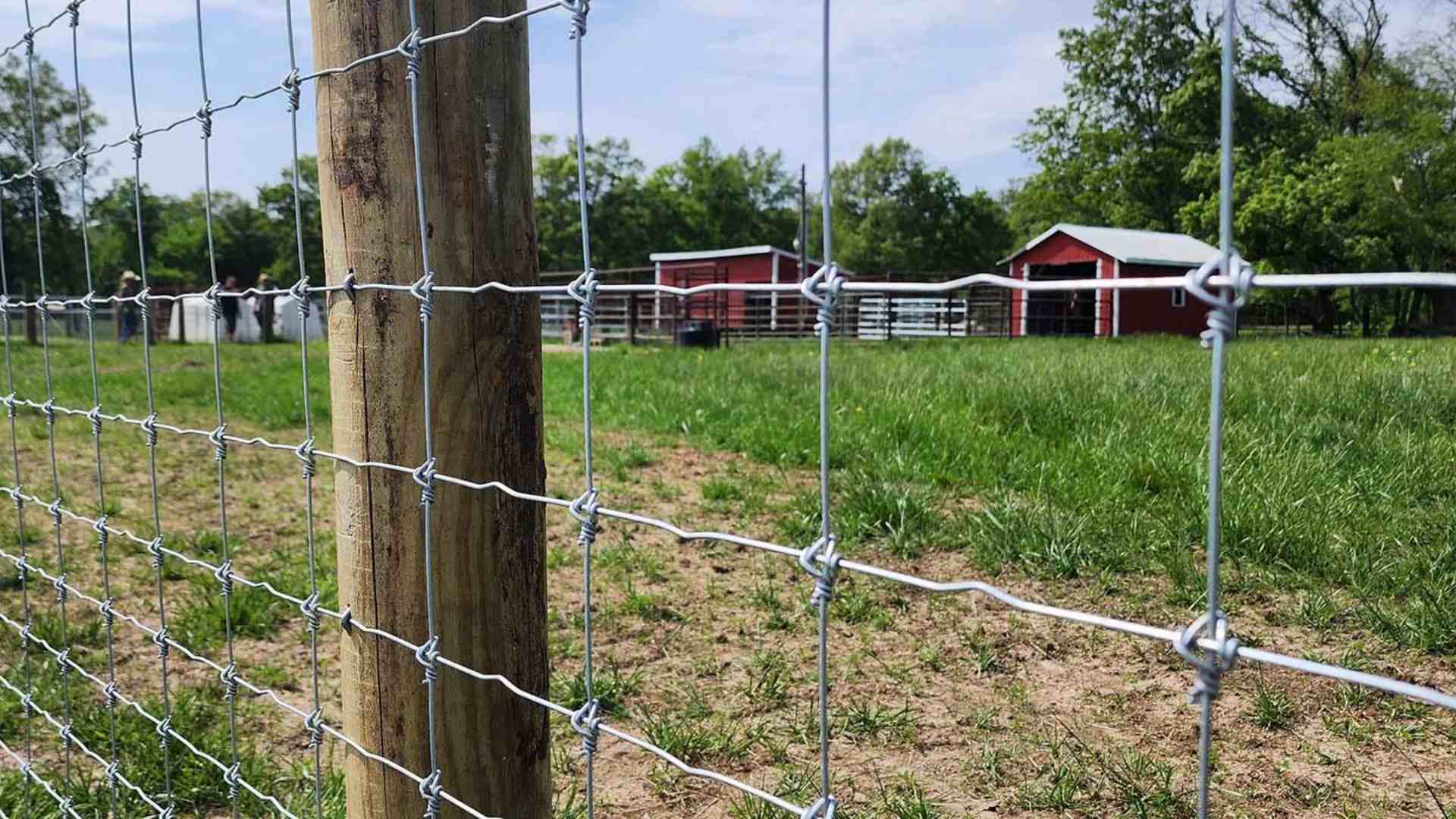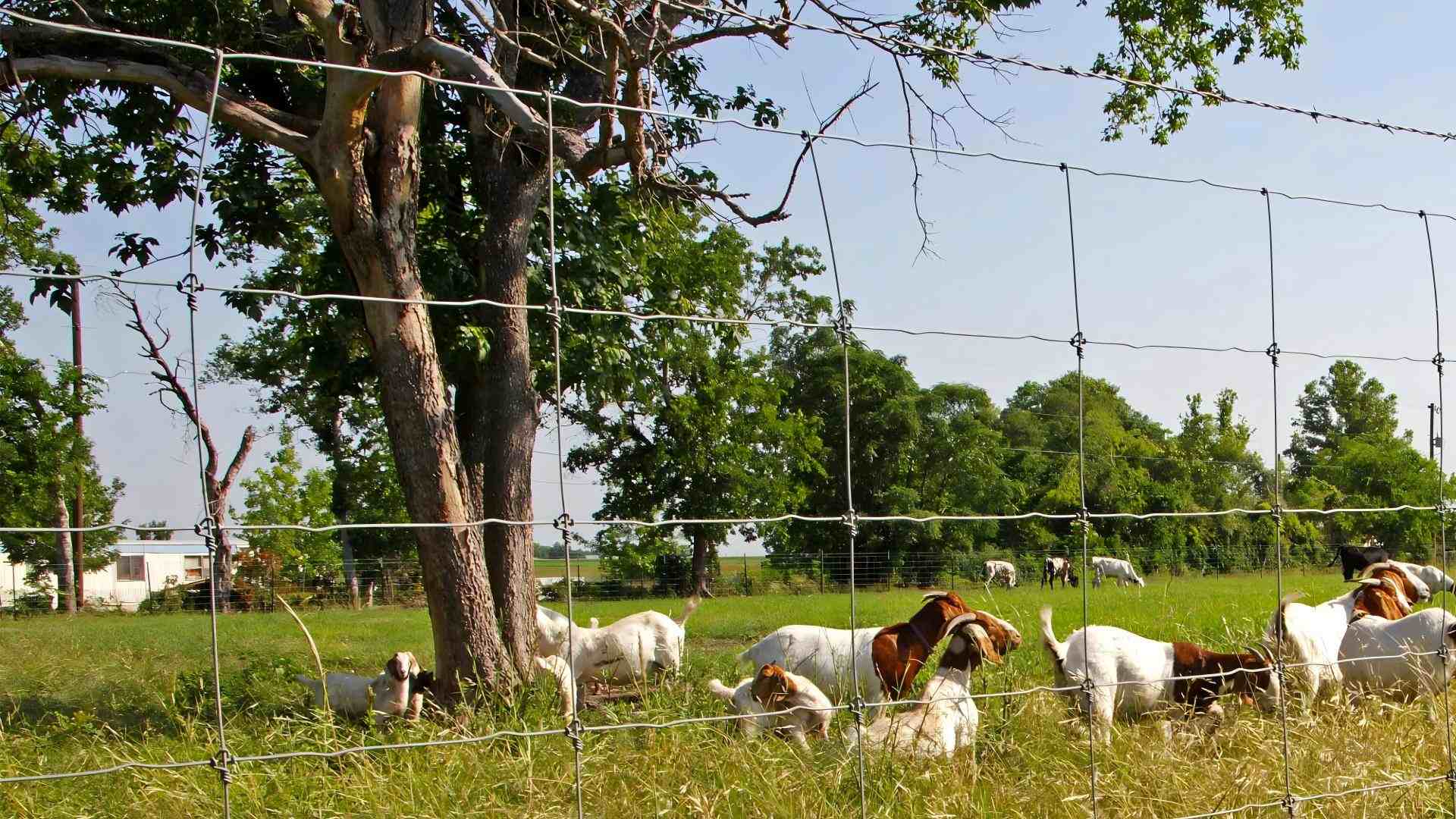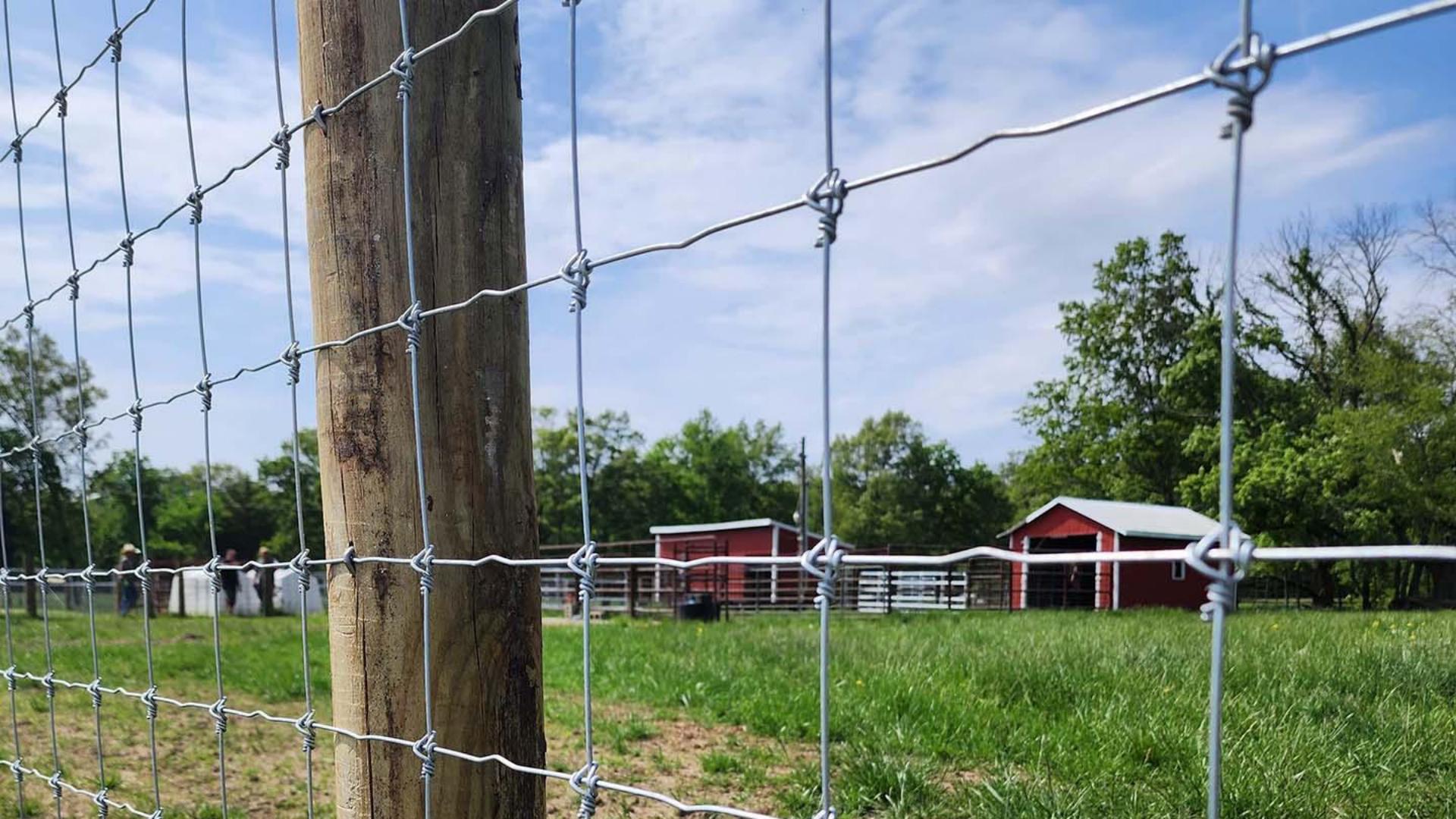
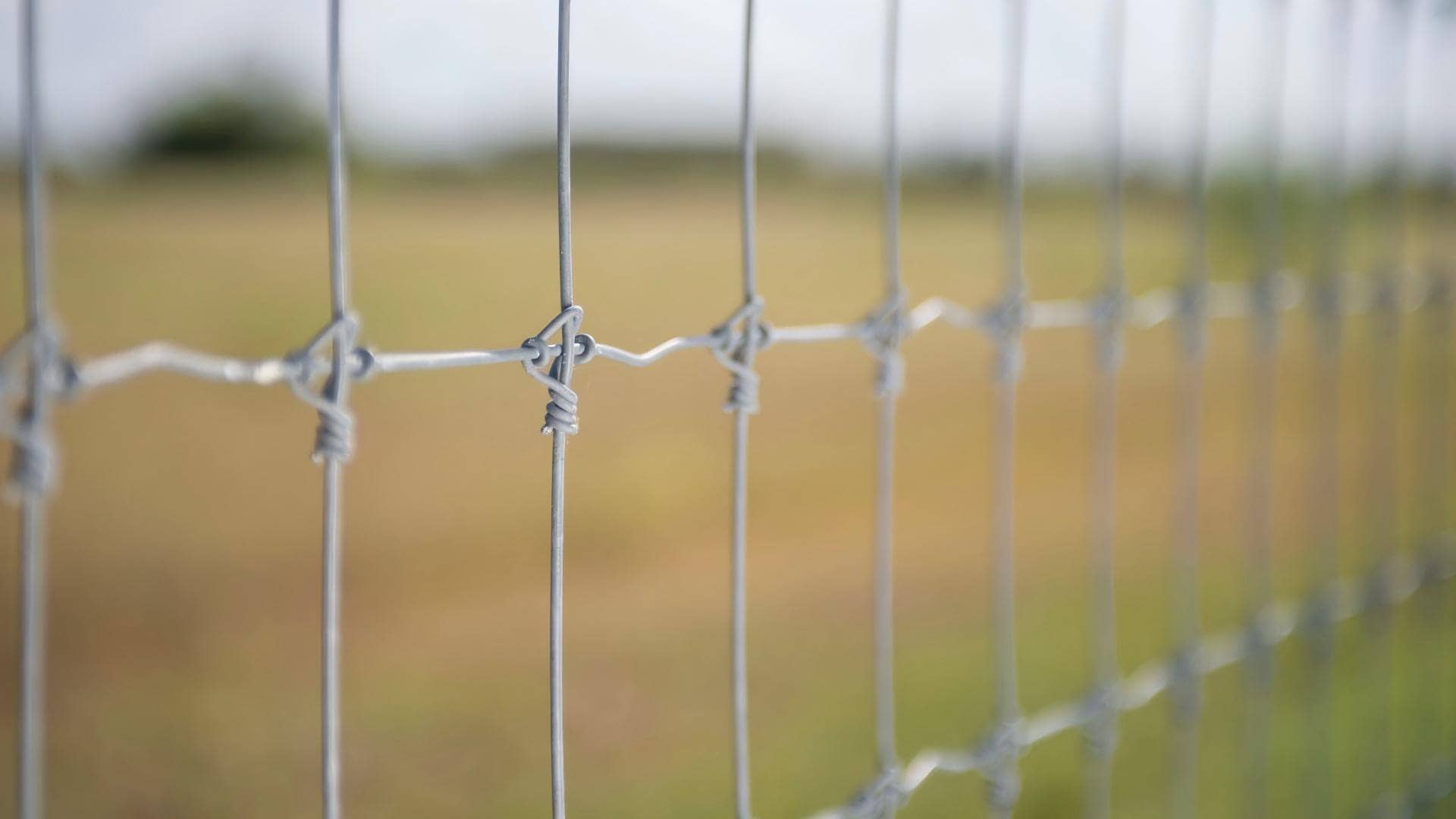
Woven wire fence is produced in different configurations to meet the requirements of agricultural, livestock, wildlife, and perimeter fencing. The primary distinction is the way the horizontal line wires and vertical stay wires are joined.
The two principal woven-wire constructions are hinge joint and fixed knot. Other knot designs, including square knot, are also used for specific applications.
Technical Snapshot
| Item | Overview |
|---|---|
| Main construction types | Hinge Joint, Fixed Knot |
| Other knot designs | Square Knot and other application-specific constructions |
| Main components | Horizontal line wires and vertical stay wires |
| Common materials | Galvanized steel, high-tensile steel |
| Supply form | Rolls |
| Typical applications | Agriculture, livestock, wildlife, perimeter fencing |
1. Hinge Joint Woven Wire Fence
Hinge joint fence is made by wrapping the vertical stay wires around the horizontal line wires. The joint can move slightly under pressure, allowing the fence to flex and recover its shape.
This construction is widely used for general agricultural and livestock fencing where flexibility and economical installation are important.
Typical characteristics:
- Flexible joint construction
- Good adaptability to uneven terrain
- Suitable for general agricultural fencing
- Available in conventional and high-tensile configurations
Hinge joint fence is commonly associated with field fence and farm fencing, although field fence is a broader product category rather than a specific knot type.
2. Fixed Knot Woven Wire Fence
Fixed knot fence uses a continuous vertical stay wire secured to the horizontal line wires with a separate knotting wire. This creates a more rigid connection at each intersection.
Fixed knot construction is commonly used where higher strength and resistance to wire displacement are required, including livestock and wildlife applications.
Typical characteristics:
- Rigid knot construction
- High resistance to wire displacement
- Available in high-tensile configurations
- Suitable for demanding livestock and wildlife applications
The combination of fixed knot construction and high-tensile wire can also allow different post-spacing requirements compared with conventional hinge-joint fencing. Actual spacing should be determined according to the fence specification and installation conditions.
3. Square Knot Woven Wire Fence
Square knot, also called S-knot or by other trade-specific names, is another woven-wire construction used in agricultural and livestock fencing.
The knot provides additional vertical stability while retaining a degree of flexibility. It is commonly associated with applications where animal contact, mesh stability, and terrain adaptability are important.
Because knot terminology can vary between manufacturers and markets, specifications should be evaluated by the actual knot construction rather than the product name alone.
Hinge Joint vs Fixed Knot
| Feature | Hinge Joint | Fixed Knot |
| Joint construction | Wrapped stay wire | Fixed stay with separate knotting wire |
| Flexibility | Higher | More rigid |
| Wire displacement resistance | Moderate | High |
| Typical positioning | General agricultural fencing | Higher-strength fencing |
| Common applications | Farms, pasture, livestock | Livestock, wildlife, perimeter |
| High-tensile options | Available | Common |
The choice between the two depends on the animal, fence height, mesh configuration, wire strength, terrain, and installation requirements rather than knot type alone.
How to Choose a Woven Wire Fence Type
Start with the application rather than the fence name.
Consider:
- Animal type — Different animals require different fence heights and mesh openings.
- Fence height — Taller fences may be required for larger livestock or wildlife.
- Wire strength — High-tensile construction may be appropriate for higher-load applications.
- Mesh configuration — Horizontal and vertical spacing should match the containment requirement.
- Terrain — Flexible constructions can be useful on uneven ground.
- Installation system — Post type, spacing, corner construction, and tensioning affect overall performance.
A complete selection should therefore consider the entire fence specification, not the knot type alone.
Conclusion
Hinge joint and fixed knot are the two main construction types used in woven wire fence. Hinge joint designs provide a flexible and economical solution for general agricultural fencing, while fixed knot designs provide greater resistance to wire displacement and are widely used for higher-strength applications. Other constructions, such as square knot, are available for specific requirements.
Understanding the knot structure is an important first step, but final fence selection should also consider wire strength, mesh spacing, fence height, coating, terrain, and application requirements.
FAQ
What are the main types of woven wire fence?
The two principal construction types are hinge joint and fixed knot. Other knot designs, such as square knot, are also available for specific applications.
What is the difference between hinge joint and fixed knot fence?
Hinge joint construction allows the joint to flex, while fixed knot construction locks the stay and line wires more securely together. This results in different flexibility and wire-displacement characteristics.
Is field fence the same as hinge joint fence?
Not necessarily. Field fence describes a type of agricultural woven-wire fencing, while hinge joint describes the knot construction. Field fence may be manufactured with different knot designs depending on the product specification.
Is fixed knot fence stronger than hinge joint fence?
Fixed knot construction generally provides greater resistance to wire displacement. However, overall fence performance also depends on wire tensile strength, diameter, mesh configuration, coating, posts, and installation.
Is high-tensile fence the same as fixed knot fence?
No. High-tensile describes the wire’s strength, while fixed knot describes the joint construction. A woven wire fence can combine high-tensile wire with either hinge-joint or fixed-knot construction.