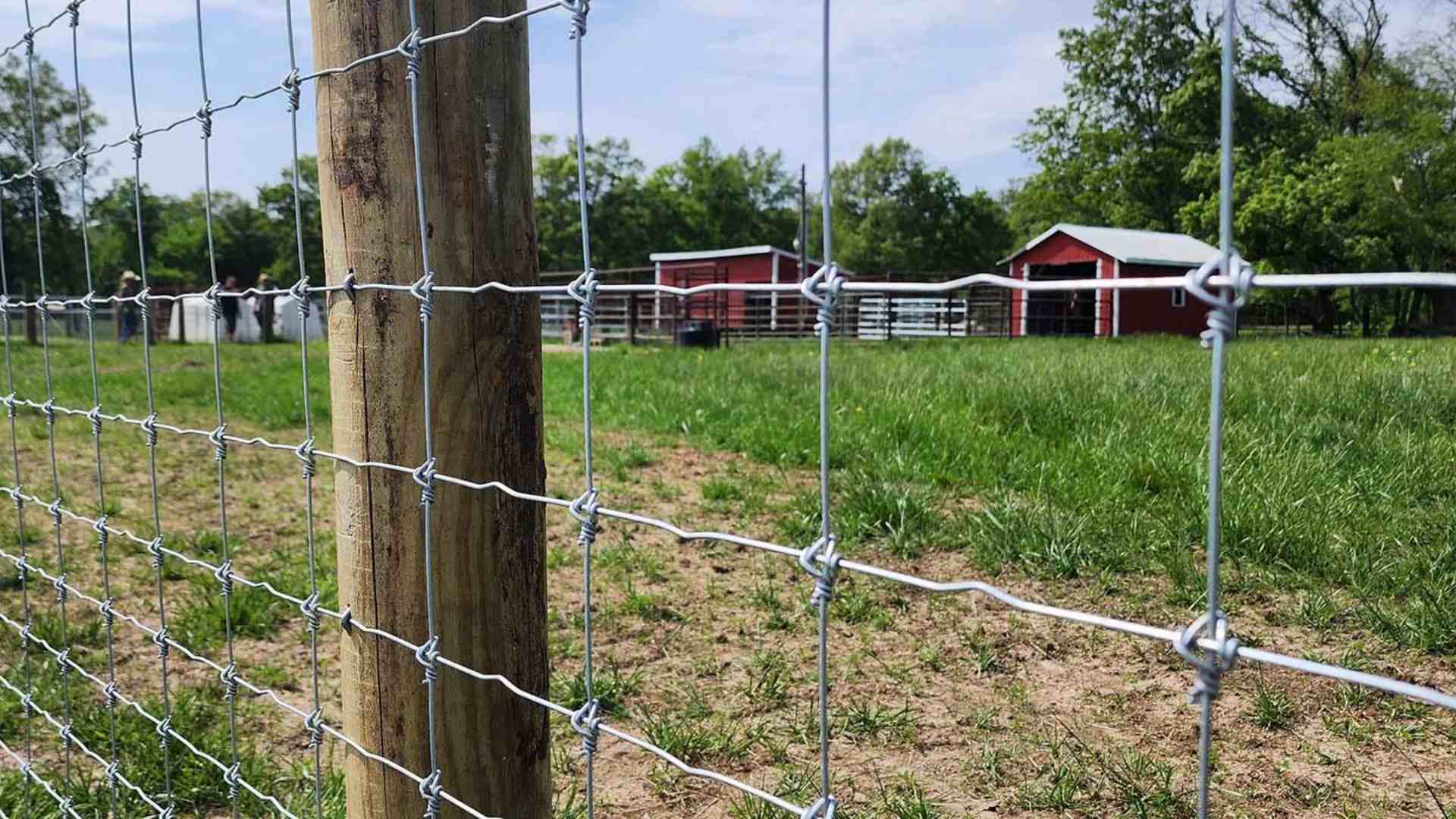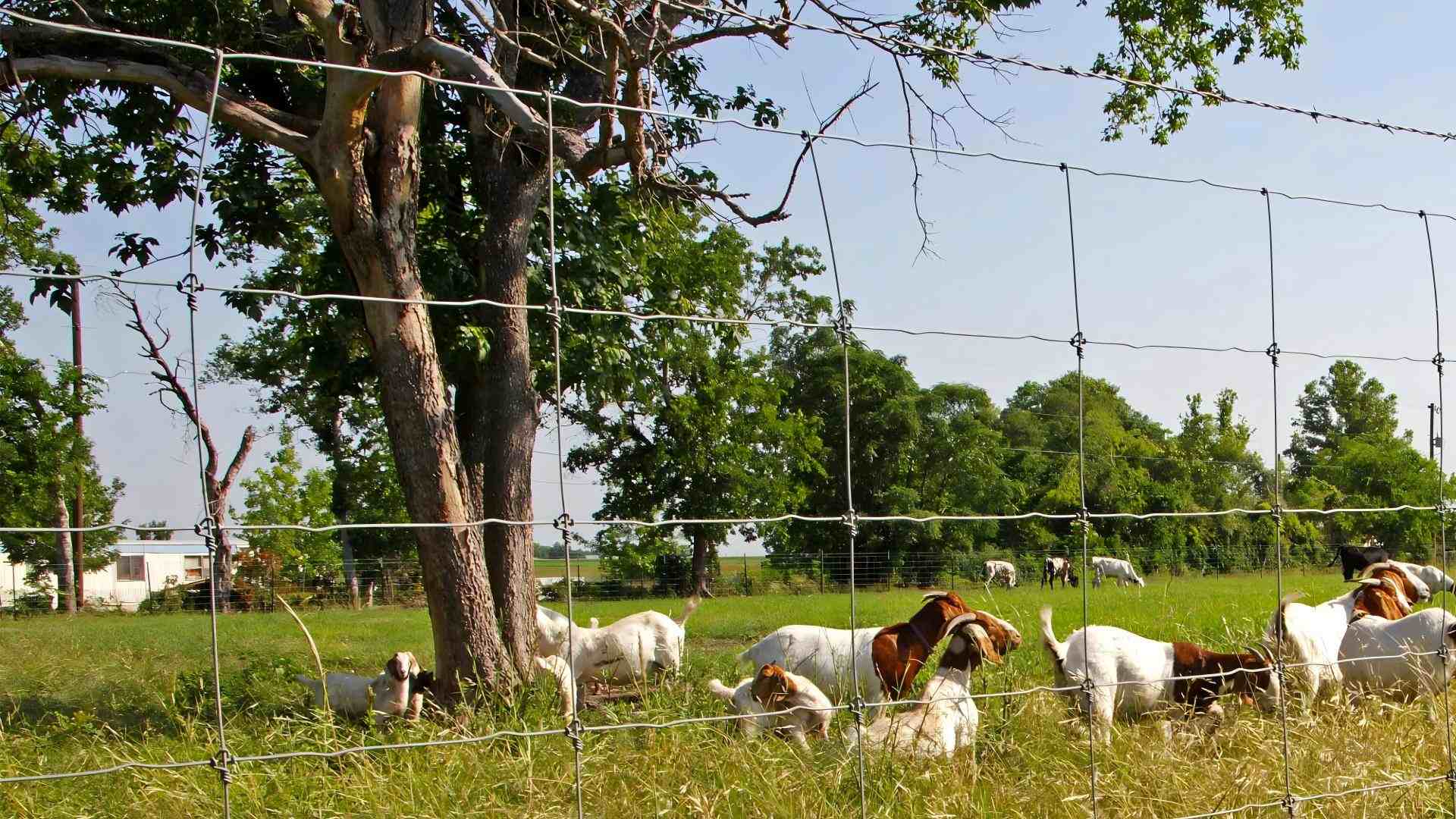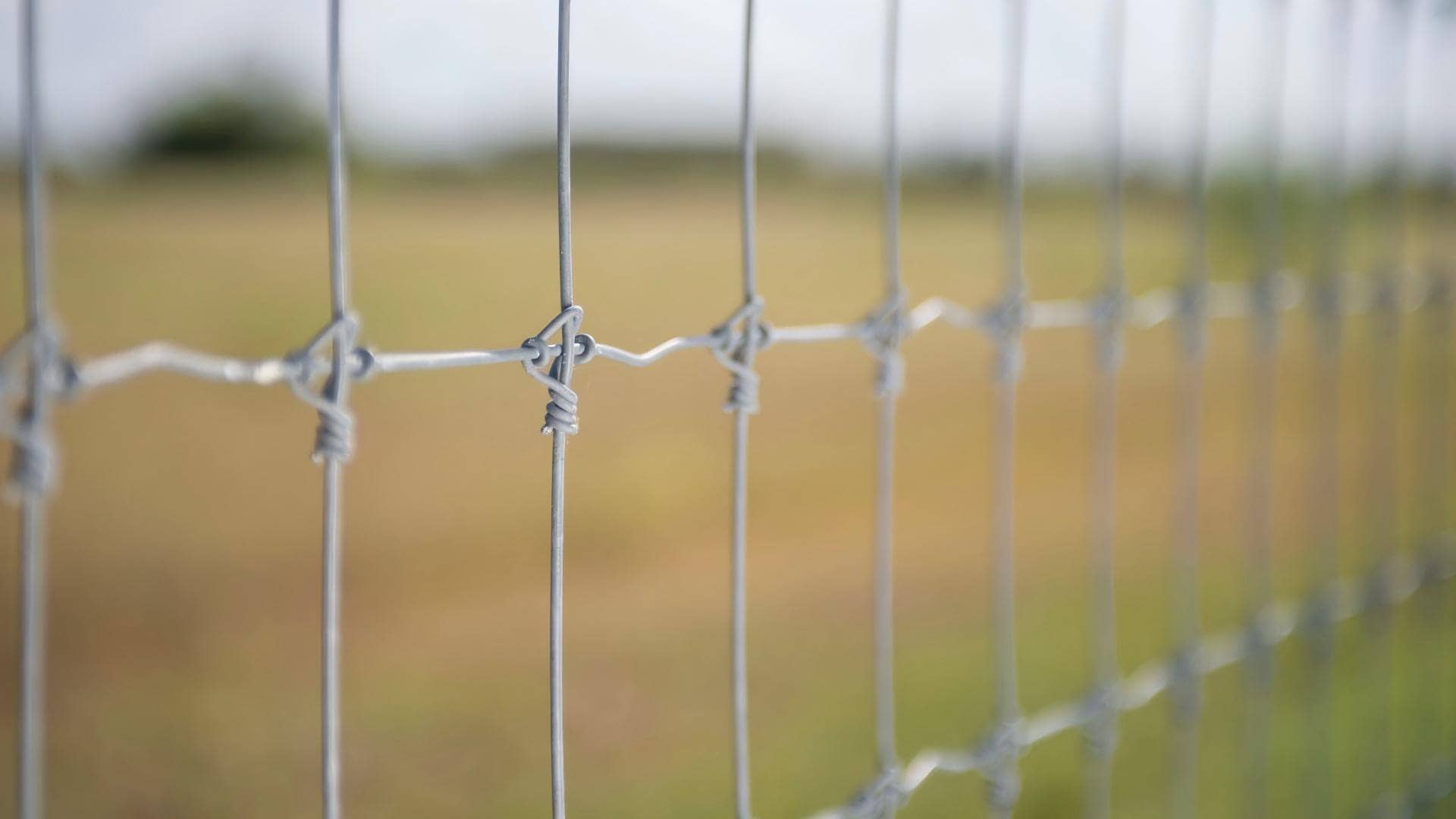
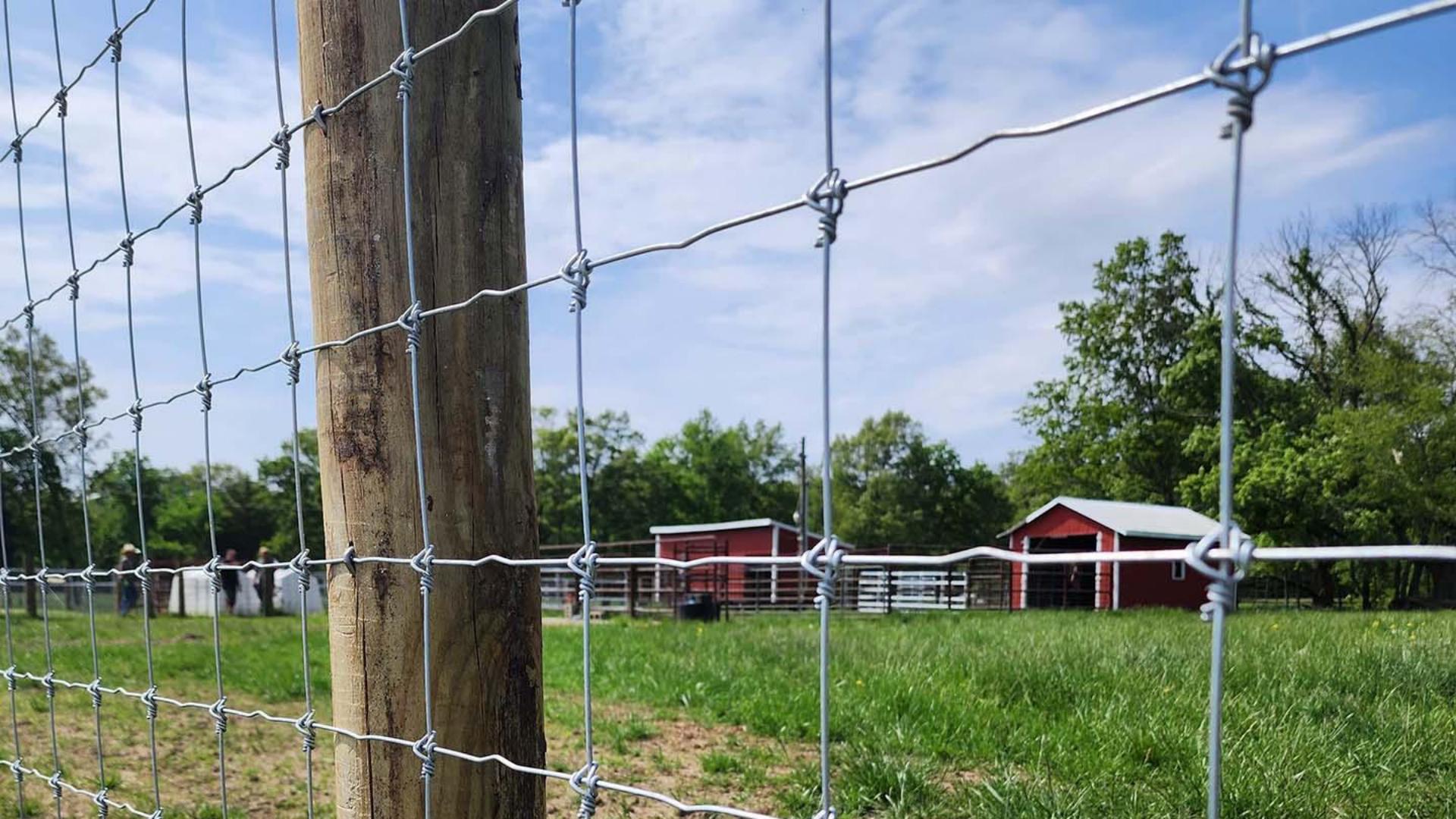
Woven wire fence is a flexible fencing system made by interweaving horizontal line wires with vertical stay wires to form a continuous mesh. Unlike welded wire fence, the wire intersections are mechanically woven rather than welded, allowing the fence to absorb impact and adapt to uneven terrain.
Widely used in agriculture, livestock management, and wildlife control, woven wire fence provides a durable and economical solution for enclosing large areas while maintaining long-term structural performance.
Technical Snapshot
| Item | Overview |
|---|---|
| Structure | Interwoven horizontal and vertical wires |
| Supply Form | Rolls |
| Common Materials | Hot-dip galvanized steel, Zinc-Aluminum alloy coated steel |
| Joint Types | Hinge Joint, Fixed Knot |
| Typical Applications | Livestock, agriculture, orchards, wildlife control |
| Terrain | Suitable for flat and uneven ground |
How Is Woven Wire Fence Manufactured?
Woven wire fence is produced by mechanically weaving continuous horizontal wires with vertical stay wires. This woven construction creates a flexible mesh that can withstand animal impact and adapt to ground movement without breaking welded joints.
Depending on the application, different knot designs and wire coatings are used to improve strength, durability, and service life.
Common Types of Woven Wire Fence
Several woven wire fence designs are available for different livestock and agricultural applications.
- Hinge Joint Fence – A cost-effective solution for general agricultural fencing.
- Fixed Knot Fence – Provides higher strength for cattle, deer, and wildlife containment.
- Field Fence – A versatile option widely used for farms and pasture enclosures.
Typical Applications
- Livestock fencing
- Cattle and sheep farms
- Horse paddocks
- Deer and wildlife control
- Orchards and agricultural land
- Rural property boundaries
Why Choose Woven Wire Fence?
- Flexible construction adapts to uneven terrain.
- Excellent impact resistance for livestock.
- Long service life with suitable protective coating.
- Available in various heights, mesh openings, and knot styles.
- Suitable for both permanent and large-scale agricultural fencing.
Conclusion
Woven wire fence remains one of the most reliable fencing solutions for agricultural and livestock applications. Its flexible woven structure, multiple knot options, and long-term durability make it suitable for farms, ranches, orchards, and wildlife management projects worldwide.
FAQ
What is the difference between woven wire fence and welded wire fence?
Woven wire fence uses mechanically woven wire intersections, while welded wire fence has welded joints. Woven construction offers greater flexibility and is better suited for uneven terrain and livestock applications.
Which woven wire fence is best for livestock?
The suitable fence depends on the animal type. Fixed knot fence is commonly selected for cattle and deer, while hinge joint field fence is widely used for general livestock fencing.
How long does galvanized woven wire fence last?
Service life depends on the coating type, environmental conditions, and installation quality. Hot-dip galvanized and zinc-aluminum alloy coated fences generally provide longer corrosion resistance than electro-galvanized products.
Can woven wire fence be installed on sloped ground?
Yes. The flexible woven structure allows the fence to follow uneven or sloped terrain more effectively than rigid welded fence panels.