Introduction
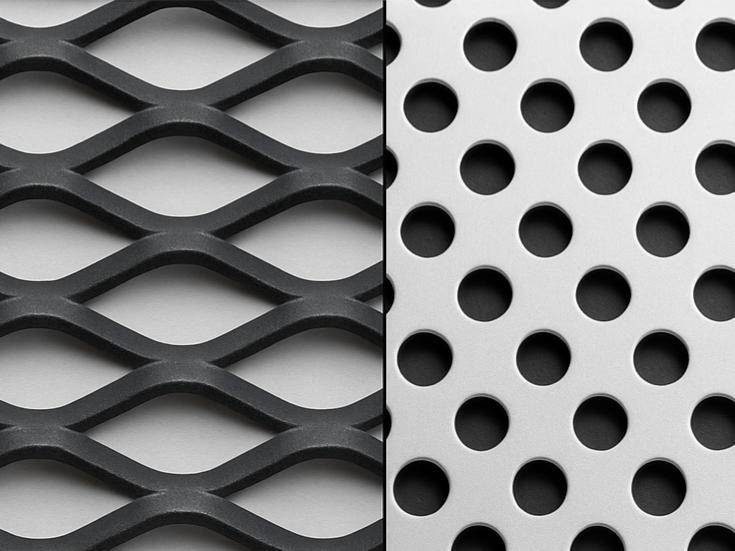
Expanded metal and perforated metal are among the most widely used metal sheet products in construction, industrial processing, architecture, security, and infrastructure projects.
Although they may appear similar at first glance, they differ significantly in manufacturing method, strength, weight, open area, appearance, and cost.
Understanding these differences helps buyers, engineers, and contractors select the most effective solution for their application.
How Expanded Metal Is Manufactured
Expanded metal is produced by simultaneously slitting and stretching a metal sheet. No material is removed during the process.
Benefits include:
- High strength-to-weight ratio
- Reduced waste
- Improved rigidity
- Cost-efficient production
Common materials:
- Carbon steel
- Stainless steel
- Aluminum
How Perforated Metal Is Manufactured
Perforated metal is produced by punching holes into a solid sheet. Material is removed during production.
Benefits include:
- Precise hole patterns
- Decorative appearance
- Controlled open area
- Excellent design flexibility
Common hole styles:
- Round holes
- Square holes
- Slotted holes
- Decorative perforations
Key Differences
| Property | Expanded Metal | Perforated Metal |
|---|---|---|
| Manufacturing | Slit and stretch | Punching |
| Material Waste | Minimal | Higher |
| Strength | Higher | Moderate |
| Weight | Lower | Higher |
| Appearance | Industrial | Decorative |
| Open Area Control | Moderate | Excellent |
| Cost | Generally Lower | Generally Higher |
Strength Comparison
Expanded metal retains continuous strands of metal.
Advantages:
- Greater rigidity
- Better impact resistance
- Improved load-bearing performance
Applications:
- Walkways
- Security barriers
- Machine guards
Perforated metal generally provides lower structural strength but offers greater design flexibility.
Open Area Comparison
Perforated metal offers more precise control over open area.
Applications requiring precise airflow:
- Acoustic panels
- HVAC systems
- Architectural screens
Expanded metal typically provides:
- Good ventilation
- Good visibility
- Excellent structural efficiency
Appearance Comparison
Expanded Metal
Characteristics:
- Industrial appearance
- Diamond openings
- Functional design
Perforated Metal
Characteristics:
- Modern appearance
- Custom hole patterns
- Architectural flexibility
For decorative applications, perforated metal is often preferred.
Cost Comparison
Expanded metal often provides lower production costs because:
- No scrap removal
- Efficient material utilization
- Faster production
Perforated metal typically costs more due to:
- Material loss
- Punch tooling
- Additional processing
Recommended Applications
| Application | Recommended Material |
|---|---|
| Walkways | Expanded Metal |
| Security Screens | Expanded Metal |
| Machine Guards | Expanded Metal |
| HVAC Panels | Perforated Metal |
| Acoustic Panels | Perforated Metal |
| Architectural Facades | Perforated Metal |
| Industrial Platforms | Expanded Metal |
| Sunshades | Perforated Metal |
Which Material Should You Choose?
Choose Expanded Metal When:
✔ Structural strength is important
✔ Budget is limited
✔ Weight reduction is desired
✔ Industrial performance is the priority
Choose Perforated Metal When:
✔ Appearance matters
✔ Precise airflow is required
✔ Acoustic performance is needed
✔ Custom hole patterns are desired
Conclusion
Both expanded metal and perforated metal offer unique advantages. Expanded metal excels in strength, efficiency, and economy, while perforated metal provides superior aesthetics and airflow control. The best choice depends on your project’s technical and design requirements.