Introduction
Modern construction projects increasingly demand materials that combine functionality, durability, sustainability, and architectural appeal. Designers and engineers are expected to create structures that not only perform efficiently but also contribute to visual identity, occupant comfort, and long-term building value.
Among the many materials available today, perforated metal has emerged as one of the most versatile solutions in contemporary architecture and construction. From building facades and parking structures to ceilings, ventilation systems, and sun control applications, perforated metal offers a unique combination of strength, airflow, visibility, and design flexibility.
Its ability to meet both technical and aesthetic requirements has made perforated metal a preferred choice for architects, contractors, and building owners worldwide.
This article explores the most common construction applications of perforated metal and highlights key specification considerations for successful project implementation.
What Is Perforated Metal?
Perforated metal is produced by punching or perforating a pattern of holes into metal sheets.
Common materials include:
- Carbon Steel
- Galvanized Steel
- Stainless Steel
- Aluminum
- Copper
Hole patterns may include:
- Round holes
- Square holes
- Slotted holes
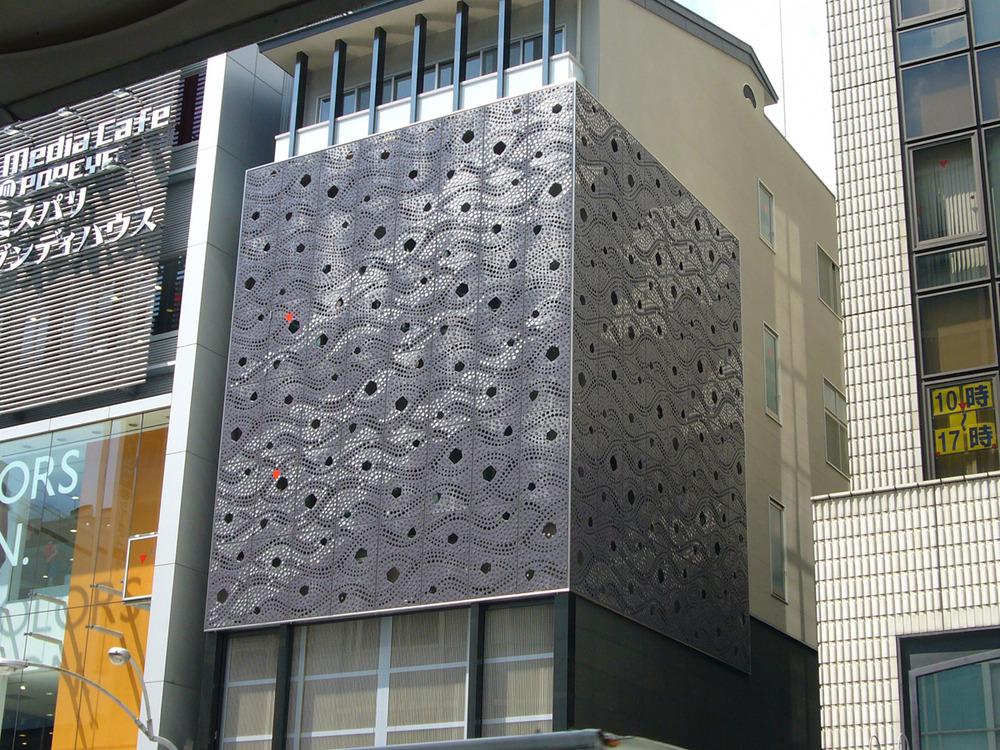
- Hexagonal holes
- Decorative patterns
The resulting material retains structural strength while allowing controlled passage of air, light, sound, and visibility.
Why Construction Projects Use Perforated Metal
Design Flexibility
Perforated metal offers nearly unlimited design possibilities.
Architects can specify:
- Hole shape
- Hole size
- Open area percentage
- Panel dimensions
- Surface finishes
This flexibility allows the material to complement a wide variety of architectural styles.
Ventilation and Airflow
Many buildings require airflow while maintaining security and weather protection.
Perforated metal enables:
- Natural ventilation
- Equipment enclosure ventilation
- Parking garage airflow
- Mechanical system protection
without sacrificing durability.
Solar Control
Perforated panels help reduce solar heat gain while preserving natural daylight.
Benefits include:
- Improved occupant comfort
- Reduced cooling loads
- Enhanced energy efficiency
- Modern building aesthetics
Durability and Low Maintenance
When properly specified, perforated metal provides:
- Corrosion resistance
- Long service life
- Minimal maintenance requirements
- High structural reliability
These characteristics contribute to lower lifecycle costs.
Common Construction Applications
Building Facades
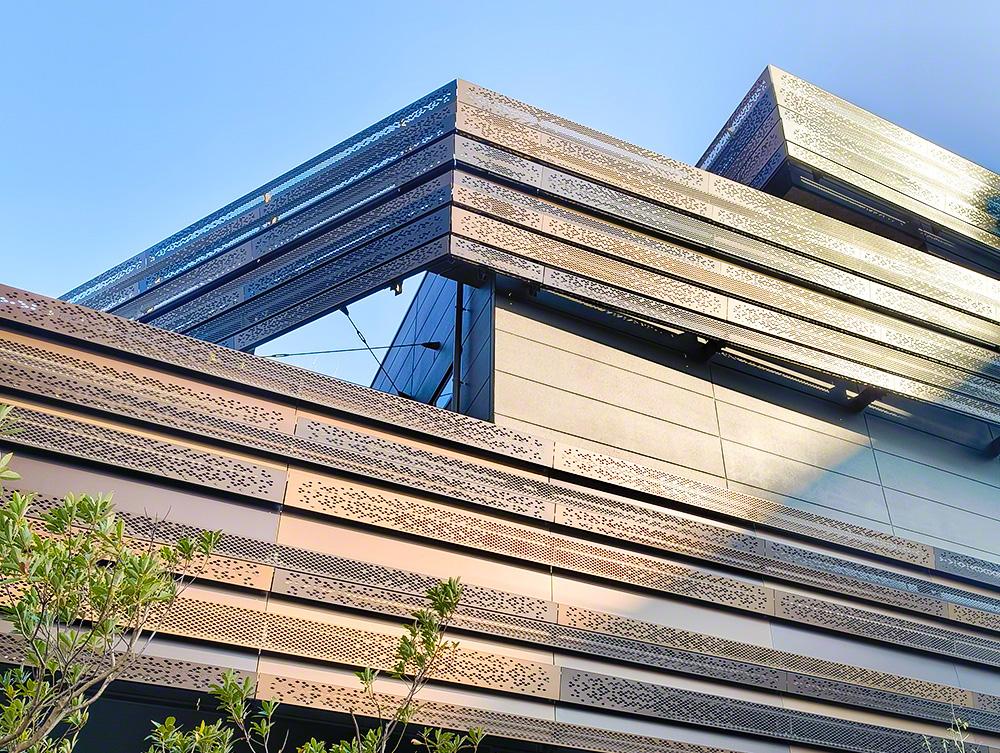
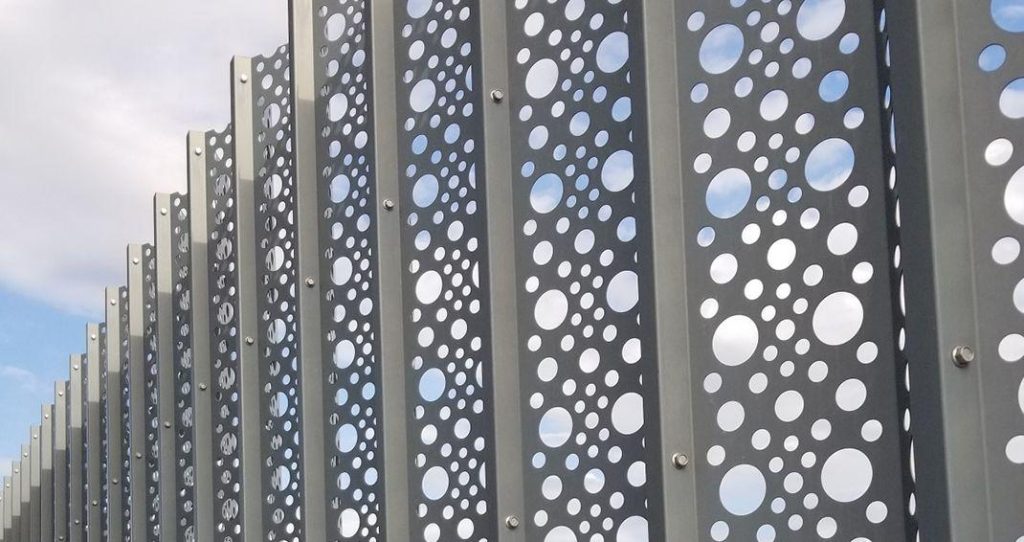
Architectural facades represent one of the fastest-growing applications for perforated metal.
Benefits include:
- Visual appeal
- Branding opportunities
- Solar shading
- Privacy screening
- Ventilation
Modern commercial buildings frequently use perforated metal as a secondary facade layer to create dynamic exterior appearances.
Solar Shading Systems
Sun control is a major design consideration in modern architecture.
Perforated metal screens can reduce direct solar exposure while maintaining visibility and airflow.
Applications include:
- Office buildings
- Airports
- Educational facilities
- Public buildings
Parking Structures
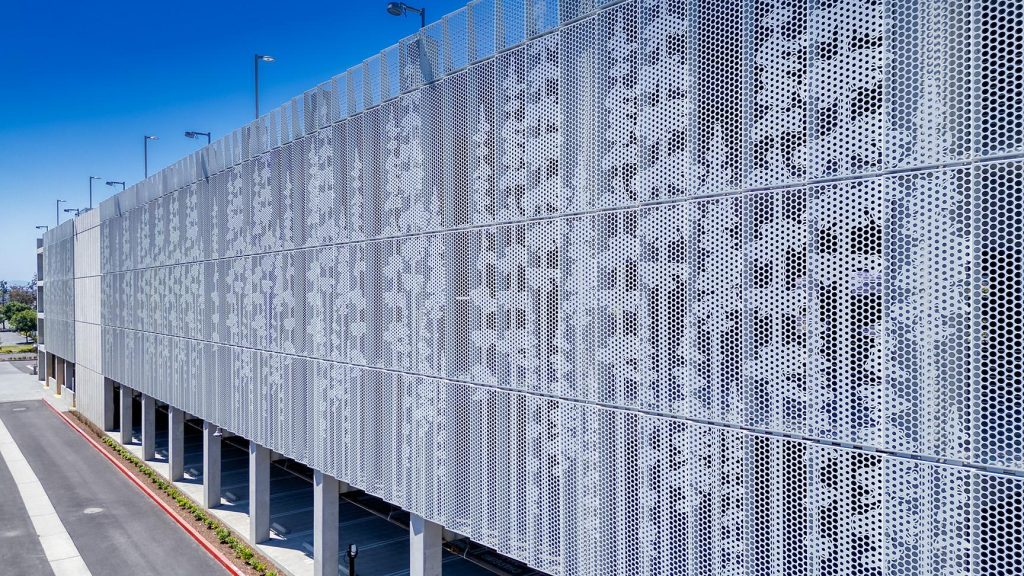
Parking garages require continuous ventilation while maintaining security and aesthetics.
Perforated metal panels provide:
- Air circulation
- Visual screening
- Architectural enhancement
- Durable enclosure systems
Many modern parking structures rely on perforated metal facades instead of traditional concrete openings.
Interior Ceilings and Wall Panels
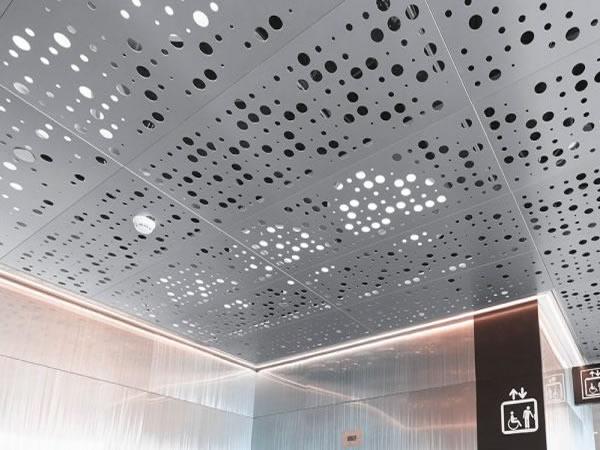
Perforated metal is increasingly used indoors.
Applications include:
- Airports
- Transit stations
- Corporate offices
- Educational facilities
- Commercial buildings
Benefits include:
- Acoustic performance
- Modern aesthetics
- Easy maintenance
- Integration with lighting systems
Mechanical Equipment Enclosures
Construction projects often require protection for:
- HVAC systems
- Cooling equipment
- Utility installations
- Electrical infrastructure
Perforated metal allows airflow while restricting access and improving appearance.
Infrastructure Projects
Transportation and public infrastructure projects frequently specify perforated metal for:
- Transit stations
- Airport facilities
- Pedestrian bridges
- Noise barriers
- Utility screening
Its durability and design flexibility make it suitable for demanding environments.
Application Benefits Table
| Application | Primary Benefits |
|---|---|
| Building Facades | Aesthetics, shading, branding |
| Parking Structures | Ventilation, screening |
| Sunshade Systems | Energy efficiency, comfort |
| Ceilings | Acoustics, appearance |
| Equipment Enclosures | Airflow, protection |
| Infrastructure | Durability, design flexibility |
Material Selection Guide
| Material | Recommended Applications |
|---|---|
| Galvanized Steel | General construction |
| Stainless Steel | Coastal or corrosive environments |
| Aluminum | Architectural facades and lightweight structures |
| Copper | Premium architectural projects |
| Carbon Steel | Interior or protected applications |
Recommended Specifications Table
| Application | Common Thickness | Open Area |
|---|---|---|
| Architectural Facade | 1.5–3.0 mm | 20–50% |
| Parking Structure | 1.5–2.5 mm | 35–60% |
| Sunshade Panels | 1.0–2.0 mm | 30–50% |
| Ceiling Systems | 0.8–1.5 mm | 15–40% |
| Equipment Enclosures | 1.2–2.5 mm | 25–50% |
Specification Considerations
Open Area Percentage
Open area directly affects:
- Ventilation
- Visibility
- Light transmission
- Structural performance
Balancing these factors is critical for achieving project objectives.
Material Selection
Environmental conditions should guide material choice.
Consider:
- Corrosion exposure
- Humidity
- Coastal environments
- Maintenance expectations
Surface Finish
Popular finishes include:
- Mill Finish
- Powder Coating
- PVDF Coating
- Anodized Aluminum
- Hot-Dip Galvanizing
Finish selection affects both appearance and durability.
Structural Requirements
Perforated panels must be designed to accommodate:
- Wind loads
- Panel spans
- Attachment methods
- Building movement
Proper engineering review is essential for large-scale projects.
Common Specification Mistakes
Prioritizing Appearance Over Performance
A visually attractive pattern may not provide the required airflow or structural strength.
Ignoring Open Area Requirements
Insufficient open area can negatively affect ventilation and energy performance.
Selecting the Wrong Material
Environmental exposure should always influence material specification.
Overlooking Maintenance Access
Facade and enclosure systems should allow practical inspection and maintenance procedures.
Conclusion
Perforated metal has become an essential material in modern construction due to its ability to combine architectural creativity with practical performance. Whether used for facades, parking structures, solar shading systems, ceilings, or infrastructure projects, perforated metal delivers ventilation, durability, aesthetics, and long-term value.
By carefully selecting materials, hole patterns, finishes, and panel configurations, project teams can create solutions that satisfy both engineering requirements and architectural objectives.