Introduction
Safe access systems are critical components of modern industrial, commercial, and infrastructure facilities. Whether providing access to elevated equipment, connecting production areas, or supporting maintenance activities, walkways and platforms must offer reliable performance under demanding operating conditions.
Engineers and facility managers must balance several requirements when specifying access flooring systems:
- Worker safety
- Structural performance
- Slip resistance
- Corrosion resistance
- Maintenance requirements
- Lifecycle cost
Among the available solutions, metal products such as bar grating, expanded metal, perforated metal, and welded wire mesh are widely used due to their durability, strength, and versatility.
Selecting the most appropriate material requires understanding both project requirements and the strengths of each product type.
This guide examines the most common metal products used in safety walkways and platforms and provides recommendations for different facility types.
Why Material Selection Matters
Poorly selected walkway materials can create:
- Slip hazards
- Structural failures
- Excessive maintenance costs
- Reduced service life
- Worker safety risks
The right flooring system improves:
- Operational efficiency
- Facility safety
- Maintenance access
- Long-term asset performance
Key Performance Requirements
Slip Resistance
Industrial walkways are frequently exposed to:
- Water
- Oil
- Dust
- Snow
- Chemicals
Slip-resistant surfaces help reduce workplace accidents.
Load Capacity
Walkways and platforms must safely support:
- Personnel traffic
- Maintenance equipment
- Tools and materials
- Emergency access requirements
Drainage and Ventilation
Open flooring systems allow:
- Water drainage
- Air circulation
- Light transmission
- Debris removal
These characteristics improve safety and reduce maintenance.
Corrosion Resistance
Environmental exposure can significantly affect service life.
Projects should evaluate:
- Humidity
- Coastal conditions
- Chemicals
- Industrial pollutants
before selecting materials.
Bar Grating for Walkways and Platforms
Advantages
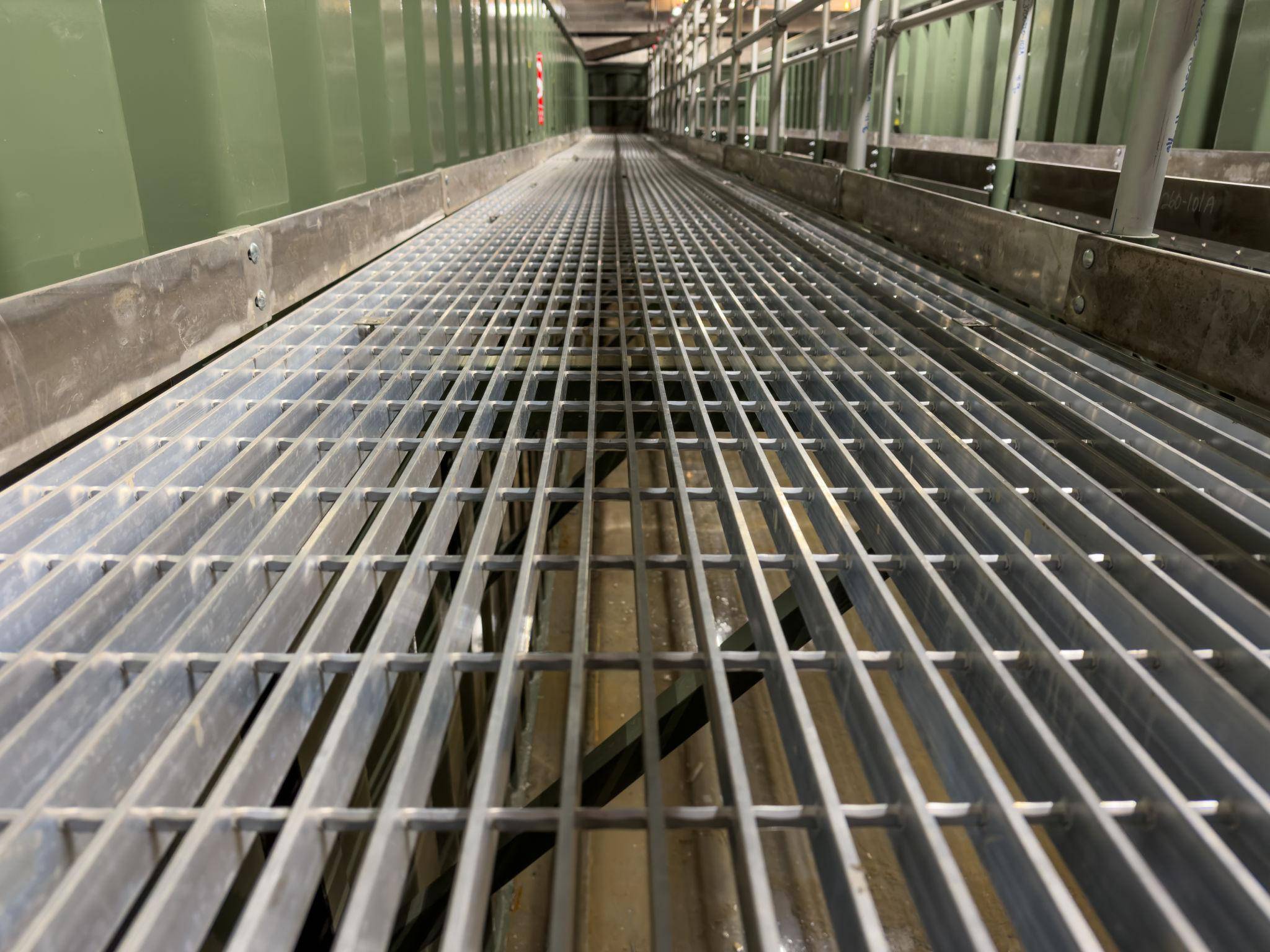
Bar grating is one of the most commonly specified products for industrial access systems.
Key benefits include:
- High load capacity
- Excellent drainage
- Long spans
- Proven durability
Typical Applications
- Power plants
- Water treatment facilities
- Manufacturing plants
- Petrochemical facilities
- Utility infrastructure
Best Use Cases
Bar grating is typically preferred when:
- Heavy loads are expected
- Long support spans are required
- Maximum durability is needed
Expanded Metal for Walkways and Platforms
Advantages
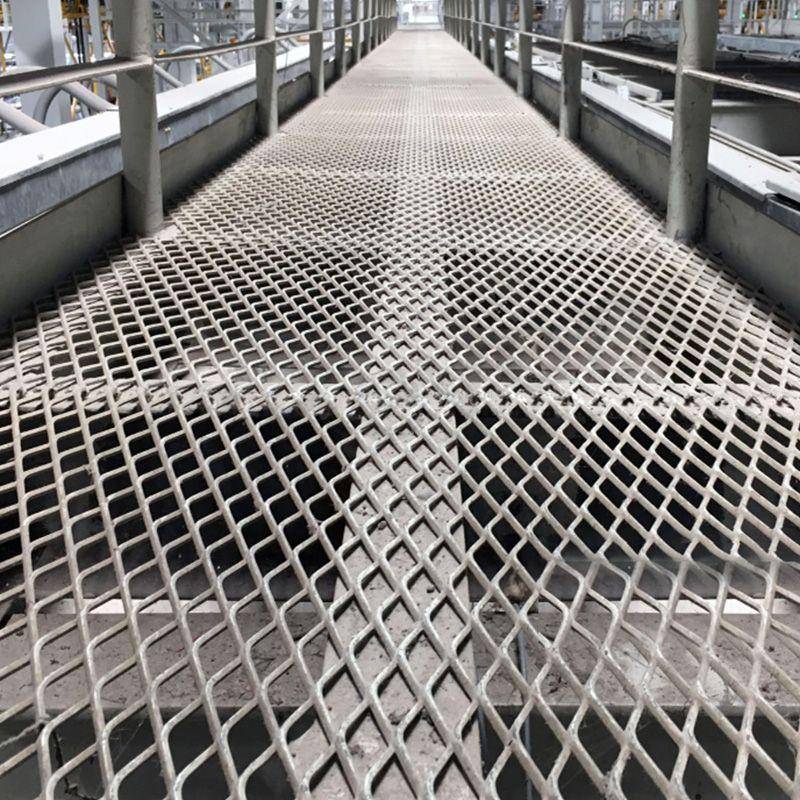
Expanded metal provides:
- Good strength-to-weight ratio
- Excellent slip resistance
- Lower material cost
- Effective drainage
Typical Applications
- Maintenance walkways
- Equipment platforms
- Industrial catwalks
- Mechanical access areas
Best Use Cases
Expanded metal is often selected when:
- Weight reduction is important
- Moderate loads are expected
- Cost efficiency is a priority
Perforated Metal for Walkways
Advantages
Perforated metal flooring systems can provide:
- Controlled slip resistance
- Modern appearance
- Consistent walking surface
Typical Applications
- Architectural projects
- Public facilities
- Commercial buildings
- Transit facilities
Limitations
Perforated metal is generally less suitable for heavy industrial applications than bar grating.
Welded Wire Mesh for Access Systems
Although less common for primary flooring, welded wire mesh may be used for:
- Safety barriers
- Equipment enclosures
- Elevated storage platforms
- Secondary access systems
Product Comparison Table
| Product Type | Load Capacity | Slip Resistance | Drainage | Cost Efficiency |
|---|---|---|---|---|
| Bar Grating | Excellent | Excellent | Excellent | Good |
| Expanded Metal | Good | Excellent | Excellent | Excellent |
| Perforated Metal | Moderate | Good | Moderate | Moderate |
| Welded Wire Mesh | Moderate | Moderate | Excellent | Good |
Recommended Product Selection Guide
| Application | Recommended Product |
|---|---|
| Industrial Walkways | Bar Grating |
| Maintenance Catwalks | Expanded Metal |
| Utility Platforms | Bar Grating |
| Architectural Walkways | Perforated Metal |
| Equipment Access Platforms | Expanded Metal |
| Water Treatment Facilities | Stainless Steel Grating |
| Power Plants | Galvanized Steel Grating |
Material Selection Guide
Carbon Steel
Advantages:
- Economical
- Strong
- Easy to fabricate
Best for:
- Interior industrial environments
Hot-Dip Galvanized Steel
Advantages:
- Corrosion protection
- Long service life
- Low maintenance
Best for:
- Outdoor applications
Stainless Steel
Advantages:
- Superior corrosion resistance
- Excellent durability
- Attractive appearance
Best for:
- Coastal facilities
- Food processing plants
- Chemical facilities
Aluminum
Advantages:
- Lightweight
- Corrosion resistant
- Easy handling
Best for:
- Architectural projects
- Lightweight access systems
Recommended Specifications Table
| Application | Material | Product Type |
|---|---|---|
| Warehouse Catwalk | Galvanized Steel | Expanded Metal |
| Manufacturing Platform | Galvanized Steel | Bar Grating |
| Utility Facility | Galvanized Steel | Bar Grating |
| Food Processing Plant | Stainless Steel | Bar Grating |
| Airport Service Area | Aluminum | Perforated Metal |
| Mechanical Access Platform | Galvanized Steel | Expanded Metal |
Industry-Specific Recommendations
Manufacturing Facilities
Primary choice:
- Galvanized Steel Bar Grating
Reason:
- Heavy-duty performance
- Long-term durability
Water Treatment Plants
Primary choice:
- Stainless Steel Bar Grating
Reason:
- Corrosion resistance
- Low maintenance
Warehouses and Distribution Centers
Primary choice:
- Expanded Metal Walkways
Reason:
- Cost efficiency
- Good slip resistance
Commercial Buildings
Primary choice:
- Perforated Metal Flooring
Reason:
- Architectural appearance
- Consistent walking surface
Common Specification Mistakes
Focusing Only on Initial Cost
Low-cost products may increase maintenance and replacement costs.
Ignoring Environmental Conditions
Corrosion exposure significantly affects product lifespan.
Underestimating Loads
Maintenance activities often create higher loads than anticipated.
Selecting Decorative Products for Industrial Service
Architectural flooring products may not meet industrial performance requirements.
Facility Type Selection Matrix
| Facility Type | Recommended Solution |
|---|---|
| Warehouse | Expanded Metal |
| Manufacturing Plant | Bar Grating |
| Utility Plant | Bar Grating |
| Food Processing Facility | Stainless Steel Grating |
| Commercial Building | Perforated Metal |
| Transportation Facility | Bar Grating or Perforated Metal |
Conclusion
Safety walkways and platforms play a critical role in protecting personnel and supporting facility operations. The most suitable metal product depends on factors such as load requirements, environmental conditions, maintenance needs, and budget.
Bar grating remains the preferred solution for heavy-duty industrial applications, while expanded metal offers an economical alternative for maintenance access systems. Perforated metal provides architectural benefits for commercial projects, and welded wire mesh serves specialized support roles.
Careful product selection helps ensure long-term safety, performance, and value.