Introduction
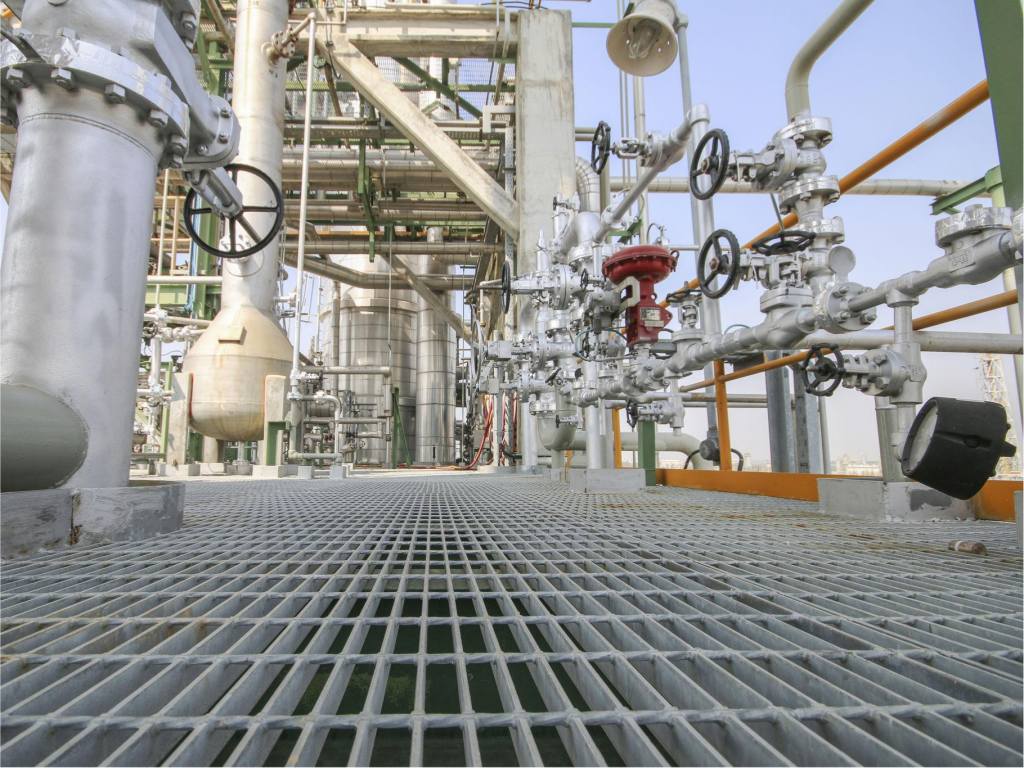
Material selection is one of the most important decisions when specifying industrial grating systems.
While both carbon steel and stainless steel grating provide excellent load-bearing performance, they differ significantly in corrosion resistance, maintenance requirements, appearance, and lifecycle cost.
Understanding these differences helps engineers, contractors, and facility managers choose the most appropriate grating solution for their operating environment.
Understanding the Two Materials
Carbon Steel Grating
Carbon steel grating is the most commonly used industrial grating material.
To improve corrosion resistance, it is typically supplied with:
- Hot-Dip Galvanized Finish
- Painted Finish
- Powder Coated Finish
Common applications include:
- Industrial plants
- Warehouses
- Manufacturing facilities
- Utility infrastructure
Stainless Steel Grating
Stainless steel grating contains chromium, which forms a protective oxide layer on the surface.
Common grades include:
- Stainless Steel 304
- Stainless Steel 316
Common applications include:
- Food processing
- Pharmaceutical plants
- Marine facilities
- Chemical processing
Strength Comparison
Many buyers assume stainless steel is always stronger.
In reality, both materials can provide excellent structural performance.
| Property | Carbon Steel | Stainless Steel |
|---|---|---|
| Load Capacity | Excellent | Excellent |
| Rigidity | Excellent | Excellent |
| Impact Resistance | Excellent | Excellent |
| Structural Applications | Excellent | Excellent |
Winner: Tie
For most grating applications, strength is not the deciding factor.
Corrosion Resistance Comparison
Corrosion resistance is where the biggest difference exists.
Carbon Steel Grating
Without protection:
- Rust develops quickly
- Maintenance increases
With hot-dip galvanizing:
- Excellent outdoor protection
- Long service life
Stainless Steel Grating
Advantages:
- Inherent corrosion resistance
- No coating required
- Resistant to moisture and chemicals
Comparison Table
| Property | Galvanized Carbon Steel | Stainless Steel |
|---|---|---|
| Corrosion Resistance | Very Good | Excellent |
| Coastal Environment | Good | Excellent |
| Chemical Exposure | Moderate | Excellent |
| Maintenance Requirement | Moderate | Low |
Winner: Stainless Steel
Especially in aggressive environments.
Maintenance Requirements
| Property | Carbon Steel | Stainless Steel |
|---|---|---|
| Cleaning Frequency | Moderate | Low |
| Recoating Requirement | Possible | None |
| Long-Term Maintenance | Moderate | Low |
Winner: Stainless Steel
Stainless steel generally requires less maintenance throughout its service life.
Appearance Comparison
Carbon Steel Grating
Characteristics:
- Industrial appearance
- Galvanized silver finish
- Functional design
Stainless Steel Grating
Characteristics:
- Premium appearance
- Smooth finish
- Architectural appeal
Winner: Stainless Steel
For visible installations and architectural projects.
Cost Comparison
| Factor | Carbon Steel | Stainless Steel |
|---|---|---|
| Material Cost | Lower | Higher |
| Initial Investment | Lower | Higher |
| Maintenance Cost | Higher | Lower |
| Lifecycle Cost | Competitive | Often Competitive |
Winner: Carbon Steel
For projects with tight budgets.
Environmental Suitability
Carbon Steel Grating Is Best For
- Industrial plants
- Warehouses
- Utility facilities
- Manufacturing environments
- General outdoor use
Stainless Steel Grating Is Best For
- Food processing facilities
- Pharmaceutical plants
- Chemical processing plants
- Marine environments
- Coastal installations
Stainless Steel 304 vs 316
For stainless steel grating, buyers often choose between 304 and 316.
| Grade | Recommended Application |
|---|---|
| SS304 | General Industrial Use |
| SS316 | Marine & Chemical Environments |
SS316 contains molybdenum, providing improved corrosion resistance.
Lifecycle Cost Comparison
A common purchasing mistake is focusing only on initial cost.
Example:
| Factor | Carbon Steel | Stainless Steel |
|---|---|---|
| Initial Cost | Lower | Higher |
| Maintenance | Higher | Lower |
| Service Life | Long | Very Long |
| Replacement Frequency | Higher | Lower |
In corrosive environments, stainless steel often delivers lower total ownership costs.
Which Material Should You Choose?
Choose Carbon Steel Grating when:
✓ Budget is a major concern
✓ Environment is relatively dry
✓ Heavy-duty industrial use is required
✓ Galvanizing provides adequate protection
Choose Stainless Steel Grating when:
✓ Corrosion resistance is critical
✓ Hygiene requirements exist
✓ Maintenance access is difficult
✓ Long service life is required
Recommended Material by Industry
| Industry | Recommended Material |
|---|---|
| Manufacturing | Carbon Steel |
| Warehousing | Carbon Steel |
| Municipal Infrastructure | Galvanized Carbon Steel |
| Food Processing | Stainless Steel 304 |
| Pharmaceutical | Stainless Steel 316 |
| Chemical Processing | Stainless Steel 316 |
| Marine Facilities | Stainless Steel 316 |
Common Buying Mistakes
Choosing Stainless Steel for Every Application
Many projects perform perfectly well with galvanized carbon steel.
Ignoring Environmental Conditions
Material selection should always reflect actual exposure conditions.
Comparing Initial Cost Only
Lifecycle cost is often more important.
Selecting the Wrong Stainless Grade
SS304 and SS316 are not interchangeable in all environments.
Conclusion
Both carbon steel and stainless steel grating offer excellent structural performance. Carbon steel provides a cost-effective solution for general industrial applications, while stainless steel delivers superior corrosion resistance, lower maintenance, and longer service life in demanding environments. The best choice depends on operating conditions, budget, and long-term performance requirements.