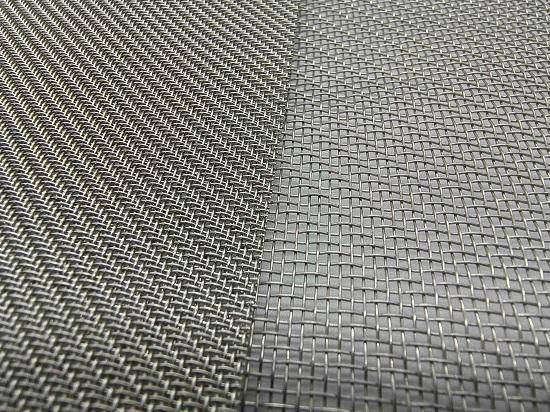
Introduction
Woven wire mesh is widely used in screening, filtration, separation, protection, and architectural applications. With hundreds of possible mesh counts, wire diameters, materials, and weave patterns available, selecting the correct specification can be challenging.
The right woven wire mesh should balance filtration performance, strength, durability, and cost while meeting the requirements of the intended application.
This guide explains the key factors engineers, contractors, and industrial buyers should consider when selecting woven wire mesh.
Step 1: Define the Application
Before selecting specifications, clearly identify the intended use. Common applications include:
- Industrial screening
- Filtration systems
- Mining and aggregate processing
- Food processing
- Pharmaceutical production
- Architectural mesh
- Machine guards
Different applications require different mesh characteristics.
Step 2: Understand Mesh Count
Mesh count refers to the number of openings per linear inch. For example:
| Mesh Count | Openings per Inch |
|---|---|
| 10 Mesh | 10 |
| 20 Mesh | 20 |
| 40 Mesh | 40 |
| 100 Mesh | 100 |
| 200 Mesh | 200 |
As mesh count increases:
- Opening size decreases
- Filtration becomes finer
- Flow rate decreases
Step 3: Evaluate Opening Size
Opening size determines the size of particles that can pass through the mesh.
| Opening Size | Typical Application |
|---|---|
| 2–5 mm | Aggregate screening |
| 1–2 mm | Industrial separation |
| 0.5–1 mm | Fine screening |
| 0.1–0.5 mm | Filtration |
| Below 0.1 mm | Precision filtration |
For most industrial screening applications, opening size is often more important than mesh count.
Step 4: Select Wire Diameter
Wire diameter affects:
- Strength
- Wear resistance
- Open area
- Flow efficiency
Thicker Wire
Advantages:
- Higher strength
- Longer service life
- Better abrasion resistance
Thinner Wire
Advantages:
- Higher open area
- Better flow rate
- Improved filtration efficiency
Step 5: Choose the Right Material
Material selection largely determines corrosion resistance and operating life.
Stainless Steel 304
Advantages:
- Excellent corrosion resistance
- Good mechanical properties
- Cost-effective
Applications:
- General industrial use
- Food processing
- Architectural applications
Stainless Steel 316
Advantages:
- Superior corrosion resistance
- Better resistance to chlorides
Applications:
- Marine environments
- Chemical processing
- Pharmaceutical industries
Galvanized Steel
Advantages:
- Economical
- Suitable for general-purpose applications
Applications:
- Construction
- Screening
- Agricultural use
Copper and Brass
Advantages:
- Electrical conductivity
- Decorative appearance
Applications:
- EMI shielding
- Architectural projects
Step 6: Select the Weave Type
The weave pattern influences performance.
Plain Weave
Most common weave style.
Characteristics:
- Uniform openings
- Excellent dimensional stability
- Suitable for most applications
Twill Weave
Characteristics:
- Higher wire density
- Finer filtration capability
- Increased strength
Applications:
- Fine filtration
- Industrial processing
Dutch Weave
Characteristics:
- Extremely fine openings
- High filtration efficiency
Applications:
- Liquid filtration
- Pressure filtration systems
Weave Comparison Table
| Weave Type | Filtration | Strength | Common Use |
|---|---|---|---|
| Plain Weave | Good | Good | General Use |
| Twill Weave | Very Good | Very Good | Fine Filtration |
| Dutch Weave | Excellent | Excellent | Precision Filtration |
Step 7: Consider Operating Environment
Environmental conditions affect material selection.
| Environment | Recommended Material |
|---|---|
| Indoor Dry Areas | Galvanized Steel |
| Outdoor Exposure | Stainless Steel 304 |
| Coastal Areas | Stainless Steel 316 |
| Chemical Plants | Stainless Steel 316 |
| Food Processing | Stainless Steel 304/316 |
Step 8: Define Sheet or Roll Dimensions
Specify:
- Width
- Length
- Roll or sheet format
- Edge treatment
Example:
Material: Stainless Steel 304
Mesh Count: 40 Mesh
Wire Diameter: 0.25 mm
Opening Size: 0.385 mm
Width: 1.0 m
Length: 30 m Roll
Weave Type: Plain Weave
Common Buying Mistakes
Focusing Only on Mesh Count
Mesh count alone does not determine filtration performance.
Wire diameter and opening size must also be considered.
Ignoring Corrosion Conditions
Material selection should match the operating environment.
Choosing an Incorrect Weave Type
Different weave patterns are designed for different applications.
Not Specifying Complete Dimensions
Incomplete RFQs often lead to quotation delays.
Recommended Specifications by Application
| Application | Recommended Mesh |
|---|---|
| Aggregate Screening | 4–20 Mesh |
| Food Processing | 20–80 Mesh SS304 |
| Chemical Filtration | 80–200 Mesh SS316 |
| Pharmaceutical Filtration | Dutch Weave SS316 |
| Architectural Mesh | Custom Decorative Mesh |
Sample RFQ Template
To receive accurate quotations, provide:
Product: Woven Wire Mesh
Material: Stainless Steel 316
Mesh Count: 80 Mesh
Wire Diameter: 0.12 mm
Opening Size: 0.198 mm
Width: 1 Meter
Length: 30 Meter Roll
Weave Type: Plain Weave
Conclusion
Selecting the right woven wire mesh requires evaluating application requirements, mesh count, opening size, wire diameter, material, weave type, and environmental conditions. By understanding these factors, buyers can choose a mesh specification that delivers reliable performance and long-term value.