
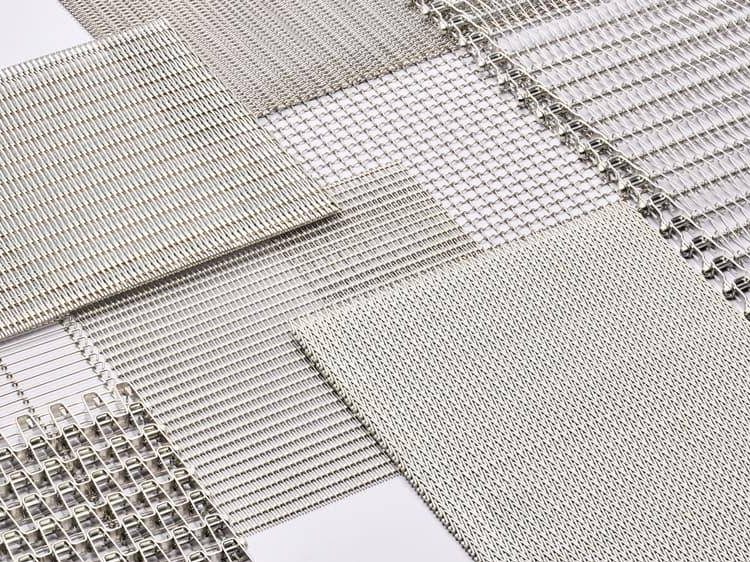
What Is Mesh Size?
Mesh size refers to the number of openings per linear inch in a woven wire mesh.
For example:
| Mesh Count | Meaning |
|---|---|
| 10 Mesh | 10 openings per inch |
| 20 Mesh | 20 openings per inch |
| 100 Mesh | 100 openings per inch |
As mesh count increases, the opening size becomes smaller.
Mesh size is one of the most important specifications when selecting wire mesh for industrial applications.
Understanding Mesh Count and Opening Size
Many buyers confuse mesh count with opening size. These two values are related but not identical.
Mesh Count
The number of openings per inch.
Opening Size
The actual free space between adjacent wires.
Example:
| Mesh | Approximate Opening |
|---|---|
| 10 Mesh | 2.00 mm |
| 20 Mesh | 0.84 mm |
| 40 Mesh | 0.40 mm |
| 80 Mesh | 0.18 mm |
Higher mesh count generally means smaller openings.
How Wire Diameter Affects Opening Size
Opening size is influenced by:
- Mesh count
- Wire diameter
Even when mesh count remains the same, a thicker wire reduces the opening size.
Example:
| Mesh Count | Wire Diameter | Opening Size |
|---|---|---|
| 20 | 0.30 mm | Larger Opening |
| 20 | 0.50 mm | Smaller Opening |
This is why engineers should evaluate both specifications together.
Common Mesh Size Ranges and Applications
Coarse Mesh (2–10 Mesh)
Applications:
- Security barriers
- Animal enclosures
- Machine guards
Benefits:
- High visibility
- Excellent airflow
- Strong structure
Medium Mesh (10–40 Mesh)
Applications:
- Screening
- Ventilation
- Architectural projects
Benefits:
- Balanced strength and filtration
Fine Mesh (40–400 Mesh)
Applications:
- Industrial filtration
- Chemical processing
- Pharmaceutical production
Benefits:
- Precise particle separation
How to Select the Right Mesh Size
When selecting mesh specifications, consider:
Particle Size
Smaller particles require finer mesh.
Airflow Requirements
Higher airflow often requires larger openings.
Visibility Requirements
Security fencing and machine guards usually use larger openings.
Structural Strength
Heavier-duty applications may require thicker wire diameters.
Mesh Size vs Micron Conversion
Many industrial buyers use micron values instead of mesh count. Reference table:
| Mesh | Opening (Micron) |
|---|---|
| 20 Mesh | 840 μm |
| 40 Mesh | 400 μm |
| 60 Mesh | 250 μm |
| 80 Mesh | 180 μm |
| 100 Mesh | 150 μm |
| 200 Mesh | 75 μm |
This conversion is particularly important for filtration applications.
Applications of Different Mesh Sizes
Filtration
Fine mesh for particle retention.
Insect Screening
Medium mesh for airflow and protection.
Industrial Screening
Selected according to material size.
Security and Protection
Coarse mesh for visibility and strength.
Architectural Design
Decorative mesh based on visual and airflow requirements.
Common Mistakes When Selecting Mesh
Choosing Mesh Count Only
Always consider wire diameter as well.
Ignoring Open Area
Open area affects airflow and visibility.
Over-Specifying Filtration Requirements
Using excessively fine mesh may increase cost and reduce efficiency.
Not Considering Material Type
Environmental conditions should influence material selection.
Conclusion
Understanding mesh count, opening size, wire diameter, and application requirements helps ensure the correct wire mesh selection.
A balanced approach improves performance, durability, and overall project value.