Introduction
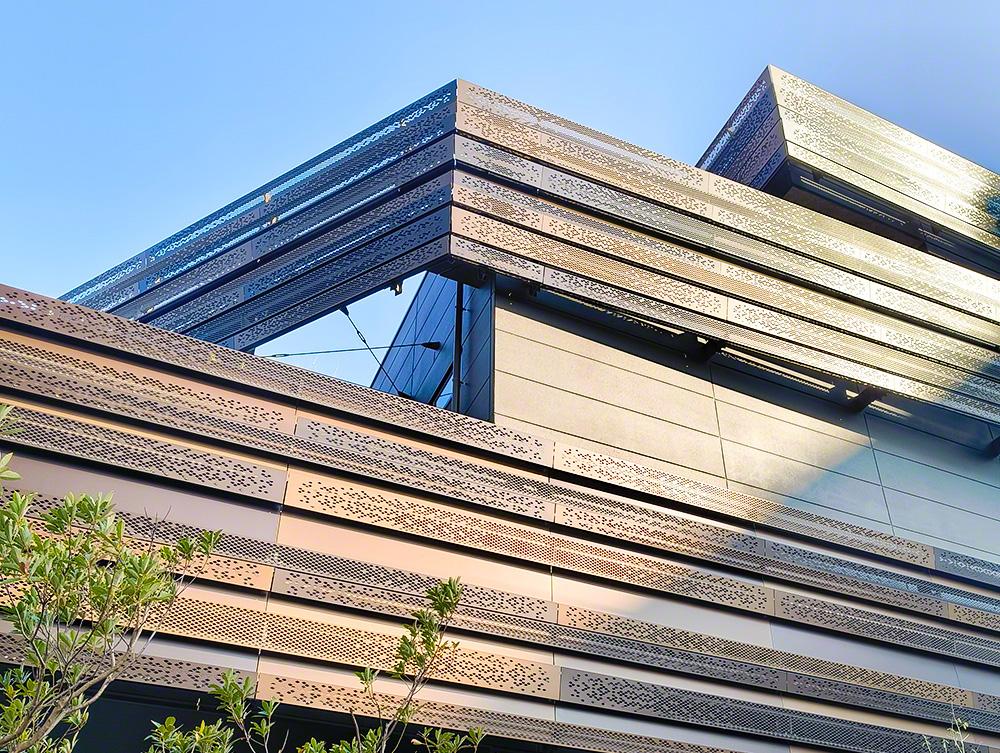
Modern architecture increasingly demands building materials that deliver both technical performance and visual impact. Architects are challenged to design structures that meet energy-efficiency goals, improve occupant comfort, enhance building identity, and satisfy sustainability requirements—all while maintaining practical constructability.
Metal mesh facade systems have emerged as one of the most versatile solutions for achieving these objectives.
Unlike traditional solid cladding materials, metal mesh facades create a semi-transparent building envelope that balances openness and protection. They allow architects to manipulate light, airflow, visibility, and shading while introducing distinctive visual textures and dynamic facade effects.
Today, metal mesh systems can be found on office towers, airports, parking structures, educational facilities, transportation hubs, and mixed-use developments around the world.
This article explores how metal mesh facades combine functionality and architectural design in modern construction projects.
What Is a Metal Mesh Facade?
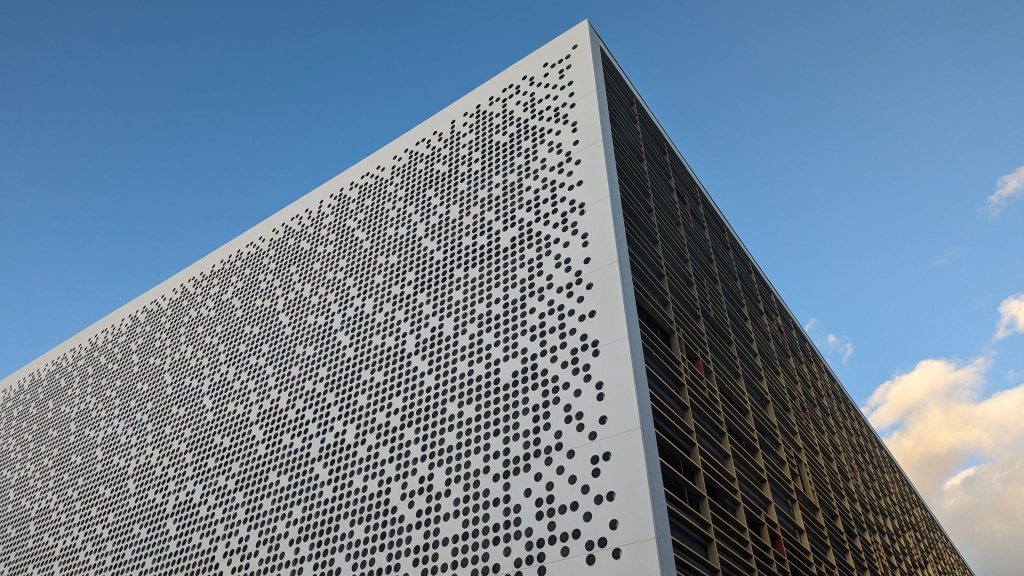
A metal mesh facade is a secondary architectural layer installed on the exterior of a building.
Depending on project requirements, the system may serve as:
- Solar shading
- Privacy screening
- Architectural cladding
- Ventilation enclosure
- Decorative facade element
Common mesh types include:
- Perforated Metal
- Woven Wire Mesh
- Expanded Metal
Each offers different visual and performance characteristics.
Why Architects Use Metal Mesh Facades
Solar Control
One of the primary benefits of metal mesh facades is reducing solar heat gain.
Properly designed systems can:
- Lower cooling loads
- Reduce glare
- Improve occupant comfort
- Enhance building energy performance
This is particularly important in regions with high solar exposure.
Natural Ventilation
Metal mesh systems allow airflow through the building envelope.
Applications include:
- Parking structures
- Mechanical equipment enclosures
- Transit facilities
- Utility buildings
Ventilation can often be achieved without sacrificing security or aesthetics.
Visual Identity
Architectural mesh helps create distinctive building appearances.
Designers can customize:
- Transparency levels
- Pattern geometry
- Material finishes
- Lighting effects
to achieve unique visual outcomes.
Sustainability
Metal mesh facade systems support sustainable design goals through:
- Daylighting optimization
- Reduced HVAC demand
- Recyclable materials
- Long service life
Many projects pursuing green building certifications incorporate architectural metal mesh solutions.
Perforated Metal Facades
Perforated metal remains one of the most commonly specified facade materials.
Benefits include:
- Precise open-area control
- Modern appearance
- Excellent solar shading
- Strong visual consistency
Typical applications:
- Office buildings
- Educational facilities
- Parking garages
- Public buildings
Woven Wire Mesh Facades
Woven wire mesh provides a premium architectural appearance.
Advantages include:
- Elegant transparency
- Sophisticated texture
- High-end aesthetics
- Excellent daylight performance
Commonly used in:
- Corporate headquarters
- Airports
- Museums
- Luxury developments
Stainless steel woven mesh is particularly popular due to its durability and visual appeal.
Expanded Metal Facades
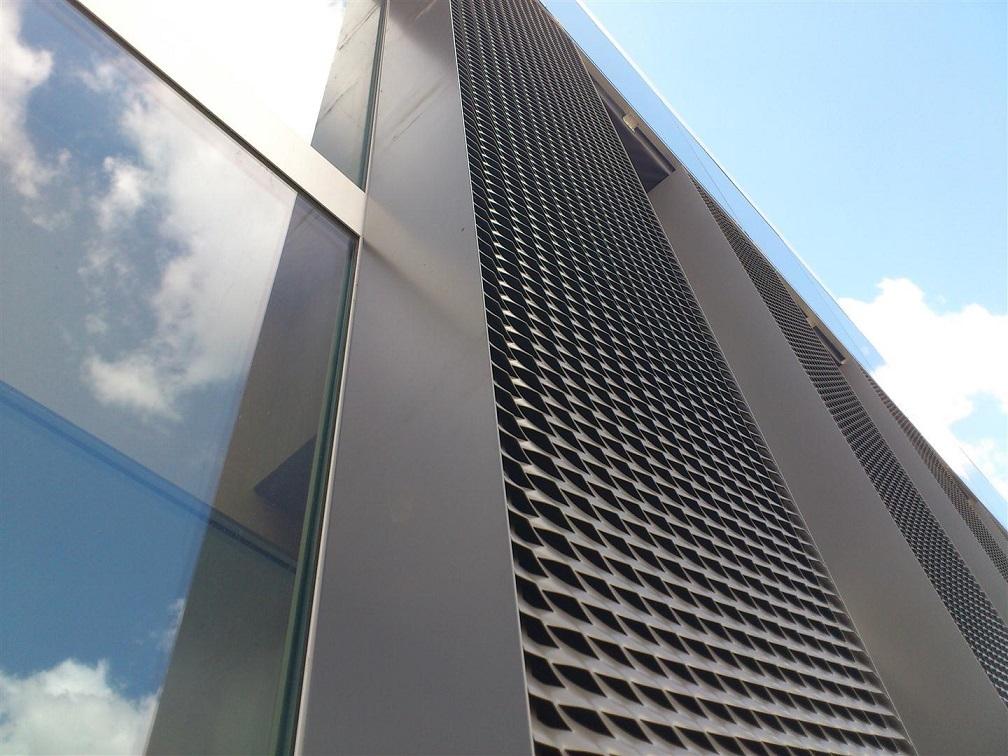
Expanded metal facades offer:
- Structural rigidity
- Cost efficiency
- Ventilation performance
- Effective screening
Applications include:
- Parking structures
- Industrial buildings
- Utility facilities
- Mixed-use developments
Expanded metal often provides an economical alternative to more complex facade systems.
Common Building Applications
Office Buildings
Architectural mesh can create distinctive facades while improving energy performance.
Parking Structures
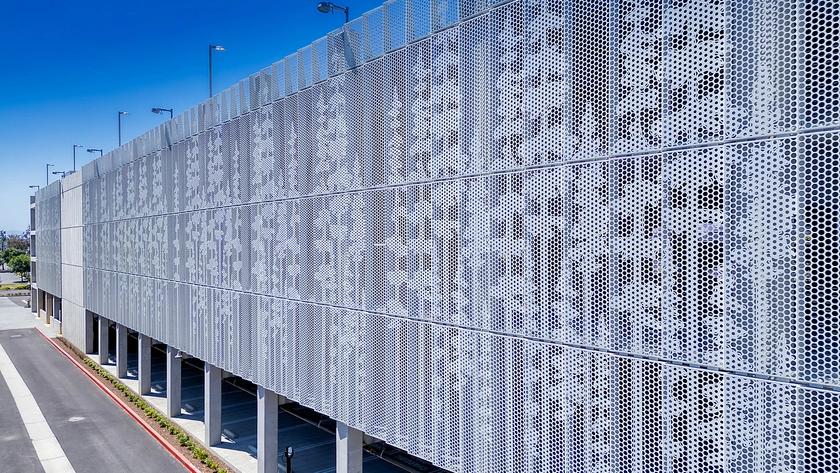
Metal mesh is widely used to provide:
- Ventilation
- Screening
- Architectural enhancement
without requiring solid wall construction.
Airports and Transportation Facilities
Large public facilities benefit from:
- Durability
- Low maintenance
- Solar control
- Visual identity
Educational Buildings
Schools and universities increasingly utilize metal mesh systems to create modern and functional building envelopes.
Metal Mesh Facade Comparison Table
| Facade Type | Appearance | Ventilation | Solar Control | Cost Level |
|---|---|---|---|---|
| Perforated Metal | Excellent | Good | Excellent | Moderate |
| Woven Wire Mesh | Premium | Excellent | Good | Higher |
| Expanded Metal | Good | Excellent | Good | Economical |
Material Selection Guide
| Material | Recommended Applications |
|---|---|
| Aluminum | Lightweight facades |
| Galvanized Steel | General building projects |
| Stainless Steel | Premium architectural projects |
| Weathering Steel | Specialized architectural designs |
Recommended Specifications Table
| Application | Material | Open Area |
|---|---|---|
| Office Building | Aluminum | 25–45% |
| Parking Structure | Galvanized Steel | 40–60% |
| Airport Facility | Stainless Steel | 30–50% |
| Educational Building | Aluminum | 25–50% |
| Utility Facility | Galvanized Steel | 40–70% |
Key Design Considerations
Open Area Percentage
Open area affects:
- Daylighting
- Visibility
- Ventilation
- Solar performance
Balancing these factors is essential.
Structural Support
Facade systems must accommodate:
- Wind loads
- Thermal expansion
- Attachment requirements
Engineering coordination is critical.
Finish Selection
Popular finishes include:
- Powder Coating
- PVDF Coating
- Anodized Aluminum
- Stainless Steel Mill Finish
Maintenance Requirements
Projects should consider long-term cleaning and access requirements during the design phase.
Common Specification Mistakes
Choosing Mesh Based Only on Appearance
Visual appeal should not outweigh performance requirements.
Ignoring Solar Analysis
Facade geometry and open area significantly influence shading effectiveness.
Underestimating Wind Loads
Large facade panels require proper structural engineering.
Selecting Unsuitable Materials
Environmental conditions should guide material selection.
Facility Type Selection Guide
| Facility Type | Recommended Mesh |
|---|---|
| Office Building | Perforated Metal |
| Airport | Woven Wire Mesh |
| Parking Structure | Expanded Metal |
| University Building | Perforated Metal |
| Transportation Hub | Woven Wire Mesh |
| Utility Facility | Expanded Metal |
Conclusion
Metal mesh facades have become an integral component of modern architectural design. By combining aesthetics, solar control, ventilation, durability, and sustainability, these systems help architects create high-performance building envelopes that meet both functional and visual objectives.
Whether utilizing perforated metal, woven wire mesh, or expanded metal, designers can tailor facade solutions to suit a wide range of commercial, institutional, and infrastructure projects.