Introduction
Contemporary architecture increasingly emphasizes both visual impact and building performance. Architects and developers seek materials that not only create distinctive building identities but also contribute to energy efficiency, occupant comfort, and long-term durability.
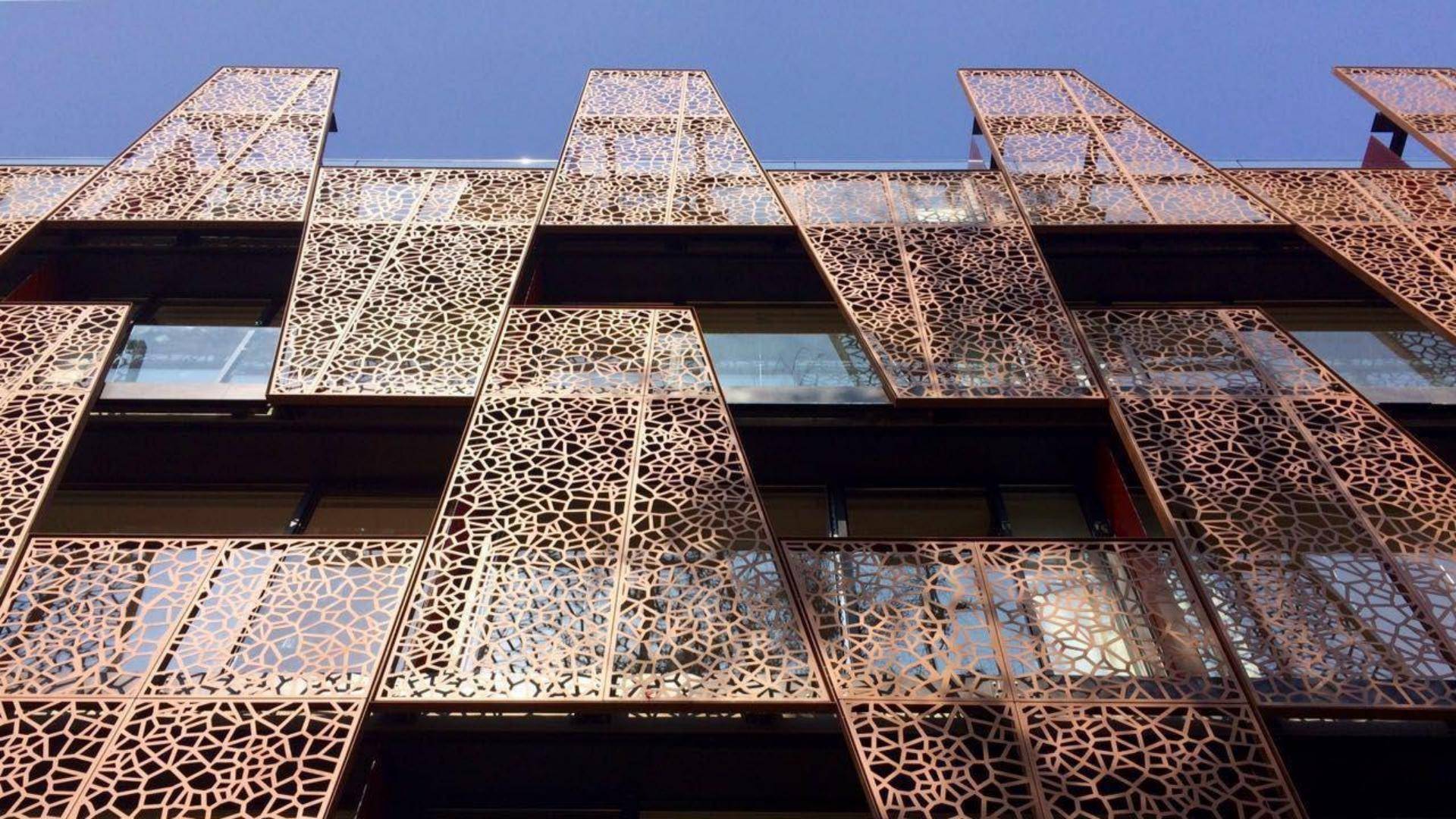
Perforated metal facades have emerged as one of the most versatile solutions for achieving these objectives. By combining custom perforation patterns with durable metal materials, facade systems can deliver shading, ventilation, privacy, and aesthetic appeal in a single architectural element.
Today, perforated metal panels can be found on office buildings, educational facilities, transportation hubs, parking structures, cultural institutions, and mixed-use developments around the world.
Why Architects Choose Perforated Metal Facades
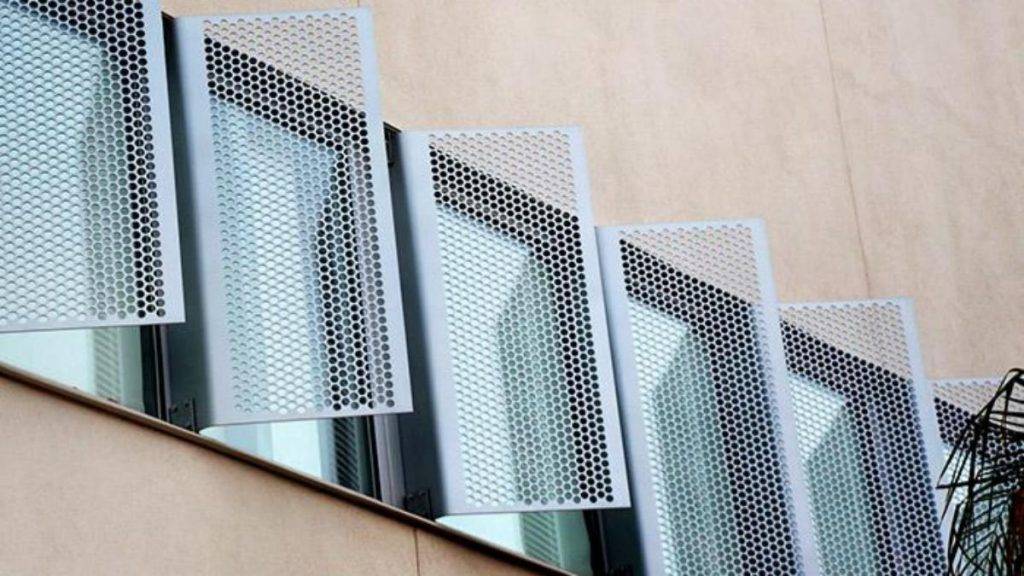
Perforated metal offers unique advantages compared with solid cladding materials.
Key benefits include:
- Modern appearance
- Flexible design options
- Solar shading
- Natural ventilation
- Daylight management
- Long service life
Because perforation patterns can be customized, designers have significant freedom to create visually distinctive building envelopes.
Improving Building Performance
Beyond aesthetics, perforated facades can improve overall building performance.
Solar Control
Direct sunlight can increase cooling loads and reduce occupant comfort.
Perforated screens help:
- Reduce solar heat gain
- Improve energy efficiency
- Minimize glare
Many facade systems are specifically designed to balance shading and daylight transmission.
Ventilation
Perforated panels allow air movement while maintaining a consistent exterior appearance.
Benefits include:
- Improved airflow
- Reduced heat buildup
- Enhanced comfort
This is particularly valuable for parking structures and semi-open facilities.
Privacy Without Blocking Light
Perforated metal can provide a degree of visual screening while still allowing:
- Daylight penetration
- Exterior visibility
- Air circulation
This makes it suitable for educational, healthcare, and commercial projects.
Common Architectural Applications
Commercial Office Buildings
Perforated metal facades help create:
- Modern aesthetics
- Energy-efficient envelopes
- Corporate branding opportunities
Parking Structures
Parking garages often use perforated metal because it provides:
- Ventilation
- Security screening
- Architectural enhancement
Educational Buildings
Schools and universities frequently incorporate perforated metal panels for:
- Sun control
- Durable exterior finishes
- Distinctive architectural identity
Transportation Facilities
Airports, train stations, and transit centers often use perforated panels to combine functionality with visual appeal.
Material Options
Aluminum Perforated Metal
Advantages:
- Lightweight
- Corrosion resistant
- Easy fabrication
Commonly used in large facade systems.
Stainless Steel Perforated Metal
Advantages:
- Premium appearance
- Excellent durability
- Superior corrosion resistance
Suitable for demanding architectural environments.
Carbon Steel Perforated Metal
Advantages:
- Cost-effective
- Strong
- Versatile
Often selected when project budgets are a primary consideration.
Material Comparison Table
| Material | Weight | Corrosion Resistance | Typical Use |
|---|---|---|---|
| Aluminum | Light | Excellent | Facades |
| Stainless Steel | Moderate | Excellent | Premium Projects |
| Carbon Steel | Heavy | Moderate | General Applications |
Design Considerations
When specifying perforated metal facades, architects should evaluate:
Open Area Percentage
The amount of open area influences:
- Shading performance
- Visibility
- Ventilation
Hole Pattern
Popular options include:
- Round holes
- Square holes
- Slotted patterns
- Decorative custom designs
Panel Size and Support Structure
Structural requirements vary based on:
- Wind loads
- Building height
- Installation method
Application Selection Guide
| Project Type | Recommended Material |
|---|---|
| Office Buildings | Aluminum |
| Educational Facilities | Aluminum |
| Parking Structures | Aluminum or Galvanized Steel |
| Coastal Projects | Stainless Steel |
| Premium Commercial Projects | Stainless Steel |
Common Specification Mistakes
Focusing Only on Appearance
Facade systems should balance aesthetics and performance.
Ignoring Environmental Exposure
Corrosion resistance should match project conditions.
Overlooking Maintenance Requirements
Material selection can significantly affect long-term upkeep.
Selecting Incorrect Open Area
Excessive openness or insufficient ventilation may reduce performance benefits.
Conclusion
Perforated metal facades have become a defining feature of contemporary architecture. Their ability to combine visual appeal, shading performance, ventilation, and durability makes them suitable for a wide range of building types.
By carefully selecting materials, perforation patterns, and structural systems, architects can create facade solutions that enhance both building performance and architectural character.
FAQ
What are the benefits of perforated metal facades?
Perforated metal facades provide shading, ventilation, privacy, visual appeal, and long-term durability.
Is aluminum suitable for facade applications?
Yes. Aluminum is widely used because it is lightweight, corrosion resistant, and easy to fabricate.
Can perforated metal improve energy efficiency?
Yes. Properly designed facade systems can reduce solar heat gain and improve occupant comfort.
What hole patterns are commonly used?
Round holes, square holes, slotted holes, and custom decorative patterns are among the most common options.
Are perforated facades suitable for parking structures?
Yes. They are frequently used because they provide ventilation while improving architectural appearance.