Introduction
Perforated metal is one of the most versatile metal products used in architecture, filtration, screening, acoustics, ventilation, and industrial processing.
Its performance depends not only on material selection and hole pattern design but also on the manufacturing process itself.
Understanding how perforated metal is produced helps buyers and engineers specify products more accurately and evaluate quality requirements more effectively.
What Is Perforated Metal?
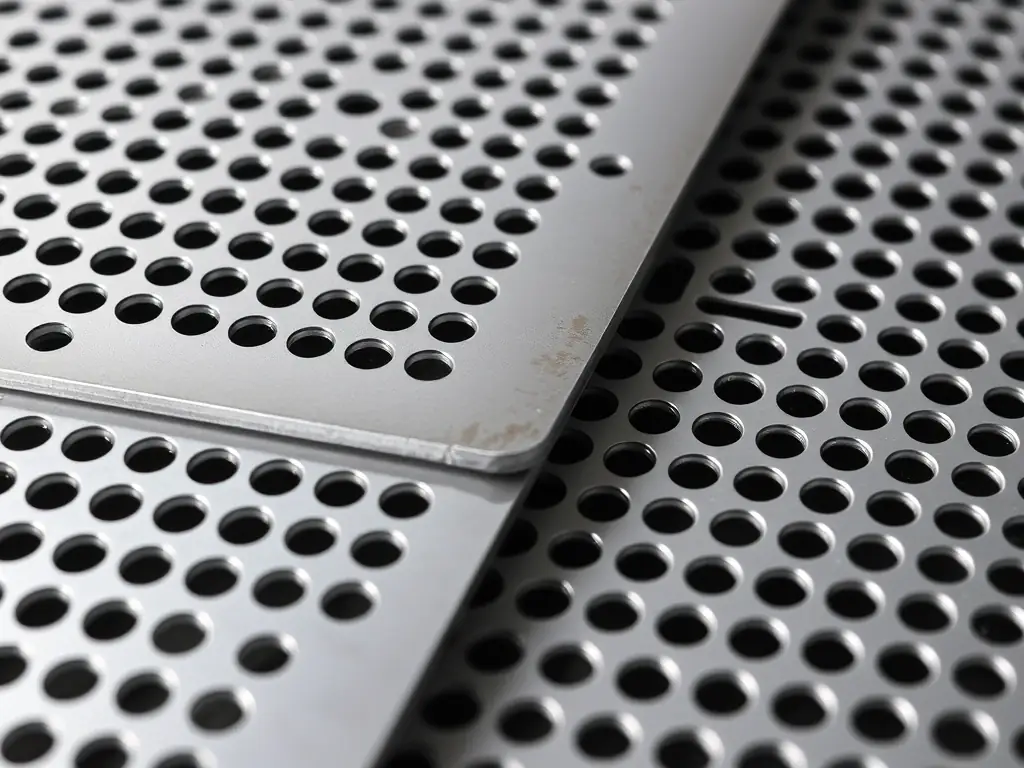
Perforated metal is a sheet product that contains a pattern of holes created through a punching process.
Common materials include:
- Carbon Steel
- Galvanized Steel
- Stainless Steel
- Aluminum
- Copper
Hole patterns may be:
- Round
- Square
- Slotted
- Hexagonal
- Decorative
Step 1: Material Selection
Production begins with selecting the appropriate metal sheet.
Factors include:
- Corrosion resistance
- Strength requirements
- Formability
- Appearance
- Cost
Common Materials
| Material | Typical Applications |
|---|---|
| Carbon Steel | Industrial Use |
| Galvanized Steel | Outdoor Applications |
| Stainless Steel | Corrosive Environments |
| Aluminum | Lightweight Structures |
| Copper | Decorative Projects |
Step 2: Sheet Preparation
Before perforation:
- Material thickness is verified
- Surface quality is inspected
- Sheet dimensions are confirmed
Proper preparation helps maintain punching accuracy and finished product quality.
Step 3: Punching Process
Punching is the core manufacturing operation.
A punch and die system creates openings according to the specified pattern.
Types of Punching Equipment
Mechanical Punch Press
Advantages:
- High production speed
- Suitable for large volumes
CNC Punching Machine
Advantages:
- High precision
- Flexible hole patterns
- Suitable for custom designs
How Holes Are Created
The punch forces the metal sheet into a matching die opening.
The removed material becomes scrap.
The process is repeated thousands of times to create the required pattern.
Common Hole Patterns
| Hole Type | Typical Use |
|---|---|
| Round Hole | General Industrial Use |
| Square Hole | Screening |
| Slotted Hole | Filtration |
| Hexagonal Hole | Ventilation |
| Decorative Pattern | Architecture |
Step 4: Leveling and Flattening
After punching, sheets may experience distortion or stress.
Leveling equipment is used to:
- Improve flatness
- Reduce deformation
- Enhance appearance
This step is especially important for architectural applications.
Step 5: Cutting and Fabrication
Sheets are processed to final dimensions.
Common operations include:
- Shearing
- Laser cutting
- Plasma cutting
- Notching
- Forming
Step 6: Surface Finishing
Depending on the application, additional finishing may be required.
Galvanizing
Provides corrosion protection.
Powder Coating
Improves appearance and weather resistance.
Anodizing
Common for aluminum perforated sheets.
Polishing
Often used for stainless steel products.
Quality Control
Critical inspections include:
| Inspection Item | Purpose |
|---|---|
| Hole Diameter | Dimensional Accuracy |
| Pitch | Pattern Consistency |
| Sheet Thickness | Compliance |
| Flatness | Appearance |
| Open Area | Performance |
Factors Affecting Manufacturing Cost
Major cost drivers include:
- Material type
- Sheet thickness
- Hole size
- Open area percentage
- Production volume
- Finishing requirements
Custom patterns generally increase production costs.
Common Applications
Architectural Facades
Decorative appearance and airflow.
Acoustic Panels
Noise control systems.
Filtration Equipment
Particle separation.
Industrial Screening
Material classification.
Safety Guards
Machine protection.
Conclusion
The perforated metal manufacturing process combines precision punching, material engineering, and quality control to create products suitable for a wide range of industrial and architectural applications. Understanding the process helps buyers make informed decisions regarding specifications, performance, and cost.