Introduction
Open area is one of the most important parameters when specifying perforated metal. Whether the application involves ventilation, filtration, acoustic control, architectural cladding, or industrial screening, the percentage of open area directly affects performance.
Understanding how open area is calculated and how it influences airflow, visibility, strength, and weight helps engineers and buyers select the most suitable perforated metal configuration for their projects.
What Is Open Area?
Open area refers to the percentage of a sheet occupied by holes.
It indicates how much of the surface is open versus solid metal.
For example:
- 30% Open Area = 30% holes, 70% metal
- 50% Open Area = 50% holes, 50% metal
- 70% Open Area = 70% holes, 30% metal
Higher open area generally allows more airflow and light transmission but reduces structural strength.
Why Open Area Matters
Open area directly affects:
| Performance Factor | Impact |
|---|---|
| Airflow | Higher open area increases airflow |
| Filtration | Influences flow rate and pressure drop |
| Visibility | Improves transparency |
| Weight | Reduces material weight |
| Strength | Excessive open area reduces rigidity |
| Acoustics | Influences sound absorption |
Common Perforation Patterns
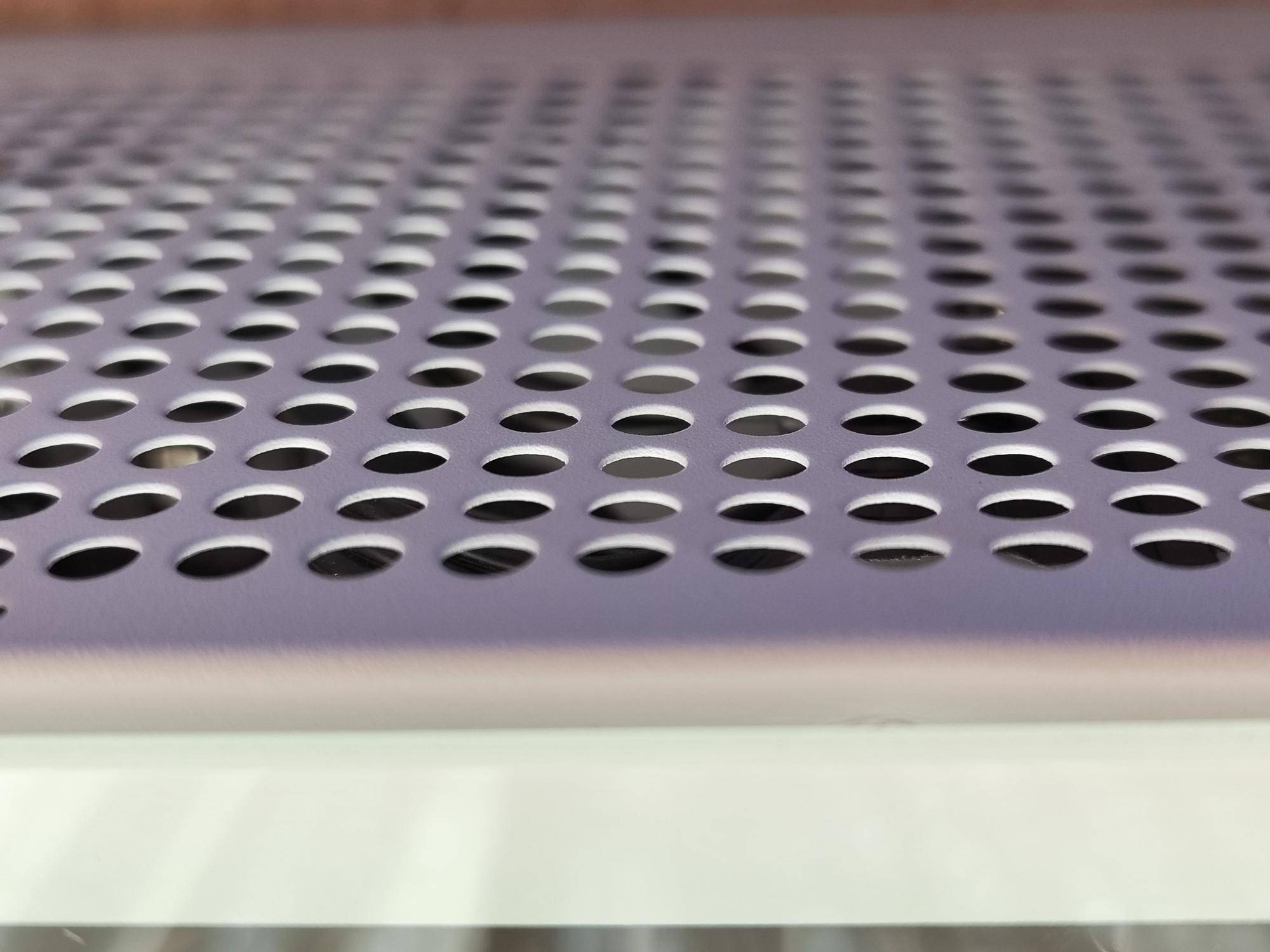
Round Hole – Staggered Pattern
Most popular perforation style.
Benefits:
- Highest open area
- Excellent strength-to-weight ratio
- Good airflow
- Cost-effective production
Applications:
- Ventilation
- Filtration
- Machine guards
- Architectural panels
Round Hole – Straight Pattern
Advantages:
- Easier alignment
- Consistent appearance
Applications:
- Decorative panels
- Equipment covers
Square Hole Pattern
Advantages:
- Larger opening per hole
- Improved visibility
Applications:
- Screening
- Architectural facades
Slotted Hole Pattern
Advantages:
- Directional airflow
- Increased drainage
Applications:
- Grain processing
- Water treatment
- Mining
Open Area Calculation
Round Hole Staggered Pattern
The most commonly used formula:
Open Area(%)=P20.907×D2×100
Where:
- D = Hole Diameter
- P = Center Pitch
Example
Hole Diameter: 5 mm
Pitch: 8 mm
Calculation: Open Area ≈ 35.4%
This means approximately 35.4% of the sheet surface consists of openings.
Typical Open Area Values
| Hole Pattern | Typical Open Area |
|---|---|
| Round Staggered | 30–60% |
| Round Straight | 20–50% |
| Square | 25–65% |
| Slotted | 20–70% |
Open Area vs Strength
Relationship between open area and sheet strength
Typical relative trend for perforated metal sheets.
| Strength | Open Area |
|---|---|
| 100 | 20% |
| 85 | 35% |
| 65 | 50% |
| 45 | 65% |
General rule:
- Higher open area → Better airflow
- Higher open area → Lower strength
Balancing these requirements is essential.
Typical Open Area Recommendations
| Application | Recommended Open Area |
|---|---|
| Ventilation Panels | 40–60% |
| Acoustic Panels | 20–40% |
| Filtration | 30–50% |
| Security Screens | 20–35% |
| Architectural Facades | 30–55% |
| Machine Guards | 30–50% |
How to Specify Perforated Metal
Always specify:
- Material
- Sheet Thickness
- Hole Diameter
- Hole Pattern
- Pitch
- Open Area
- Sheet Size
Conclusion
Open area is one of the most influential design parameters in perforated metal. By understanding the relationship between hole size, pitch, airflow, visibility, and structural strength, engineers and buyers can select the optimal perforated sheet for their specific application.