Introduction
Utility and infrastructure facilities are among the most critical assets in modern society. Electrical substations, water treatment plants, renewable energy installations, telecommunications sites, and transportation infrastructure provide essential services that support communities, businesses, and industries. Protecting these facilities requires more than basic perimeter fencing—it demands a security strategy designed to deter unauthorized access, safeguard critical equipment, and ensure uninterrupted operations.
Unlike warehouses or manufacturing plants, utility sites are often unmanned, remotely located, or distributed across large geographic areas. They may also be subject to stricter regulatory requirements due to their role in public safety and national infrastructure. As a result, fencing systems must balance physical security, durability, ease of maintenance, and compatibility with surveillance technologies.
This article examines the key considerations for selecting fencing systems for utility and infrastructure projects and highlights practical solutions for different types of facilities.
Why Utility Facilities Require Enhanced Perimeter Protection
Utility sites face security challenges that differ significantly from conventional industrial properties.
Many facilities operate continuously with limited on-site personnel. Unauthorized access can lead not only to theft or vandalism but also to service interruptions, safety hazards, and significant financial losses.
A robust perimeter fencing system helps facility owners:
- Prevent unauthorized entry.
- Protect critical electrical and mechanical equipment.
- Reduce risks of vandalism and metal theft.
- Improve public safety around hazardous installations.
- Support regulatory compliance and asset management.
- Integrate with modern monitoring and alarm systems.
For many infrastructure operators, perimeter fencing is considered a fundamental layer within a broader physical security program.
Security Challenges Across Different Infrastructure Projects
Although utility facilities share common security objectives, each type of installation presents unique operational requirements.
| Facility Type | Primary Security Concern | Typical Fence Requirement |
|---|---|---|
| Electrical Substations | Unauthorized access to energized equipment | High-security welded wire or anti-climb fencing |
| Solar Farms | Large remote perimeters | Chain link fencing with monitored access gates |
| Water Treatment Plants | Public safety and regulatory compliance | Welded wire fencing with controlled entry |
| Telecommunications Sites | Equipment theft and vandalism | Anti-climb fencing with surveillance |
| Pumping Stations | Remote operation | Corrosion-resistant perimeter fencing |
Rather than applying a single fencing solution across every project, operators should evaluate site-specific risks, environmental conditions, maintenance resources, and future operational requirements.
Selecting the Right Fencing System for Different Infrastructure Projects
No single fencing system is suitable for every utility project. The appropriate solution depends on the facility’s function, risk profile, environmental conditions, and maintenance strategy.
Electrical Substations
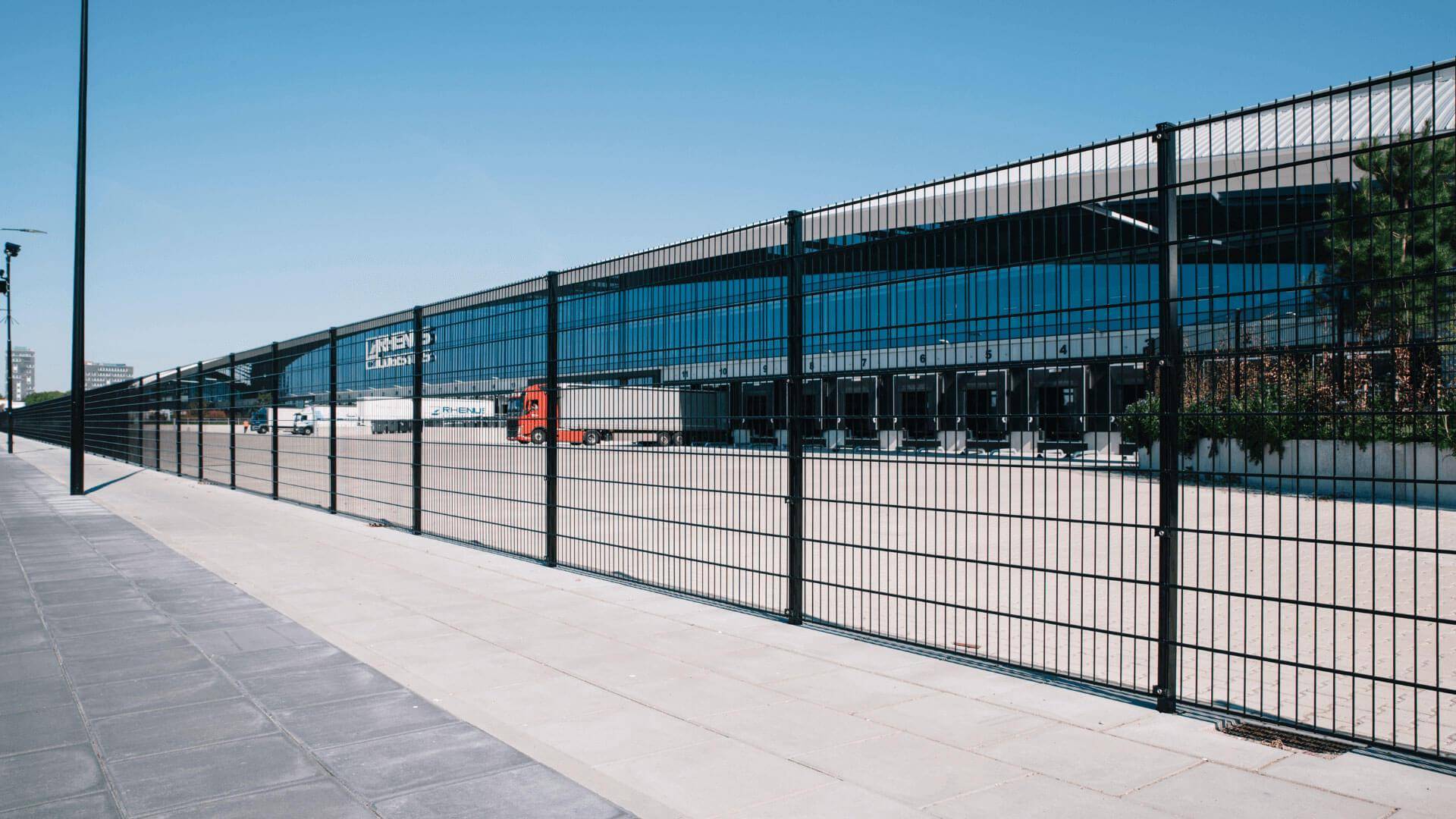
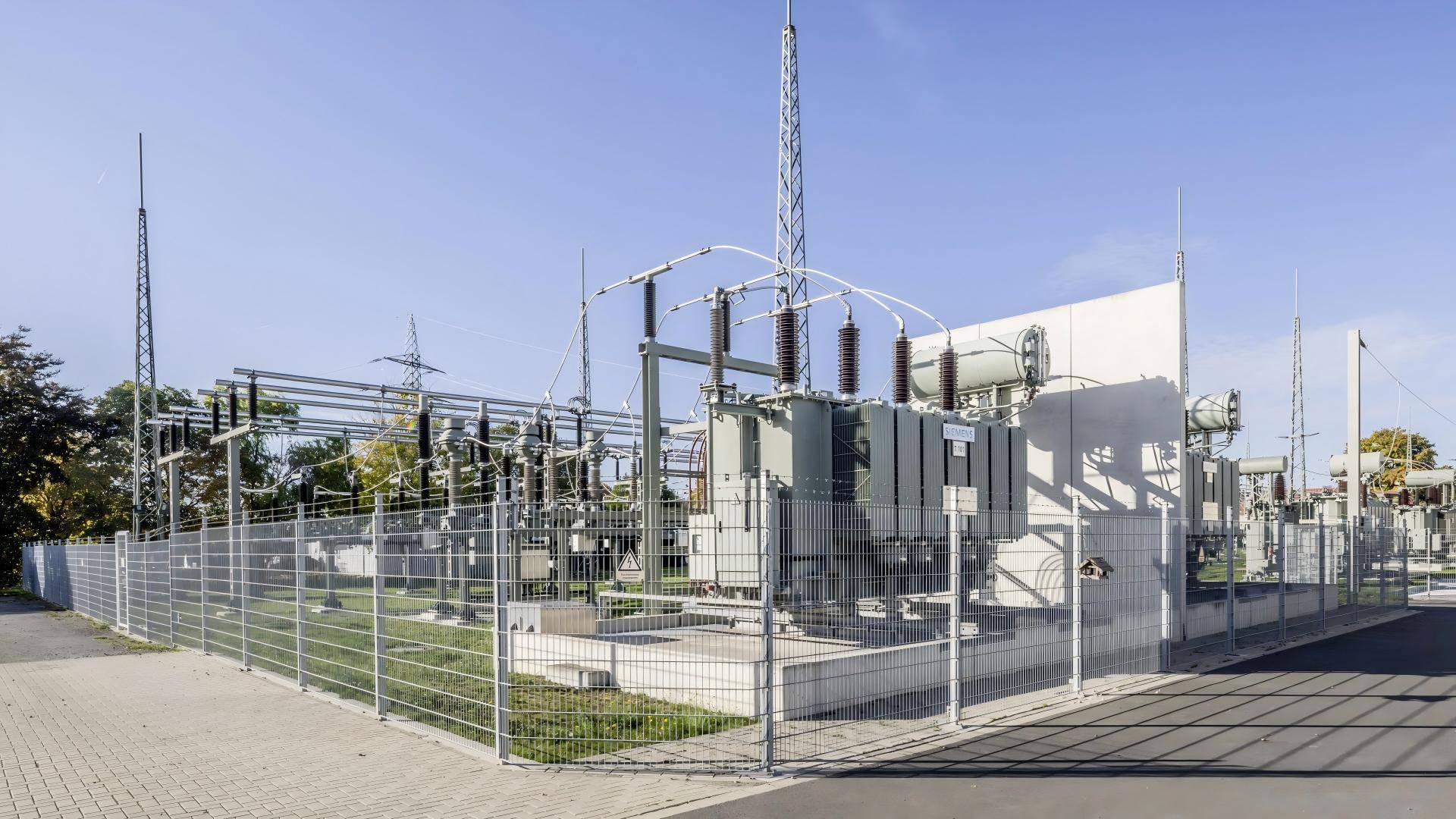
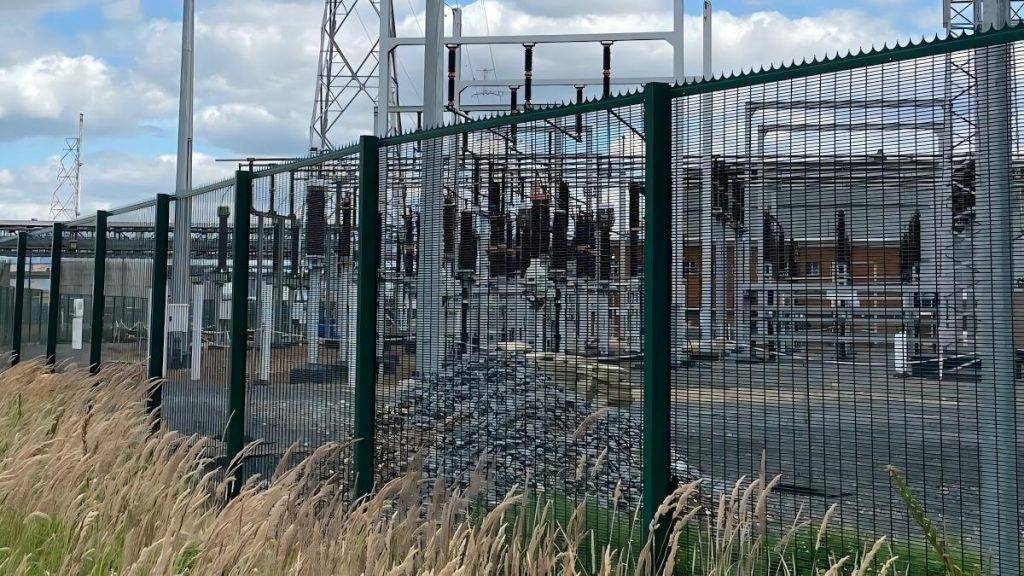
Electrical substations contain energized equipment, transformers, switchgear, and control systems that require strict access control. Security fencing should discourage climbing, provide clear visibility for surveillance, and withstand long-term outdoor exposure.
Recommended solution:
- Welded Wire Fence
- 358 High Security Fence (for critical substations)
- Hot-dip galvanized or powder-coated finish
- Lockable vehicle and pedestrian access gates
Solar Farms
Utility-scale solar farms often occupy hundreds of hectares in remote locations. Their large perimeters make installation efficiency and maintenance costs important considerations.
Recommended solution:
- Chain Link Fence
- Galvanized steel posts
- Vehicle access gates
- Integrated CCTV and intrusion detection where required
The open structure of chain link fencing allows excellent visibility while providing a cost-effective solution for extensive perimeters.
Water Treatment Facilities
Water treatment plants require fencing that not only protects infrastructure but also helps prevent public access to potentially hazardous operational areas.
Recommended solution:
- Welded Wire Fence
- Powder-coated finish for improved appearance
- Controlled entry points
- Clearly identified emergency access gates
Telecommunications Sites
Telecommunication towers and equipment shelters often operate without permanent on-site personnel, making them attractive targets for vandalism and equipment theft.
Recommended solution:
- Welded Wire Fence
- Anti-climb mesh
- Secure lock systems
- Remote monitoring integration
Designing a Perimeter for Long-Term Performance
Utility infrastructure projects are designed for long service lives, often exceeding 20 years. The fencing system should therefore be selected based on lifecycle performance rather than initial installation cost alone.
The following factors should be considered during project planning.
| Design Consideration | Recommendation |
|---|---|
| Corrosion Protection | Select coatings appropriate for the local environment. |
| Foundation Stability | Design posts according to soil conditions and wind loads. |
| Maintenance Access | Allow sufficient clearance for inspection and repairs. |
| Future Expansion | Use modular fencing systems where possible. |
| Emergency Response | Maintain designated emergency access points. |
Planning for maintenance and future upgrades during the design phase can significantly reduce operational costs over the lifetime of the facility.
Material Selection for Utility Environments
Environmental exposure varies considerably between infrastructure projects. Selecting the appropriate material helps ensure long-term durability and minimizes maintenance requirements.
| Environment | Recommended Material | Typical Finish |
|---|---|---|
| Inland Utility Sites | Carbon Steel | Hot-Dip Galvanized |
| Coastal Infrastructure | Carbon Steel | Galvanized + PVC Coated |
| High-Humidity Regions | Carbon Steel | Powder Coated over Galvanized |
| Chemical Exposure | Stainless Steel | Natural Finish |
| Marine Installations | Stainless Steel 316 | Natural Finish |
For projects located in aggressive environments, corrosion resistance should be a primary consideration during material selection.
Best Practices for Utility Perimeter Security
A successful fencing project extends beyond the fence itself. Utility operators should adopt a comprehensive approach that integrates physical protection with operational management.
Key recommendations include:
- Conduct a site-specific security risk assessment before specifying the fencing system.
- Separate public access areas from restricted operational zones.
- Install durable signage to identify hazardous or restricted areas.
- Maintain clear vegetation around the perimeter to improve visibility.
- Coordinate fence design with lighting and surveillance systems.
- Establish a regular inspection and maintenance program.
These practices help improve both security performance and operational reliability.
Supporting Regulatory Compliance
Many utility and infrastructure projects are subject to industry regulations or owner-specific technical standards. While exact requirements vary by country and project type, perimeter fencing often contributes to compliance by:
- Restricting unauthorized access to hazardous areas.
- Supporting occupational health and safety objectives.
- Protecting critical public infrastructure.
- Assisting with site security audits and inspections.
Project owners should always verify local codes and engineering specifications before selecting fencing products.
Conclusion
Utility and infrastructure facilities demand perimeter security solutions that combine durability, reliability, and effective access control. Whether protecting an electrical substation, a water treatment plant, a solar farm, or a telecommunications site, the fencing system should be selected according to the facility’s operational risks, environmental conditions, and long-term maintenance objectives.
Chain link fencing remains a practical solution for large remote sites where cost efficiency and visibility are priorities. Welded wire and high-security mesh fencing provide enhanced protection for critical infrastructure requiring greater resistance to climbing and unauthorized access.
By integrating appropriate fencing with surveillance, lighting, and access control systems, utility operators can establish a secure perimeter that supports safe, reliable, and uninterrupted operation of essential infrastructure.
FAQ
Which fence is most commonly used for utility facilities?
Chain link fencing is widely used for large utility sites because it is economical, durable, and easy to install. Welded wire fencing is preferred where enhanced security is required.
Is anti-climb fencing necessary for electrical substations?
For substations with higher security requirements or critical infrastructure status, anti-climb welded wire or 358 security fencing is often recommended to reduce the risk of unauthorized entry.
What is the best fence coating for outdoor utility projects?
Hot-dip galvanized steel is suitable for most inland environments. Coastal or corrosive locations may require PVC-coated galvanized steel or stainless steel to improve corrosion resistance.
Can utility fencing be integrated with electronic security systems?
Yes. Modern utility projects commonly integrate perimeter fencing with CCTV, intrusion detection, access control systems, and perimeter lighting to provide layered security.