Introduction
Welded wire mesh is one of the most versatile metal mesh products available today. It is used in construction, agriculture, security fencing, industrial enclosures, and infrastructure projects.
Selecting the right specification requires evaluating several factors including mesh opening, wire diameter, coating type, and environmental conditions.
This guide provides a practical framework for choosing welded wire mesh for your application.
Step 1: Define the Application
The intended application determines the required mesh specification.
| Application | Typical Requirement |
|---|---|
| Construction | Strength |
| Security Fencing | Security |
| Agriculture | Durability |
| Animal Enclosures | Safety |
| Industrial Partitions | Rigidity |
Step 2: Select Mesh Opening
Mesh opening affects:
- Visibility
- Security
- Containment
- Airflow
| Mesh Opening | Common Use |
|---|---|
| 12.5 mm | Small animal cages |
| 25 mm | Poultry fencing |
| 50 mm | Security fencing |
| 75 mm | General fencing |
| 100 mm | Agricultural fencing |
Step 3: Choose Wire Diameter
Wire diameter determines strength and service life.
| Diameter | Typical Application |
|---|---|
| 1.2 mm | Light-duty |
| 1.6 mm | Animal enclosures |
| 2.0 mm | General fencing |
| 2.5 mm | Security fencing |
| 3.0 mm+ | Industrial applications |
Step 4: Select Material and Finish
Galvanized Welded Wire Mesh
Advantages:
- Economical
- Corrosion resistant
- Widely available
PVC Coated Welded Wire Mesh
Advantages:
- Enhanced corrosion protection
- Attractive appearance
- Outdoor durability
Stainless Steel Welded Wire Mesh
Advantages:
- Excellent corrosion resistance
- Hygienic surface
- Long service life
Step 5: Consider Environmental Conditions
Dry Indoor Environment
Recommended:
- Standard galvanized mesh
Outdoor Environment
Recommended:
- Hot-dip galvanized
- PVC coated
Marine Environment
Recommended:
- Stainless steel 316
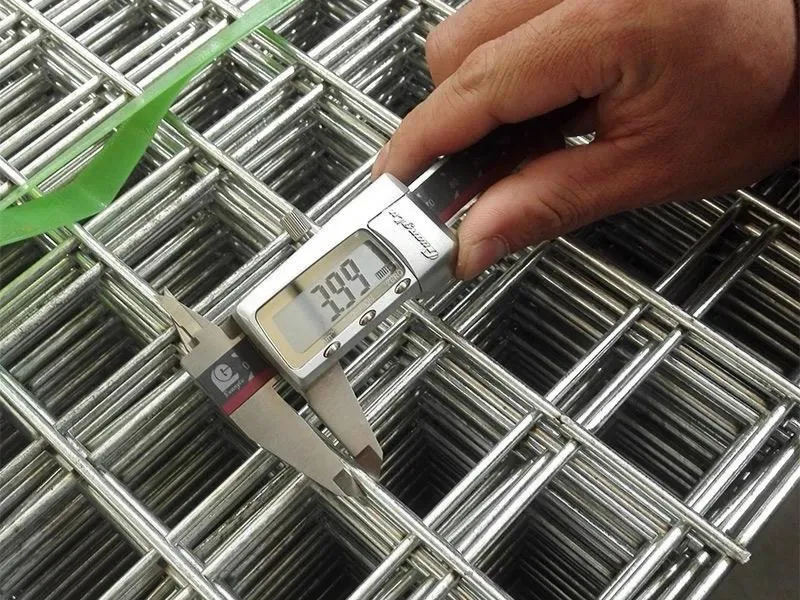
Step 6: Verify Technical Specifications
A complete RFQ should include:
- Material
- Wire diameter
- Mesh opening
- Width
- Length
- Surface finish
Example:
Material: Hot-Dip Galvanized Steel
Wire Diameter: 2.5 mm
Mesh Opening: 50 × 50 mm
Roll Width: 1.8 m
Roll Length: 30 m
Common Buying Mistakes
Selecting by Price Only
Lower cost may result in shorter service life.
Ignoring Corrosion Exposure
Environmental conditions strongly influence material choice.
Not Specifying Wire Diameter
Mesh opening alone is insufficient.
Omitting Coating Requirements
Coating thickness affects durability.
Recommended Specifications by Application
| Application | Recommendation |
|---|---|
| Poultry Farming | 25 mm × 25 mm, 1.6 mm |
| Residential Fence | 50 mm × 50 mm, 2.0 mm |
| Industrial Fence | 50 mm × 50 mm, 2.5 mm |
| Security Enclosure | 25 mm × 25 mm, 3.0 mm |
| Construction Use | Heavy-duty welded mesh |
Conclusion
The best welded wire mesh specification depends on the balance between strength, durability, corrosion resistance, and cost. By clearly defining the application and environment, buyers can select a product that delivers reliable long-term performance.