Selecting the correct wire diameter is one of the most important considerations in wire manufacturing, wire mesh production, fencing systems, and industrial fabrication.
However, wire sizes are often specified using different standards depending on the market and industry. North America commonly uses AWG (American Wire Gauge), while many international specifications reference SWG (Standard Wire Gauge) or direct metric dimensions.
This wire gauge conversion chart provides a practical reference for engineers, buyers, contractors, and manufacturers who need to compare wire sizes accurately and avoid specification errors during sourcing and production.
Understanding Wire Gauge Systems
Wire gauge is a numerical system used to indicate wire diameter.
A common source of confusion is that larger gauge numbers represent smaller wire diameters.
For example:
- 10 AWG is thicker than 20 AWG
- 12 SWG is thicker than 20 SWG
- Metric measurements directly indicate diameter in millimeters
Different industries and countries may use different standards, making conversion essential when reviewing technical drawings, RFQs, standards, and product specifications.
Common Wire Gauge Standards
American Wire Gauge (AWG)
AWG is widely used in:
- United States
- Canada
- Electrical applications
- Industrial wire manufacturing
The AWG system was originally developed for non-ferrous conductors but is now commonly referenced across various industries.
Standard Wire Gauge (SWG)
SWG is commonly found in:
- United Kingdom specifications
- Commonwealth countries
- Wire mesh manufacturing
- Industrial steel wire products
SWG values do not correspond directly to AWG values.
Metric Wire Diameter
Metric sizing expresses wire diameter directly in millimeters.
For international trade and engineering documentation, metric dimensions are often preferred because they eliminate conversion ambiguity.
Wire Gauge Conversion Chart
AWG to Metric Conversion
| AWG | Diameter (mm) | Diameter (inch) |
|---|---|---|
| 6 | 4.115 | 0.162 |
| 8 | 3.264 | 0.129 |
| 10 | 2.588 | 0.102 |
| 12 | 2.053 | 0.081 |
| 14 | 1.628 | 0.064 |
| 16 | 1.291 | 0.051 |
| 18 | 1.024 | 0.040 |
| 20 | 0.812 | 0.032 |
| 22 | 0.644 | 0.025 |
| 24 | 0.511 | 0.020 |
| 26 | 0.405 | 0.016 |
| 28 | 0.321 | 0.013 |
SWG to Metric Conversion
| SWG | Diameter (mm) | Diameter (inch) |
|---|---|---|
| 6 | 4.877 | |
| 8 | 4.064 | |
| 10 | 3.251 | |
| 12 | 2.642 | |
| 14 | 2.032 | |
| 16 | 1.626 | |
| 18 | 1.219 | |
| 20 | 0.914 | |
| 22 | 0.711 | |
| 24 | 0.559 | |
| 26 | 0.457 | |
| 28 | 0.376 |
AWG vs SWG Comparison
The following table highlights why AWG and SWG values should never be assumed to be equivalent.
| Gauge Number | AWG Diameter (mm) | SWG Diameter (mm) |
|---|---|---|
| 10 | 2.588 | 3.251 |
| 12 | 2.053 | 2.642 |
| 14 | 1.628 | 2.032 |
| 16 | 1.291 | 1.626 |
| 18 | 1.024 | 1.219 |
| 20 | 0.812 | 0.914 |
Even when the gauge number is identical, actual diameters can differ significantly.
For procurement and engineering projects, always verify whether AWG, SWG, BWG, or metric dimensions are being specified.
Why Wire Diameter Matters
Mechanical Strength
Thicker wire generally provides:
- Higher tensile strength
- Better impact resistance
- Longer service life
- Greater load-bearing capacity
This is particularly important for fencing, security mesh, and industrial screening applications.
Electrical Conductivity
For conductive materials such as copper wire:
- Larger diameters reduce electrical resistance
- Higher current capacity is possible
- Voltage drop is minimized
Weight and Cost
Increasing wire diameter typically results in:
- Higher material consumption
- Increased product weight
- Higher transportation costs
Selecting the optimal wire size balances performance and cost efficiency.
Wire Gauge Applications in Industrial Products
Woven Wire Mesh
Wire diameter directly influences:
- Open area percentage
- Filtration efficiency
- Screen strength
- Service life
Typical wire diameters range from 0.03 mm to over 5 mm depending on mesh count and application.
Welded Wire Mesh
Wire size affects:
- Panel rigidity
- Weld strength
- Structural performance
- Corrosion protection systems
Chain Link Fence
Common fence wire diameters include:
| Application | Typical Diameter |
|---|---|
| Residential | 2.5–3.0 mm |
| Commercial | 3.0–4.0 mm |
| Security Fence | 4.0–5.0 mm |
Steel Wire Products
Industrial steel wire is widely used for:
- Fasteners
- Reinforcement
- Wire forming
- Mesh manufacturing
- Agricultural fencing
Best Practices When Specifying Wire Size
To avoid procurement mistakes:
Always Specify Diameter
Use metric dimensions whenever possible. Example:
Correct: “2.50 mm galvanized steel wire”
Less precise: “Approximately 10 gauge wire”
Confirm Standard System
Clarify whether specifications refer to:
- AWG
- SWG
- BWG
- Metric
Verify Tolerance Requirements
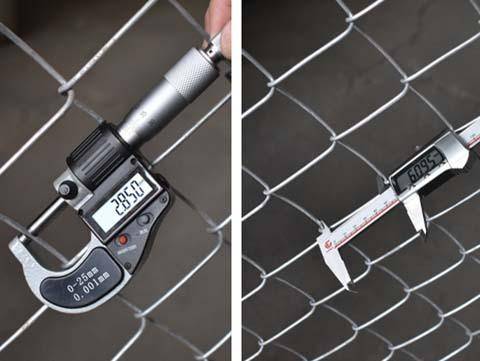
Wire manufacturing standards often include allowable diameter tolerances.
For critical applications, specify both:
- Nominal diameter
- Acceptable tolerance range
Conclusion
Wire gauge systems remain widely used across industrial sectors, but differences between AWG, SWG, and metric sizing can create confusion during procurement and engineering projects.
Using a reliable wire gauge conversion chart helps ensure accurate product selection, better communication with suppliers, and improved compliance with project specifications.
For international sourcing projects, specifying wire diameter in millimeters is generally the most accurate and universally accepted approach.