Introduction
Efficient air filtration and ventilation systems are essential for maintaining safe, productive, and compliant industrial environments. Manufacturing facilities, processing plants, warehouses, commercial buildings, and energy facilities all depend on reliable airflow management to control contaminants, protect equipment, and improve indoor air quality.
Wire mesh plays a critical role in many air handling systems. Whether used as filtration media, equipment protection screens, ventilation panels, or support structures, woven wire mesh and knitted wire mesh provide durability, airflow efficiency, and long service life.
This article explores how wire mesh products are used in air filtration and ventilation systems and highlights key factors for selecting the right solution.
Why Air Filtration Matters
Industrial ventilation systems perform several important functions:
- Remove airborne contaminants
- Protect sensitive equipment
- Improve worker safety
- Control dust and particulate matter
- Maintain environmental compliance
- Support process efficiency
A properly designed filtration system helps reduce maintenance costs while improving facility performance.
Common Air Filtration Challenges
Industrial facilities often face:
- Dust accumulation
- Airborne particles
- Oil mist contamination
- Moisture exposure
- Equipment overheating
- Restricted airflow
Selecting the appropriate wire mesh solution can help address these challenges.
Woven Wire Mesh in Air Filtration Systems
Woven wire mesh is commonly used in:
Air Intake Screens
Air intake systems require protection against:
- Debris
- Insects
- Large particles
- Environmental contaminants
Woven wire mesh provides effective screening without significantly restricting airflow.
HVAC Filtration Systems
HVAC systems frequently use wire mesh as:
- Pre-filter media
- Support layers
- Protective screens
Benefits include:
- Durability
- Reusability
- Corrosion resistance
Ventilation Equipment Protection
Ventilation openings often require screening to prevent:
- Foreign object intrusion
- Equipment damage
- Unauthorized access
Knitted Wire Mesh in Air and Gas Filtration
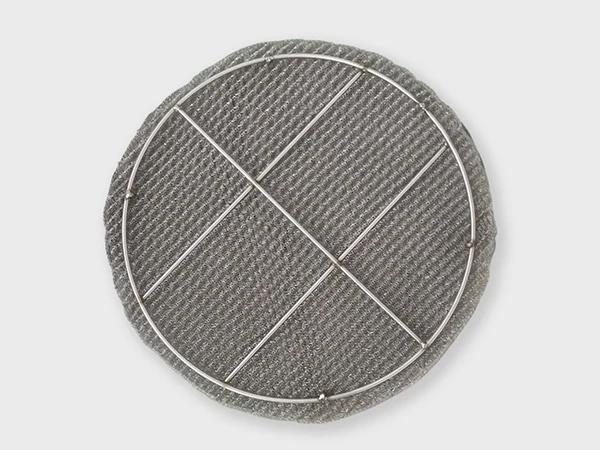
Knitted wire mesh offers a three-dimensional structure that provides unique filtration capabilities.
Typical Applications
- Mist eliminators
- Demister pads
- Air-oil separators
- Gas filtration systems
Why Knitted Wire Mesh Is Effective
The interlocking wire structure creates:
- High surface area
- Efficient droplet capture
- Low pressure drop
- Excellent airflow characteristics
Dust Collection Applications
Dust collection systems are common in:
- Manufacturing plants
- Cement facilities
- Woodworking operations
- Food processing plants
Wire mesh is often used for:
- Protective screens
- Filter support media
- Air distribution systems
Air Filtration Applications Table
| Application | Common Mesh Type |
|---|---|
| HVAC Intake Screens | Woven Wire Mesh |
| Ventilation Panels | Woven Wire Mesh |
| Dust Collection Systems | Woven Wire Mesh |
| Air-Oil Separation | Knitted Wire Mesh |
| Mist Elimination | Knitted Wire Mesh |
| Equipment Protection Screens | Woven Wire Mesh |
Material Selection Guide
Stainless Steel 304
Suitable for:
- General industrial ventilation
- HVAC applications
- Indoor filtration systems
Stainless Steel 316
Recommended for:
- Corrosive environments
- Chemical processing facilities
- Coastal installations
Galvanized Steel
Commonly used where:
- Cost efficiency is important
- Environmental exposure is moderate
Woven Wire Mesh vs Knitted Wire Mesh
| Feature | Woven Wire Mesh | Knitted Wire Mesh |
|---|---|---|
| Airflow | Excellent | Excellent |
| Particle Screening | Excellent | Moderate |
| Mist Capture | Limited | Excellent |
| Structural Rigidity | High | Flexible |
| HVAC Applications | Excellent | Good |
| Gas Separation | Limited | Excellent |
Recommended Specifications Table
| Application | Material | Typical Mesh Type |
|---|---|---|
| HVAC Intake | SS304 | Woven Mesh |
| Ventilation Panels | SS304 | Woven Mesh |
| Industrial Air Filters | SS304/316 | Woven Mesh |
| Demister Pads | SS304/316 | Knitted Mesh |
| Air-Oil Separators | SS316 | Knitted Mesh |
| Chemical Ventilation Systems | SS316 | Woven Mesh |
Common Selection Mistakes
Restricting Airflow with Excessively Fine Mesh
Very fine mesh may increase pressure drop and reduce system efficiency.
Ignoring Corrosion Exposure
Outdoor and chemical environments often require stainless steel materials.
Using Woven Mesh for Mist Elimination
Mist separation applications typically perform better with knitted wire mesh.
Overlooking Maintenance Accessibility
Reusable mesh systems should be easy to inspect and clean.
Industry Selection Guide
| Industry | Recommended Solution |
|---|---|
| Manufacturing | Woven Wire Mesh |
| Warehousing | Ventilation Mesh Screens |
| Food Processing | Stainless Steel Mesh |
| Chemical Processing | SS316 Mesh |
| Petrochemical | Knitted Wire Mesh |
| Power Generation | Ventilation Mesh Systems |
Future Trends in Industrial Air Filtration
As environmental regulations become more stringent, facilities increasingly focus on:
- Improved filtration efficiency
- Reduced energy consumption
- Reusable filtration materials
- Enhanced equipment protection
Wire mesh solutions continue to support these goals through durable and adaptable filtration designs.
Conclusion
Wire mesh remains an essential component in modern air filtration and ventilation systems. Woven wire mesh provides effective screening, equipment protection, and airflow management, while knitted wire mesh offers specialized performance in mist elimination and gas separation applications.
Selecting the right mesh type, material, and specification helps improve filtration efficiency, protect equipment, and support long-term operational performance.